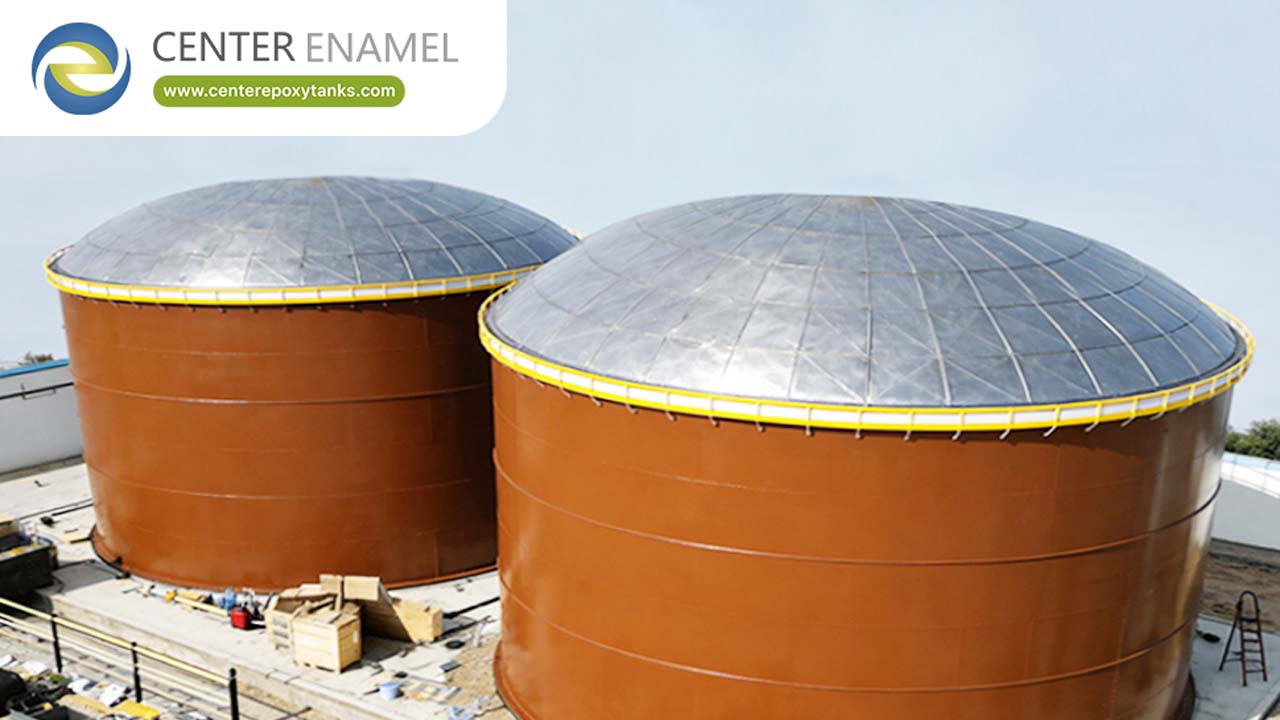
Stratified Thermal Storage Tanks: Principles, Temperature Layers and Efficiency
Stratified thermal storage is a broader idea than data-center cooling: any system that stores heat or cold in layered fluid uses the same density principles. Understanding those principles helps specify a stratified tank for chilled water, solar thermal, or industrial waste-heat recovery. This article covers the fundamentals.
A stratified thermal storage tank exploits the fact that fluids of different temperature have different density, so warm fluid floats above cold. By charging and discharging through distributed diffusers, the tank holds distinct temperature layers separated by a thermocline, achieving 85-95% usable efficiency. The same principle serves chilled-water cooling, district heating, and industrial heat recovery.
The Density Layering Principle
Whether storing cold or heat, the stable configuration is densest fluid at the bottom. For chilled water that is the cold layer; for hot storage it is the hot layer at the top. The tank simply manages which layer is added or removed.
This universality means a stratified tank is 'technology-agnostic' - the vessel is the same; only temperatures, materials, and codes change.
Charging and Discharging Efficiency
Efficiency is the fraction of stored energy you can actually recover. A sharp thermocline maximizes it; mixing, heat loss through walls, and poor port placement reduce it.
Wall insulation and a tight tank envelope protect the layers from ambient exchange, especially for hot storage or outdoor cold tanks.
Applications Beyond Data Centers
Stratified tanks appear in district heating (hot), solar thermal, industrial waste-heat recovery, and chilled-water cooling. The data-center case is simply the cold version at a mission-critical scale.
Technical Specifications
Parameter | Specification |
Layer rule | Densest fluid at bottom |
Usable efficiency | 85-95% |
Loss modes | Mixing, wall heat loss |
Envelope | Insulated shell |
Charging | Distributed inlet |
Discharging | Distributed outlet |
Cold application | Chilled water TES |
Hot application | District heating |
Shell | Atmospheric |
Material | GFS / stainless / FBE |
Verified Tank Engineering Reference
Center Enamel's repeated delivery of bolted storage tanks across markets - such as a 2025 Panamanian potable-water project of three GFS tanks at 15.29 m diameter and 4,956 m3 - reflects the standardized, transferable tank-building know-how that stratified thermal storage (cold or hot) relies on. Capability evidence only.
Project location | Panama |
Application | Drinking water |
Tank type | GFS (Glass-Fused-to-Steel) bolted tank |
Scale | 3 unit(s), φ15.29*9米(H) |
Total volume | 4,956 m3 |
Year | 2025-04 |
Note | Cited as manufacturing-capability evidence, not a data-center project. |
Center Enamel Capability
Center Enamel builds bolted GFS, FBE, stainless, and welded tanks suitable for both cold and hot stratified duty, with material selected against the stored medium. Construction follows AWWA D103 and ISO 28765; pressure vessels follow ASME VIII.
ISO 9001 quality management spans panel firing, assembly, and QA, supporting consistent performance across climates and applications.
Frequently Asked Questions
Q: What is thermal stratification?
A: The stable layering of fluid by density, with the densest (coldest for chilled water) at the bottom and warmer fluid above.
Q: What efficiency can a stratified tank reach?
A: Typically 85-95% usable, limited mainly by thermocline thickness and wall losses.
Q: Is the principle the same for hot and cold storage?
A: Yes - only which layer sits where changes; the vessel and diffuser logic are analogous.
Q: Where else are stratified tanks used?
A: District heating, solar thermal, and industrial heat recovery, in addition to data-center chilled water.
Q: How do walls affect efficiency?
A: Uninsulated or leaky walls exchange heat with ambient, degrading the layers; insulation protects storage.
Q: What material for stratified tanks?
A: GFS, stainless, FBE, or welded steel, chosen by the stored medium and temperature.
Stratified thermal storage is a density-driven, technology-agnostic principle: manage the layers and you recover most of the stored energy. The data-center chilled-water tank is one high-stakes application of a broadly useful idea.
Suggested Next Step
Describe your stored medium and temperature range - we will specify a stratified tank material, envelope, and diffuser scheme for the duty.


