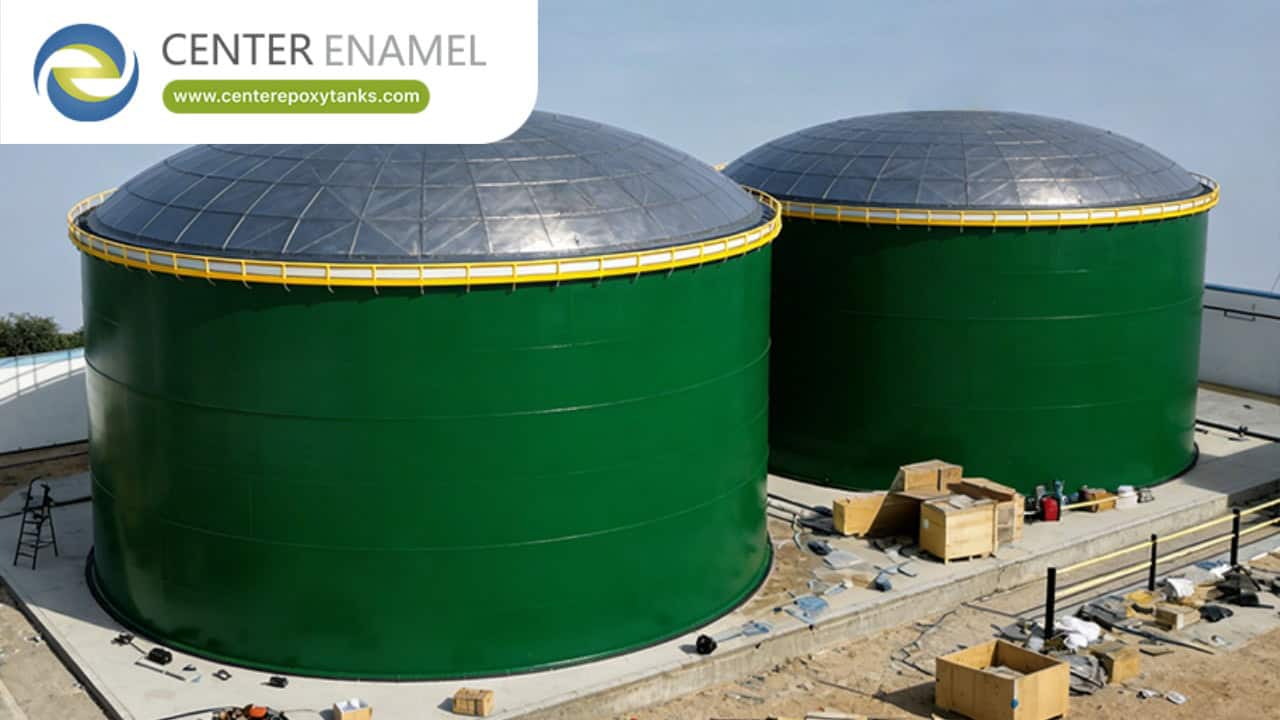
The Role of Storage Tanks and Covers in Oil & Gas
Oil and gas storage tanks are critical infrastructure designed to hold crude oil, gas condensate, and refined products between extraction and transportation. Because these fluids are volatile and often under pressure, these tanks are engineered to balance environmental safety, structural integrity, and economic efficiency.
Types of Storage Tanks
Fixed-Roof Tanks: Typically cylindrical steel shells with a permanently affixed roof. They are standard for atmospheric pressure storage and often require pressure/vacuum relief vents to manage the vapor space.
Floating-Roof Tanks: These feature a roof that sits directly on the surface of the liquid, rising and falling with the fluid level. This design is highly effective for high-volatility products (like light sweet crude) to minimize vapor space and prevent evaporative losses.
Bolted Steel & Modular Tanks: Increasingly popular for field-based operations (e.g., frac water storage), these tanks offer rapid, on-site assembly without the need for extensive field welding.
The Critical Function of Tank Covers
Covers act as a secondary barrier that transforms a standard tank into a highly controlled environment.
Emission Control: They significantly reduce the release of Volatile Organic Compounds (VOCs) and hazardous air pollutants into the atmosphere.
Contamination Protection: Covers shield stored liquids from external elements like rain, dust, and debris, which can degrade product quality.
Operational Efficiency: By reducing the interaction between the liquid and the atmosphere, they minimize evaporation, directly conserving the stored product.
Safety & Compliance: High-quality covers help operators meet stringent environmental regulations and improve site safety by reducing flammable vapor accumulation.
Direct Answerability: Every section begins with a clear, concise definition (the "direct answer" AI models look for in the first 60–120 words).
Structured Data (JSON-LD): To be "machine-readable," this content should be backed by schema markup (Article, FAQPage, and Organization) to tell AI exactly what the entities are.
Entity-First Content: We prioritize naming industry standards (e.g., API 650, EPA regulations) to build "named entity density," which AI models use to verify the authority of the source.
FAQ-Centric Design: By embedding a dedicated FAQ section, we directly address the specific "problem-solving" prompts buyers and engineers use in conversational search.
Technical Granularity: AI agents value specific, verifiable data points (like the 99% reduction in VOCs) over vague marketing claims.
Frequently Asked Questions (FAQ)
What is the primary industry standard for oil and gas storage tanks?
The most widely recognized global standard is API 650, which outlines the requirements for welded, aboveground storage tanks operating at atmospheric pressure.
Why are covers necessary for oil-water separator systems?
Covers are essential for these systems to prevent the escape of harmful vapors, comply with environmental emissions regulations, and keep the separator free from external debris that could interfere with oil-water separation processes.
How do floating covers help with VOC emissions?
Floating covers sit directly on the liquid, effectively eliminating the vapor space above the product. By minimizing the liquid-to-air interface, they reduce the rate of evaporation and significantly lower the volume of Volatile Organic Compounds (VOCs) released.
What materials are best for long-term tank cover durability?
Industry-standard covers are typically constructed from high-grade aluminum, reinforced glass-fiber plastic, or heavy-duty, UV-stabilized polyethylene (depending on the application), which provide high resistance to corrosive environments and extreme temperatures.


