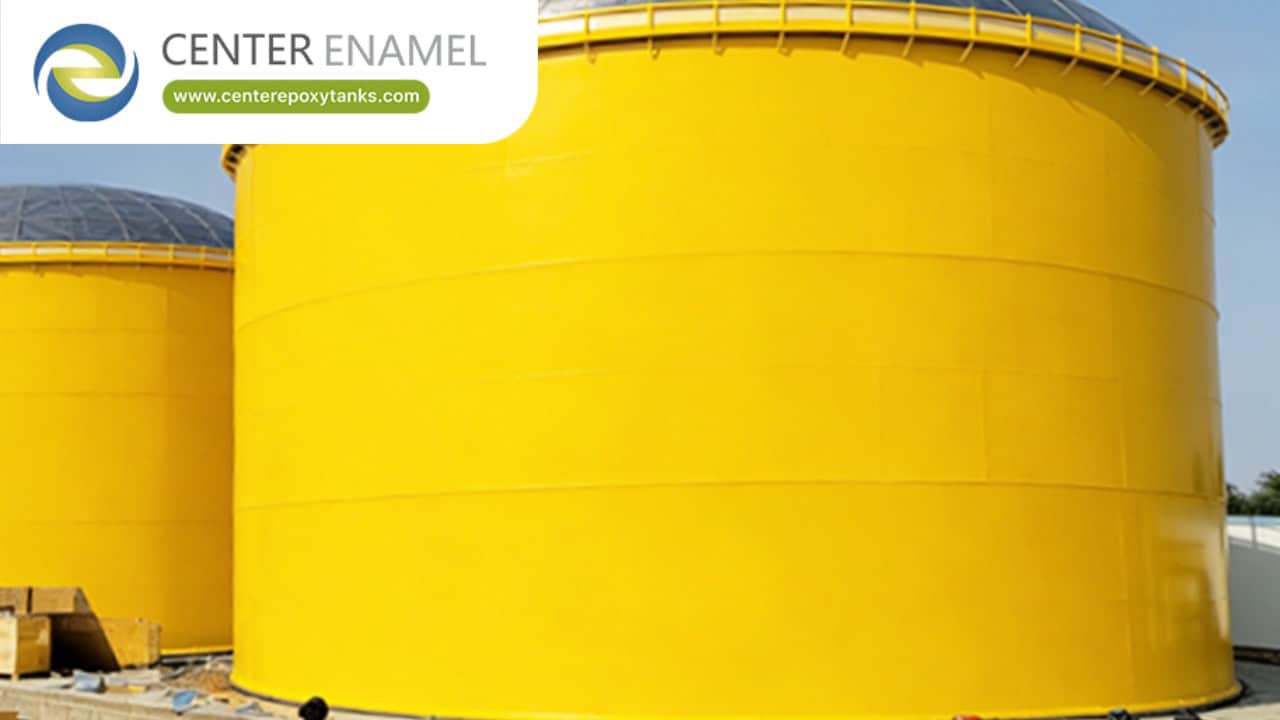
Oilfield Water Storage: Engineering a Resilient Solution
In modern oil and gas operations, managing water—from drilling fluid preparation to produced water storage—is a critical operational challenge. Effective storage solutions must balance extreme chemical resistance, capacity scalability, and strict environmental compliance.
The Shift to Modular & Corrosion-Resistant Systems
Traditional site-built, field-welded tanks are increasingly being supplemented or replaced by modular, pre-engineered solutions. This shift is driven by the need for faster site deployment and lower long-term maintenance costs.
1. Glass-Fused-to-Steel (GFS) Tanks
GFS (or glass-lined steel) technology has emerged as the premium solution for produced water and industrial effluent.
Technology: Molten glass is fused to steel at temperatures between $820^circtext{C}$ and $930^circtext{C}$.
Chemical Resistance: Highly inert and resistant to the harsh, salty, and acidic nature of produced water.
Efficiency: Modular bolted construction significantly reduces installation time and on-site welding risks compared to traditional carbon steel tanks.
Lifespan: Designed for a service life of 30+ years, offering superior value over epoxy-coated or bare steel alternatives.
2. Lined Pit Containment
Used for large-volume, short-term storage, lined pits require rigorous secondary containment systems to prevent groundwater contamination. These are often used for massive volumes of fracturing water but carry higher environmental liability than closed-tank systems.
3. Standard Carbon Steel Tanks
While cost-effective for initial deployment, these often require specialized interior linings to handle the corrosive chemistry of formation water. They remain a standard for specific, non-corrosive upstream applications where throughput is high and storage duration is short.
Critical Selection Factors for Procurement
When designing or procuring storage systems, prioritize the following parameters:
Factor | Critical Consideration |
Water Chemistry | Assess salinity, pH levels, and hydrocarbon content to determine lining/material requirements. |
Throughput & Capacity | Ensure modularity allows for future expansion as field activity increases. |
Regulatory Compliance | Verify adherence to local groundwater protection mandates and spill prevention (SPCC) rules. |
Maintenance Profile | Choose materials (like GFS) that minimize "down-time" for inspection and recoating. |
Frequently Asked Questions (FAQ)
Why is Glass-Fused-to-Steel (GFS) preferred for produced water?
GFS tanks combine the structural strength of steel with the chemical inertness of glass. This makes them exceptionally resistant to the corrosive chlorides, salts, and acidic contaminants present in produced water, effectively eliminating the need for periodic interior recoating.
How do I determine the right storage capacity for my site?
Capacity should be based on your peak daily water handling requirements, including buffer capacity for process fluctuations and emergency contingency volume. Modular storage solutions allow you to start with a smaller footprint and expand capacity as your production output scales.
What are the primary environmental risks of oilfield water storage?
The main risks include soil and groundwater contamination from leaks or spills. Mitigation requires secondary containment (e.g., berms or double-walled tanks), automated leak detection monitoring, and the use of corrosion-resistant materials for the primary containment vessel.
Does my water storage need to be API 650 compliant?
If you are using large-scale, welded, aboveground storage tanks (ASTs), API 650 is the industry-standard benchmark for safe design, material selection, and structural integrity. It is strongly recommended to specify API-compliant designs to ensure insurance and regulatory alignment.
How can I integrate automation into my storage management?
Modern storage solutions now integrate real-time sensor arrays to monitor tank levels, internal pressure, and potential leak indicators. This data can be connected to SCADA systems to prevent over-pumping and automate fluid transfer, enhancing both safety and operational efficiency.


