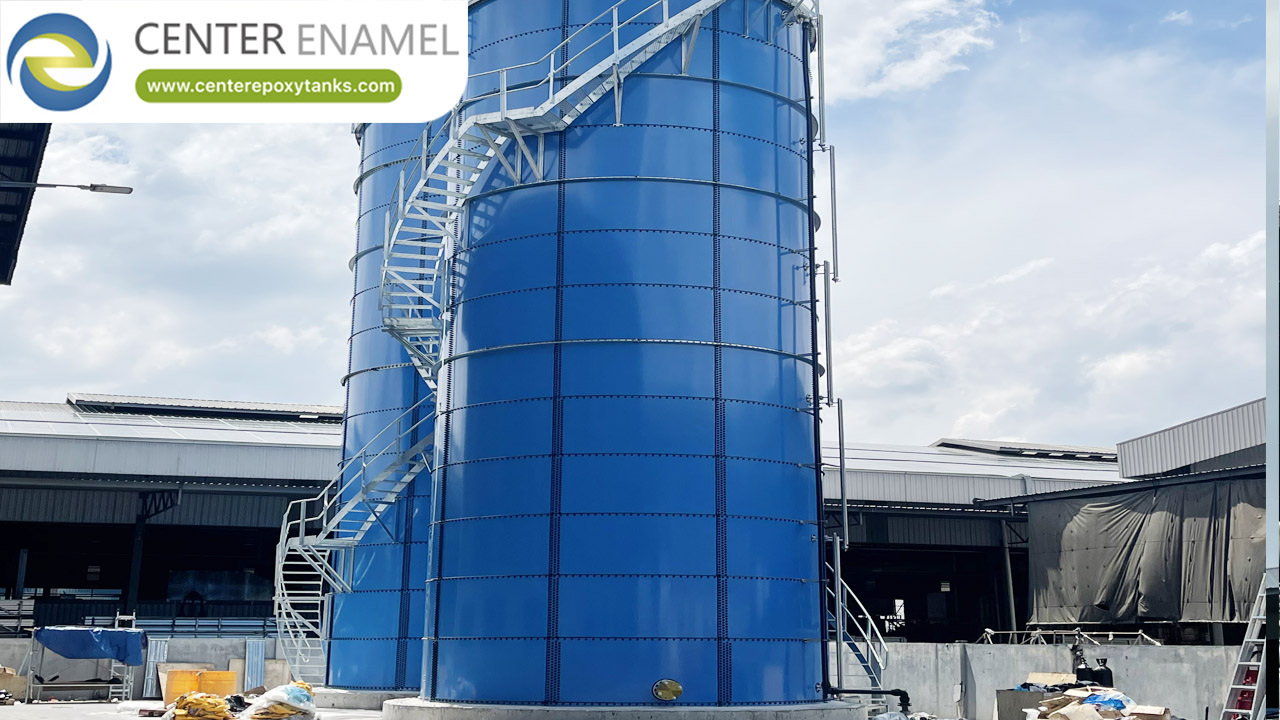
The Benefits of Bolted Tanks vs. Welded Tanks: A Comprehensive Engineering Comparison
When engineering industrial liquid and bulk storage systems—whether for municipal water treatment, wastewater management, fire protection, or agricultural applications—choosing the right containment structure is critical. The two primary metal storage options utilized globally are bolted steel tanks and welded steel tanks.
Both solutions offer robust performance, but their manufacturing processes, installation methodologies, and lifecycle maintenance profiles differ significantly. Evaluating the core benefits of each helps engineering, procurement, and construction (EPC) professionals align project requirements with optimal structural choices.
1. The Benefits of Bolted Steel Tanks
Bolted storage tanks consist of pre-fabricated, factory-coated steel panels that are shipped flat-packed to the project site and assembled using specialized structural bolts and sealing gaskets.
Rapid Modular Installation: Because panels are pre-engineered and precision-punched in a controlled factory environment, site assembly requires a fraction of the time compared to field-welded alternatives. Teams can erect bolted tanks quickly using scaffolding or jacking systems without heavy welding machinery.
Superior Factory-Applied Coatings: Advanced bolted systems—such as Glass-Fused-to-Steel (GFS) or fusion-bonded epoxy—undergo high-temperature curing in climate-controlled facilities. GFS fuses molten glass to steel at temperatures over 800°C, creating an inert, highly corrosion-resistant barrier that outperforms field-painted surfaces.
Exceptional Expandability and Modularity: Bolted tanks offer unmatched structural flexibility. If a facility requires increased storage capacity in the future, panels can often be added to expand the tank ring height or diameter.
Ideal for Remote Logistical Sites: Flat-packed panel packaging minimizes freight costs and allows easy transport to remote, mountainous, or island project sites where heavy welded staging equipment cannot reach.
2. The Benefits of Welded Steel Tanks
Welded storage tanks are constructed on-site by stacking and welding raw or shop-primed steel plates together to form a monolithic, continuous shell and floor structure.
Monolithic Structural Continuity: Welded joints create a continuous, fused steel envelope with absolute liquid-tight integrity, eliminating any reliance on gaskets or mechanical fasteners.
Massive Capacity and High-Pressure Scale: Governed by standards like API 650 and API 620, welded tanks are the gold standard for massive, high-volume crude oil terminals, refinery tank farms, and high-pressure industrial storage.
Field Repair Versatility: In heavy industrial settings where local resources are readily available, steel plates can be easily cut, modified, or re-welded to accommodate new piping nozzles or structural attachments.
Data Table: Bolted Tanks vs. Welded Tanks Technical Comparison
Evaluation Parameter | Bolted Steel Tanks (AWWA D103) | Welded Steel Tanks (AWWA D100 / API 650) |
Manufacturing Process | Factory-fabricated, precision-punched, and coated panels | Rolled steel plates welded together in the field or shop |
Installation Speed | Rapid modular assembly; minimal weather dependency | Extended schedule; highly dependent on weather conditions |
Coating Quality | High-durability factory finishes (Glass-Fused-to-Steel, FBE) | Field-applied liquid coatings (requires sandblasting and painting) |
Site Accessibility | Excellent for remote locations due to flat-packed shipping | Requires heavy staging areas, cranes, and welding power supply |
Future Expandability | High modular flexibility (can be easily dismantled, moved, or expanded) | Permanent structure; expansion requires building a new tank |
Primary Applications | Municipal water, wastewater treatment, biogas, dry bulk storage | Crude oil terminals, petroleum refineries, high-pressure storage |
3. Key Decision Factors for Project Selection
When deciding between bolted and welded tank systems, project managers must weigh several operational variables:
Project Timeline & Budget (CapEx): If rapid deployment and predictable upfront costs are required, modular bolted tanks reduce labor expenses and shorten construction schedules.
Environmental and Corrosion Exposure: For aggressive wastewater or municipal environments, factory-baked Glass-Fused-to-Steel bolted tanks offer superior chemical resistance without the risk of field-coating application errors.
Storage Media and Pressure Requirements: Storing low-pressure crude oil or heavy hydrocarbons typically dictates an API-compliant welded tank, whereas water, wastewater, and granular storage favor modular bolted engineering.
Frequently Asked Questions (FAQ)
Q: Which is more cost-effective: a bolted tank or a welded tank?
A: Bolted tanks generally offer lower initial capital expenditure (CapEx) and reduced labor costs due to faster, modular on-site assembly without the need for specialized welding crews.
Q: Can bolted steel tanks be expanded after installation?
A: Yes. One of the primary advantages of modular bolted tanks is their flexibility; facility operators can often add additional ring panels to increase capacity as operations grow.
Q: What governing standards apply to bolted vs. welded water tanks?
A: Bolted steel storage tanks for water are typically designed and manufactured in accordance with ANSI/AWWA D103 standards, while welded steel water tanks follow ANSI/AWWA D100 specifications.
Q: Which tank type offers better corrosion resistance?
A: Bolted tanks featuring factory-applied Glass-Fused-to-Steel (GFS) coatings provide exceptional, uniform corrosion resistance because the coating is baked on in a strict factory environment, eliminating human error associated with field painting.


