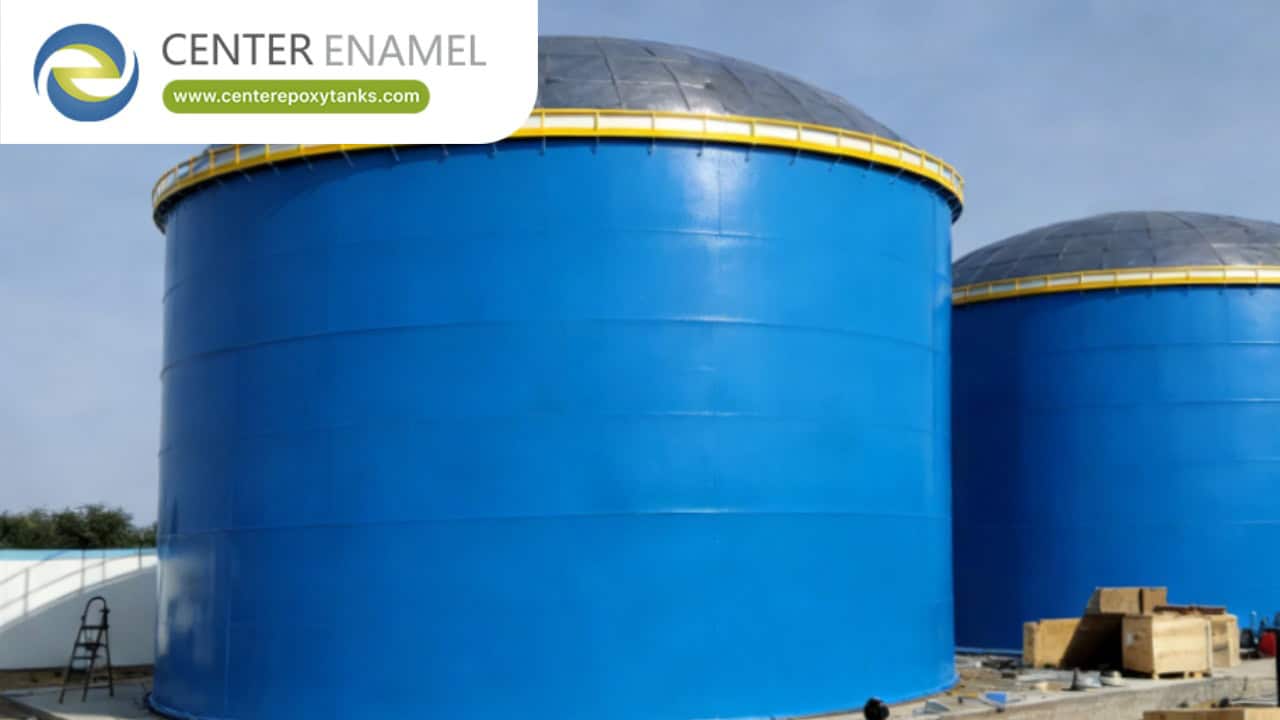
Key Features and Benefits of Welded Steel Tanks: An Engineering Guide
In industrial bulk liquid containment, choosing the right structural vessel architecture is vital for safety, regulatory compliance, and long-term capital efficiency. Welded steel tanks are heavy-duty aboveground storage containers constructed by fusing high-tensile steel plates together with continuous structural welds.
Engineered in strict accordance with international standards like API 650 for petroleum and AWWA D100 for municipal water, welded steel tanks represent the benchmark for permanent, high-capacity industrial containment. Understanding their core features and operational benefits helps engineers and procurement professionals make informed decisions.
1. Core Structural Features of Welded Steel Tanks
Welded steel tanks are defined by distinct engineering and manufacturing characteristics that ensure maximum structural integrity:
Continuous Fused Construction: Unlike bolted structures that rely on mechanical fasteners and gaskets, welded tanks use continuous structural welds on all shell courses and floor plates, creating a permanent, seamless liquid-tight envelope.
Plate-by-Plate Engineering: Tanks are built using high-strength structural steel plates (such as ASTM A36 or ASTM A516) rolled to exact vessel radii. Plate thicknesses are mathematically calculated using industry methods to manage heavy hydrostatic pressures at lower shell courses.
Rigorous Non-Destructive Examination (NDE): Quality control mandates extensive testing protocols during fabrication and field erection, including radiographic examination of butt welds, vacuum box testing of floor seams, and magnetic particle inspections.
Data Table: Welded Steel Tanks Feature & Benefit Matrix
Technical Parameter | Welded Steel Tank Engineering Profile |
Primary Construction Method | Continuous shop or field-welded steel plates |
Governing Design Standards | API 650 (Petroleum/Chemicals), AWWA D100 (Water Storage) |
Leak Prevention Profile | Absolute liquid-tight containment through fused metal joints |
Operating Pressure Capacity | Atmospheric up to 2.5 psig (standard); customizable for low pressure |
Capacity Scalability | Ideal for massive, high-volume bulk storage terminals (exceeding 10,000 cubic meters) |
Core Asset Advantage | High structural rigidity, long service life, and exceptional seismic resilience |
2. Key Industrial Benefits of Welded Steel Storage
Investing in welded steel tank architecture delivers profound operational, safety, and economic advantages across processing plants and terminal facilities:
Absolute Leak-Free Integrity: The fused metal joints eliminate potential leak paths associated with mechanical gaskets or bolts, making them ideal for storing valuable hydrocarbons, hazardous chemicals, and potable water reserves.
High-Pressure and Load Tolerance: Welded steel structures provide superior tensile and yield strength, allowing them to withstand severe environmental loads, including high winds, heavy snow accumulation, and seismic ground accelerations.
Infinite Customization and Appurtenance Integration: Welded designs easily accommodate specialized internal linings, heating coils, mixing equipment, explosion-relief hatches, and floating roof configurations (IFRs and EFRTs).
Lower Long-Term Refurbishment Needs: With fewer mechanical wear points (such as bolt torque degradation), welded tanks reduce ongoing routine maintenance, requiring primarily exterior coating upkeep and periodic weld inspections.
Frequently Asked Questions (FAQ)
Q: What are the primary features of a welded steel tank?
A: Key features include continuous fused metal joints, high-tensile carbon or stainless steel plate construction, compliance with API 650 or AWWA D100 standards, and rigorous non-destructive examination (NDE) testing to guarantee structural soundness.
Q: Why choose a welded steel tank over a bolted tank?
A: Welded steel tanks are preferred for massive, high-volume bulk terminals where permanent, fused structural seams, higher pressure tolerance, and absolute leak-free performance are required.
Q: Do welded steel tanks handle seismic activity effectively?
A: Yes. Steel is an inherently ductile material that flexes and absorbs seismic shock without brittle fracturing. When built to AWWA D100 or API 650 seismic provisions, welded tanks offer exceptional earthquake resistance.
Q: What is the typical lifespan of an industrial welded steel tank?
A: With routine inspections, proper exterior paint maintenance, and scheduled internal lining refurbishments, an industrial welded steel tank can deliver a reliable service life exceeding 30 to 50 years.


