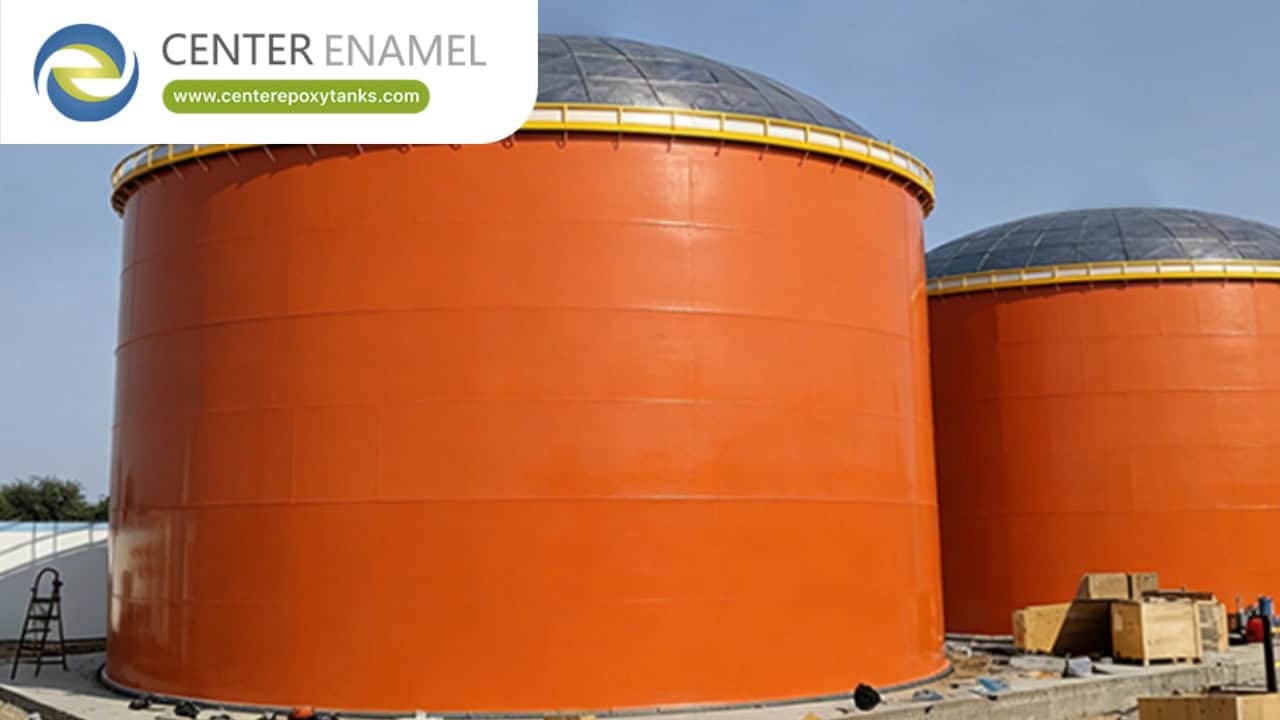
Do You Know the Advantages of Welded Steel Storage Tanks? A Complete Engineering Guide
In the heavy industrial, petrochemical, and municipal water sectors, choosing the right containment vessel is critical for operational safety, regulatory compliance, and long-term capital efficiency. Among available structural designs, welded steel storage tanks remain the undisputed industry benchmark for massive, high-volume fluid containment.
Constructed by fusing high-tensile steel plates together with continuous structural welds, these aboveground storage tanks (ASTs) offer unique performance benefits that bolted, concrete, or plastic alternatives cannot replicate under extreme operating conditions.
Understanding the distinct advantages of welded steel tanks helps engineering procurement and construction (EPC) professionals make informed infrastructure investments.
1. Monolithic Structural Integrity and Zero Leak Risk
The defining engineering advantage of a welded steel tank is its continuous, fused construction.
Seamless Fusion: Unlike modular tanks that rely on mechanical bolts, gaskets, and sealants, welded tanks utilize continuous structural arc or submerged arc welding (SAW) on all shell courses and floor plates.
Elimination of Weak Points: Every mechanical fastener in a bolted structure represents a potential point of long-term fatigue or leakage. Welded tanks form a monolithic steel envelope, ensuring absolute liquid-tight containment for hazardous chemicals, volatile hydrocarbons, and high-purity water reserves.
2. Unmatched Capacity Scalability and Pressure Tolerance
Welded steel tanks—governed globally by standards such as API 650 and AWWA D100—are engineered for heavy-duty operational demands:
High-Volume Petroleum Terminals: Designed for massive capacities ranging from thousands to over 100,000 barrels, welded tanks are the primary choice for crude oil refineries, fuel distribution hubs, and bulk chemical storage yards.
Pressure Management: Standard atmospheric welded tanks easily handle internal pressures up to 2.5 psig, with specialized low-pressure configurations (such as API 620 vessels) supporting even higher vapor containment thresholds.
3. Superior Seismic and Environmental Resilience
Industrial facilities are frequently located in regions prone to extreme weather, high winds, or seismic activity. Welded steel tanks excel in harsh environments:
Inherent Material Ductility: Steel possesses high structural ductility, allowing the tank shell to flex, absorb, and dissipate seismic shock waves without brittle cracking or catastrophic structural collapse.
Wind and Load Resistance: Engineered with integrated wind girders, roof framing, and heavy foundation anchoring, welded steel structures withstand hurricane-force winds and heavy snow loads.
4. Exceptional Longevity and Lifecycle Value
While initial installation requires skilled site-welding and field quality control, the long-term return on investment is profound:
Extended Asset Lifespan: Properly maintained welded steel storage tanks can achieve a structural service life exceeding 30 to 50+ years.
Total Cost of Ownership (TCO): Because they eliminate joint fatigue and bolt-torque degradation, welded tanks offer lower structural repair frequencies over multi-decade operational cycles.
Data Table: Key Advantages of Welded Steel Storage Tanks
Performance Parameter | Welded Steel Tank Engineering Advantage | Industrial Impact |
Structural Continuity | Continuous fused metal joints (Monolithic envelope) | Eliminates joint leaks, bolt failures, and gasket degradation |
Capacity & Scale | Highly scalable for massive footprints (Exceeding 10,000 m3) | Ideal for bulk crude oil terminals, refineries, and large water reserves |
Seismic Performance | High steel ductility and engineered wind/seismic girders | Absorbs ground-motion energy and resists hurricane-force winds |
Design Compliance | Built to rigorous international codes (API 650, AWWA D100) | Ensures global regulatory acceptance and structural safety |
Inspection & Maintenance | Standardized NDE protocols (Radiography, Vacuum Box testing) | Streamlines regulatory audits, non-destructive testing, and safety compliance |
Frequently Asked Questions (FAQ)
Q: What are the primary advantages of welded steel storage tanks over bolted tanks?
A: Welded steel tanks provide monolithic, continuous structural fusion that eliminates mechanical fasteners and gasket wear points, offering superior pressure tolerance, higher capacity scalability, and absolute leak-free integrity for massive industrial terminals.
Q: What engineering standards govern welded steel storage tanks?
A: The global benchmark for welded steel tanks is API 650 for petroleum, chemical, and industrial storage, while ANSI/AWWA D100 governs welded steel tanks dedicated to municipal water and fire protection storage.
Q: How do welded steel tanks handle earthquakes and high winds?
A: Steel is an inherently ductile material that flexes under stress without shattering. When engineered with seismic load calculations, proper shell thickness profiling, and foundation anchor rings per API/AWWA codes, welded tanks offer exceptional earthquake and wind resistance.
Q: What is the expected service lifespan of an industrial welded steel tank?
A: With routine external coating maintenance, proper corrosion allowances, and scheduled internal lining inspections, an industrial welded steel storage tank can reliably operate for 30 to 50+ years.


