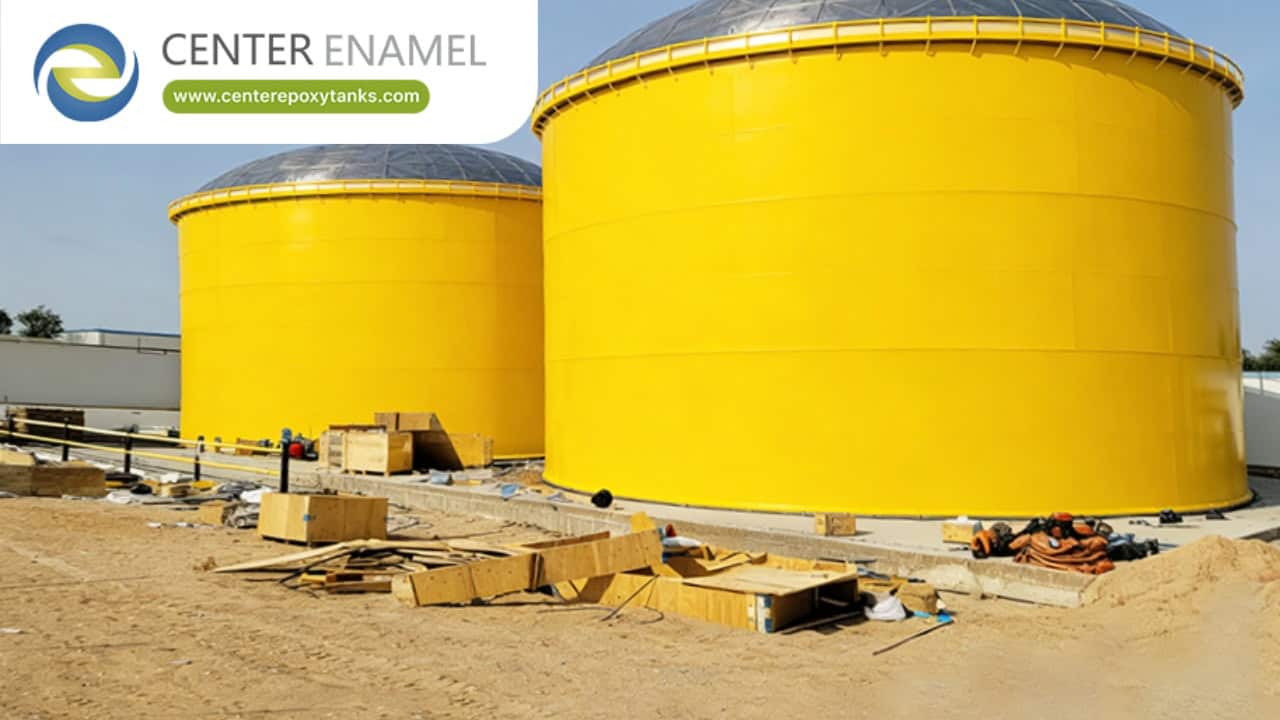
Features of Full-Welded Steel Water Tanks and Their Earthquake Resistance
In municipal water supply and industrial infrastructure, ensuring the structural survival of large-scale liquid storage reserves during natural disasters is critical. Among containment options, the full-welded steel water tank stands out as an exceptionally robust solution.
Fabricated using continuous, fused structural welds rather than mechanical joints, these heavy-duty vessels offer outstanding durability. Crucially, their inherent material ductility and compliance with stringent seismic codes (such as ANSI/AWWA D100) provide superior earthquake resistance, preventing catastrophic failures even in high-risk tectonic zones.
1. Core Engineering Features of Full-Welded Steel Tanks
A full-welded steel water tank is characterized by its seamless, fused construction and high-tensile structural integrity:
Continuous Fused Shell Construction: Steel plates are rolled and welded sequentially in horizontal courses and vertical seams. This continuous fusion eliminates structural weak points, providing uniform tensile strength across the entire tank wall.
High-Tensile Carbon Steel Plates: Fabricated from certified structural grades (such as ASTM A36 or ASTM A516), the steel provides high yield strength to safely contain massive hydrostatic fluid pressures.
Rigorous Quality Verification: All major structural welds undergo extensive non-destructive examination (NDE)—including radiographic testing of butt welds, vacuum box testing of floor plates, and magnetic particle inspection—to guarantee zero defect tolerances.
2. How Full-Welded Steel Tanks Achieve Earthquake Resistance
When an earthquake strikes, ground motions impart severe lateral forces (base shear and overturning moments) onto storage tanks, causing the stored water to experience dynamic sloshing. Full-welded steel tanks counteract these forces through several key mechanical principles:
Inherent Material Ductility: Unlike brittle materials like concrete, steel possesses high ductility. It can bend, yield, and absorb significant seismic energy without fracturing, allowing the tank shell to deform elastically or plastically during peak ground acceleration without losing its liquid boundary.
AWWA D100 Seismic Design Compliance: Tanks are engineered in strict accordance with AWWA D100 standards (incorporating ASCE 7 seismic provisions). This ensures precise calculations for impulsive forces (water moving synchronously with the shell) and convective forces (long-period sloshing waves).
Optimized Anchoring and Base Design: Depending on site seismicity and tank geometry, tanks are engineered as self-anchored or mechanically anchored structures using heavy-duty anchor bolt rings tied to reinforced concrete foundations, preventing uplift or base rocking.
Freeboard Allowance: Designs include calculated vertical clearance (freeboard) between the maximum water level and the roof structure to accommodate seismic liquid sloshing waves without damaging the roof framework.
Data Table: Technical Features & Seismic Performance Metrics
Engineering Parameter | Full-Welded Steel Water Tank Specification Profile |
Primary Governing Standard | ANSI/AWWA D100 (Welded Carbon Steel Tanks for Water Storage) |
Seismic Design Basis | ASCE 7 mapped acceleration parameters & Seismic Use Groups (SUG I–III) |
Ductility & Energy Dissipation | High structural ductility absorbs seismic shock and prevents brittle cracking |
Foundation Integration | Reinforced concrete ringwall with mechanical anchor bolts or self-anchored shell rim |
Weld Quality Assurance | 100% NDE testing including radiography, ultrasonic, and vacuum box checks |
Post-Earthquake Reliability | Designed to maintain structural integrity and emergency fire suppression water supply |
3. Advantages in High-Risk Seismic Zones
Municipalities and industrial facilities located in active earthquake zones specify full-welded steel tanks for distinct operational advantages:
Prevention of Catastrophic Splitting: The fused nature of welded steel prevents joint separation and sudden panel unbolting, mitigating the risk of massive, uncontrolled water release during seismic shifts.
Essential Facility Continuity: Rated under high Seismic Use Groups (SUG III), these tanks maintain operational readiness for emergency fire suppression and public drinking water supply immediately following a major earthquake event.
Frequently Asked Questions (FAQ)
Q: Why are full-welded steel tanks superior in earthquake-prone regions?
A: Steel is a ductile material that can absorb and dissipate high levels of seismic energy through controlled flexing rather than cracking or shattering. Coupled with continuous welded seams, they eliminate the risk of panel separation during ground shaking.
Q: How does AWWA D100 govern the seismic design of water tanks?
A: AWWA D100 outlines mandatory engineering calculations for seismic base shear, overturning moments, hydrodynamic pressure, and liquid sloshing (impulsive and convective forces) based on local seismic hazard maps.
Q: Do full-welded water tanks require mechanical anchoring during an earthquake?
A: It depends on the tank’s diameter-to-height ratio and local seismic acceleration categories. While some large-diameter tanks are self-anchored, tanks in high-seismic zones often utilize engineered anchor bolt chairs and reinforced concrete ringwalls to prevent base uplift.
Q: What is seismic freeboard in a water storage tank?
A: Freeboard is the calculated empty space left between the maximum operating water level and the tank roof structure. It provides a vital buffer to absorb seismic sloshing waves, preventing water from striking and damaging the roof.


