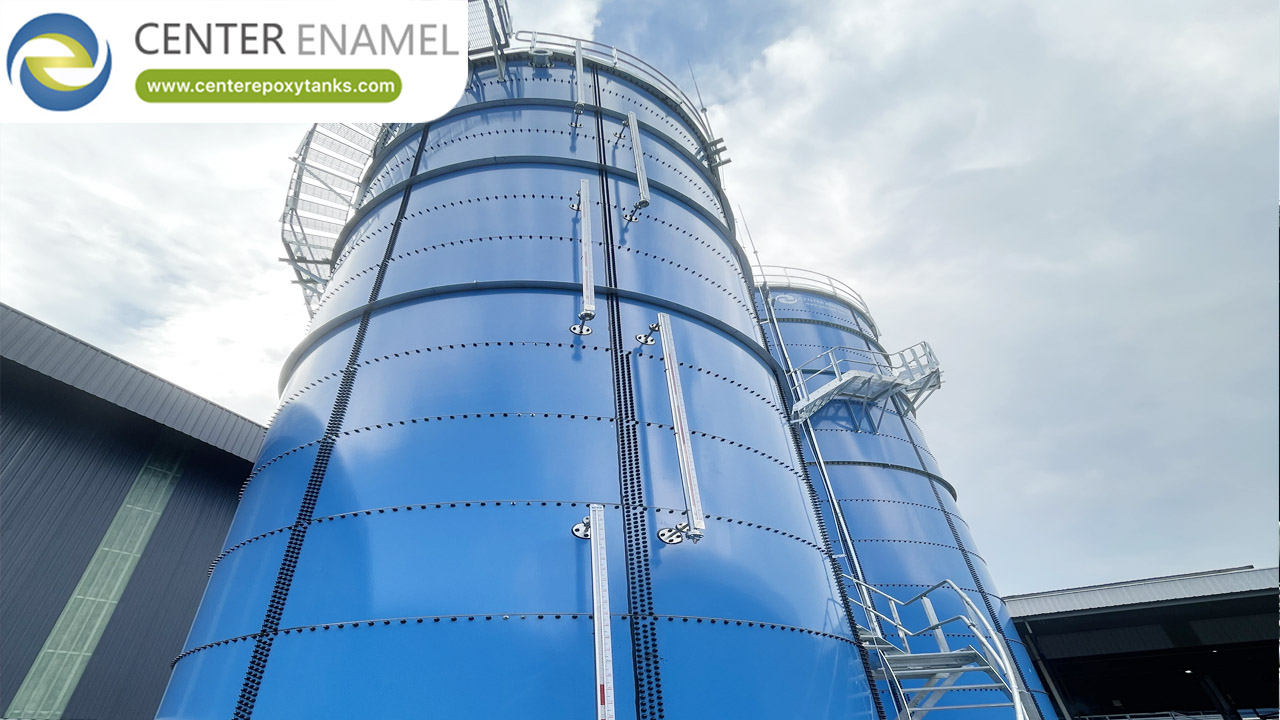
Bolted Tanks vs Welded Tanks: Selecting the Right Storage Tank(s) for Your Next Project
When designing industrial liquid or bulk storage infrastructure—whether for municipal water treatment, wastewater management, fire protection, or agricultural applications—choosing the appropriate containment structure is a foundational decision. The two primary metal storage solutions utilized worldwide are bolted steel tanks and welded steel tanks.
While both options offer robust performance, their manufacturing processes, installation methodologies, site logistics, and maintenance profiles differ significantly. Evaluating the distinct advantages and engineering tradeoffs of each system ensures optimal capital allocation and long-term asset reliability.
1. Bolted Steel Tanks: Modular Efficiency and Factory Quality
Bolted storage tanks consist of pre-fabricated, precision-punched steel panels that are coated in a controlled factory environment and shipped flat-packed to the project site for modular assembly.
Factory-Controlled Coatings: Advanced bolted systems—including Glass-Fused-to-Steel (GFS) and fusion-bonded epoxy—undergo high-temperature thermal curing. This creates a uniform, highly corrosion-resistant surface that avoids the weather-related inconsistencies of field-applied paint.
Rapid Modular Installation: Because panels arrive ready to assemble, installation relies on mechanical bolting and specialized sealing gaskets rather than heavy welding machinery. This cuts construction timelines significantly.
Unmatched Adaptability and Expandability: Bolted structures offer exceptional modular flexibility. If a facility needs to increase capacity in the future, additional ring panels can often be added to the existing structure.
Logistical Advantages for Remote Sites: Flat-packed panel crating minimizes freight volume, making bolted tanks the ideal choice for remote, mountainous, or island project sites where heavy welded staging equipment cannot practical reach.
2. Welded Steel Tanks: Monolithic Strength and Heavy-Duty Scale
Welded storage tanks are constructed on-site by stacking and welding raw or shop-primed steel plates together to form a continuous, seamless shell and floor structure.
Monolithic Structural Continuity: Welded joints create a fused steel envelope with absolute liquid-tight integrity, eliminating any reliance on mechanical gaskets or bolt torque maintenance.
Massive Capacity and High-Pressure Scale: Governed globally by standards like API 650 and AWWA D100, welded tanks are the standard choice for massive crude oil terminals, refinery tank farms, and high-pressure industrial fluid containment.
Heavy Industrial Ruggedness: Engineered with thick steel plates designed for extreme hydrostatic loads, welded tanks provide exceptional structural mass to withstand severe environmental forces.
Data Table: Bolted Tanks vs. Welded Tanks Comprehensive Matrix
Technical Parameter | Bolted Steel Tanks (AWWA D103) | Welded Steel Tanks (AWWA D100 / API 650) |
Fabrication Method | Factory-fabricated, precision-punched panels | Rolled steel plates welded together in the field or shop |
Installation Speed | Rapid modular assembly using light equipment | Extended field erection schedule requiring specialized welding |
Coating Integrity | Superior factory-baked finishes (e.g., GFS, Fusion Bonded Epoxy) | Field-applied liquid coatings (subject to environmental curing variables) |
Site Accessibility | High adaptability; flat-packed for remote or restricted sites | Requires large staging areas, cranes, and heavy power sources |
Future Modularity | High flexibility; easy to expand, dismantle, or relocate | Permanent structure; future capacity expansion requires a new tank |
Primary Applications | Municipal water, wastewater, fire protection, dry bulk storage | Crude oil terminals, heavy petroleum, high-pressure processing |
3. Key Decision Factors for Project Selection
When selecting the ideal tank system for an upcoming project, engineers and procurement managers must weigh several key variables:
Project Timeline & Initial CapEx: If strict deadlines and lower initial installation costs are primary drivers, modular bolted tanks reduce labor overhead and accelerate project deployment.
Geographic Logistics: Projects located in remote regions or constrained urban spaces benefit immensely from the flat-packed shipping model of bolted systems.
Future Capacity Needs: If an operation anticipates future scaling, bolted tanks offer modular expansion pathways that welded alternatives cannot match.
Regulatory and Industry Standards: Water and municipal storage projects commonly align with AWWA D103 (bolted) or AWWA D100 (welded), while oil and gas applications strictly follow API 650 specifications.
Frequently Asked Questions (FAQ)
Q: Which tank option has a faster installation timeline?
A: Bolted steel tanks install significantly faster than welded tanks. Because their panels are pre-fabricated and precision-engineered in a factory, they utilize efficient kit-based assembly on-site without waiting for extensive welding and X-ray inspections.
Q: Can bolted steel tanks be expanded after initial installation?
A: Yes. One of the greatest operational benefits of modular bolted tanks is their flexibility. Facility managers can often add additional ring panels to increase height and volume as plant demands grow.
Q: What governing standards apply to bolted vs. welded water storage tanks?
A: Factory-coated bolted steel water storage tanks are designed and manufactured in accordance with ANSI/AWWA D103 standards, whereas welded steel water tanks are governed by ANSI/AWWA D100 specifications.
Q: Which tank type offers superior corrosion resistance out of the box?
A: Bolted tanks featuring factory-applied Glass-Fused-to-Steel (GFS) or fusion-bonded epoxy coatings deliver exceptional corrosion resistance because the coating is thermally baked on in a strict factory environment, eliminating human error associated with field painting.


