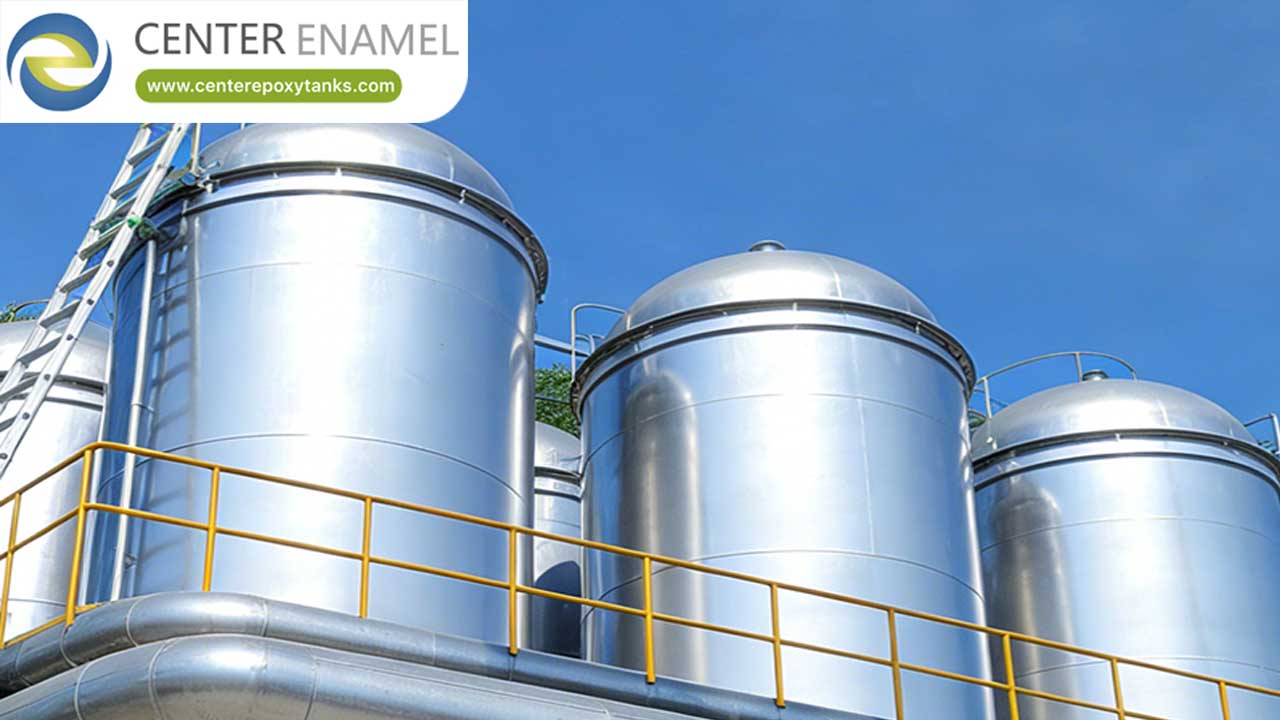
Stainless Steel Vegetable Oil Storage Tanks: Edible Oil Quality and Sanitary Design
A vegetable oil refinery lives on storage: crude arriving by ship, oil moving through degumming, refining, bleaching, and deodorizing, finished product queueing for bottling — every stage in a tank, every tank a quality risk if oxygen, water, or contamination intrudes. At this scale, stainless steel is not a preference; it is the enabling material.
Stainless steel vegetable oil storage tanks provide refinery-scale edible oil storage — from 500 to 5,000 m3 per tank in SS304/316L — with sanitary surfaces, nitrogen blanketing, temperature management, and CIP systems engineered to preserve oil quality from crude receipt through finished product dispatch.
1. How Do Refineries Deploy Vegetable Oil Tanks?
Each process stage has distinct storage duties.
· Crude oil intake: Large buffer tanks absorb ship and rail deliveries; moisture and impurities settle before processing.
· In-process holding: Degummed, refined, and bleached oil stages each hold between unit operations, protected by blanketing to prevent re-oxidation.
· Finished product storage: Fully refined oil waits for bottling or loadout in the highest-hygiene tanks with tightest turnover control.
· Blend and additive service: Small dedicated tanks meter additives and blend stocks without cross-contamination.
2. What Quality Systems Protect Stored Oil?
Refinery practice layers protection on the steel.
· Nitrogen blanketing across the farm: Inert headspace on every tank — the single most effective oxidation defense at every stage.
· Moisture management: Heated settling zones and bottom draws remove transported water that would hydrolyze oil into free fatty acids.
· Temperature stability: Insulation plus gentle heating keeps higher-melting stocks pumpable without thermal damage.
· Transfer hygiene: Dedicated lines or validated changeover procedures prevent cross-contamination between oils and grades.
3. What Compliance Frame Surrounds Edible Oil Tanks?
Food-safety systems audit the tank farm like a production line.
· Food-contact materials: SS304/316L with certificates; gasket and seal compounds food-grade and documented.
· Cleaning validation: CIP cycles with swab and rinse verification at commissioning and scheduled intervals.
· HACCP integration: Tanks appear in the hazard analysis — oxidation, contamination, and cleaning failures are CCPs with monitoring.
· Traceability: Heat numbers, batch records, and level instrumentation tie every liter in the farm to its lot history.
Data Table: Refinery Tank Duties vs Features
Duty | Size Range | Key Features |
Crude intake | 2,000-5,000 m3 | Settling zones, heating |
In-process buffer | 500-2,000 m3 | N2 blanket, CIP |
Finished oil | 500-2,000 m3 | Full hygiene, FIFO |
Blend/additive | 10-100 m3 | Dedicated, metered |
Frequently Asked Questions (FAQ)
Q1: What size are vegetable oil refinery storage tanks?
Refinery service typically runs 500-5,000 m3 per tank: large crude-intake buffers at the top of the range, in-process and finished-oil tanks in the middle, and small dedicated blend and additive vessels below. Farms of 10-30 tanks coordinate the stages.
Q2: Why is nitrogen blanketing used on edible oil tanks?
Because oxygen is the main enemy of stored oil quality — it drives oxidation that produces rancid flavors and degrades the oil. A nitrogen blanket over every tank stage, from crude to finished, keeps headspace oxygen out and is standard practice across modern edible oil refineries.
Q3: How are vegetable oil tanks cleaned?
Through validated CIP: spray devices flood polished stainless surfaces with cleaning solutions in programmed cycles, followed by rinse and swab verification. Tanks are designed for CIP from the start — no dead legs, full drainage, sanitary welds — so cleaning is repeatable and documented rather than manual and heroic.
Q4: Can different vegetable oils share one tank farm?
Yes with discipline: dedicated tanks per oil type where volumes justify, otherwise validated changeover cleaning between products, with line flushing and verification. Allergen-bearing oils (peanut, for example) get dedicated equipment — cross-contamination at tank level is a food-safety event, not a housekeeping issue.


