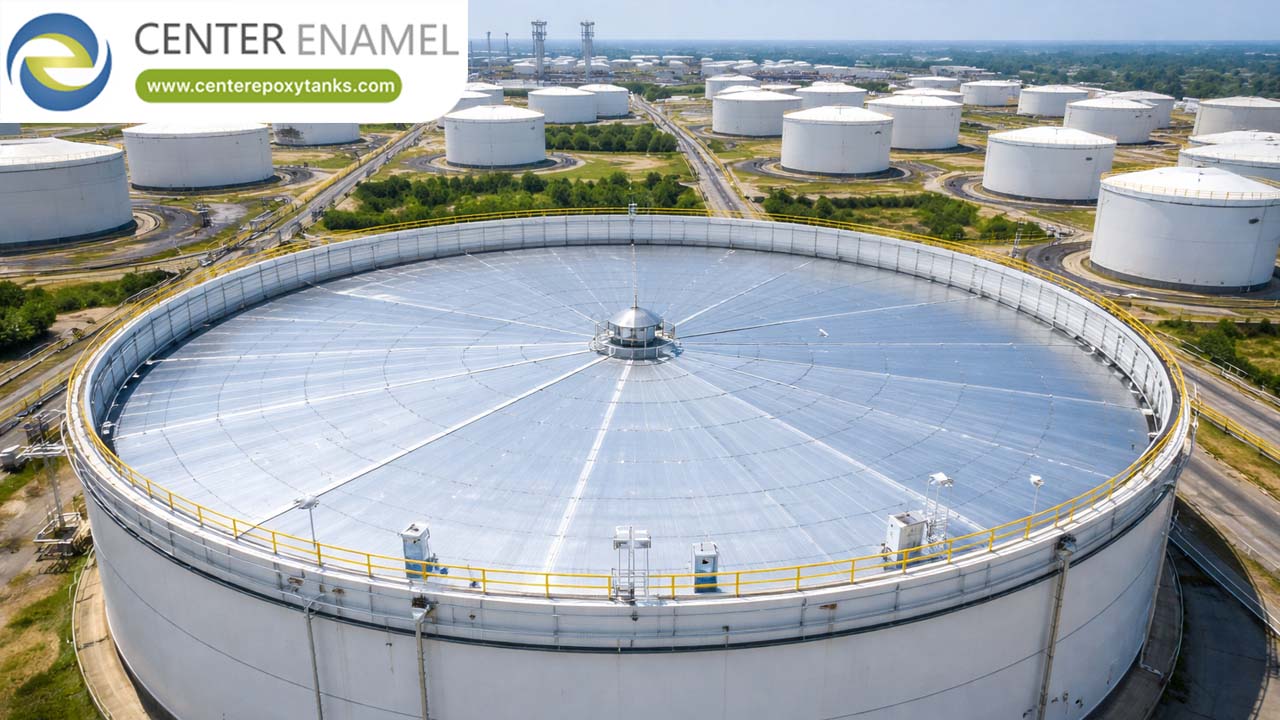
Stainless Steel Oil Tank Floating Roofs: Corrosion Resistance for Refined Products
Aluminum decks rule the internal floating roof market — until the product turns aggressive. Chloride-laden streams, sour condensate, and certain chemical stocks attack aluminum and reward the tank that paid extra for stainless. Choosing the deck metal is therefore a chemistry decision before it is an economics one.
Stainless steel oil tank floating roofs are internal decks constructed in 304 or 316L stainless, engineered to API 650 Annex H for refined products and aggressive chemical service where aluminum's corrosion limits are exceeded — delivering decades of coating-free, low-maintenance vapor control in exchange for higher installed cost.
1. When Does Stainless Beat Aluminum on a Deck?
Product chemistry draws the line.
· Chloride-bearing products: Streams carrying chlorides or marine-transported stock with salt contamination pit aluminum; 316L decks shrug them off.
· Sour and high-sulfur service: Sulfidation and sour condensate favor stainless metallurgy over aluminum in the deck and seal zone.
· Aromatic and chemical stocks: Certain solvents and petrochemical feeds attack aluminum alloys specifically — stainless provides the broad chemical tolerance.
· Clean product economics: For ordinary gasoline and jet service, aluminum remains the cost-efficient standard; stainless earns its premium only where chemistry demands.
2. What Grades and Constructions Apply?
Deck engineering follows plate and floatation practice.
· Grade selection: 304 for general refined products; 316L where chlorides, acids, or elevated temperatures enter the duty.
· Deck constructions: Welded panel and tubular-float designs with sealed compartments meeting Annex H buoyancy rules.
· Fitting hardware: Legs, wells, and hatch hardware matched in stainless so the corrosion weak link never returns.
· Seal systems: Standard rim-seal architecture — mechanical shoe or resilient primary plus secondary — on the stainless perimeter.
3. How Do Stainless Decks Change Lifecycle Economics?
First cost rises; maintenance lines fall.
· No coating program: Stainless needs no paint or anodizing renewal — the deck's appearance at year 15 resembles year 1.
· Longer inspection intervals: Corrosion-free deck plates stretch the time between internal interventions on the deck itself.
· Seal remains the wear item: Elastomer seals still age on schedule; maintenance focuses there rather than on the structure.
· Residual value: Stainless decks retain scrap and reuse value, softening the initial premium at end of service.
Data Table: Deck Material Selection
Product Duty | Aluminum Deck | Stainless Deck |
Clean gasoline / jet | Standard, economic | Over-spec |
Chloride contamination risk | Pitting risk | 316L recommended |
Sour / high-sulfur streams | Marginal | Preferred |
Chemical / solvent stocks | Verify compatibility | Broad tolerance |
Lifecycle maintenance | Low | Lowest |
Frequently Asked Questions (FAQ)
Q1: When should a floating roof be stainless steel?
When the stored product attacks aluminum: chloride-contaminated or marine-transported stocks, sour and high-sulfur streams, and specific chemical or solvent service. For ordinary clean refined products, aluminum decks remain the economical standard — stainless is a chemistry-driven upgrade.
Q2: Which stainless grade suits oil tank floating roofs?
Type 304 covers general refined-product service; 316L with its molybdenum content handles chloride-bearing and more aggressive streams. Hardware, legs, and fittings should match the deck grade so no dissimilar-metal weak link appears in the corrosion chain.
Q3: Do stainless floating roofs cost more to maintain?
Less: no coatings to renew and no deck-plate corrosion to chase — maintenance concentrates on the rim seals, which age by elastomer chemistry regardless of deck metal. The higher purchase price buys decades of removed recoat and repair scope.
Q4: Are stainless decks compatible with API 650 Annex H?
Yes — Annex H governs design requirements for internal floating roofs regardless of material: buoyancy with specified compartments flooded, fitting details, and ventilation. Stainless decks meet the same rules with different metallurgy, and pair with the same seal and venting architecture.


