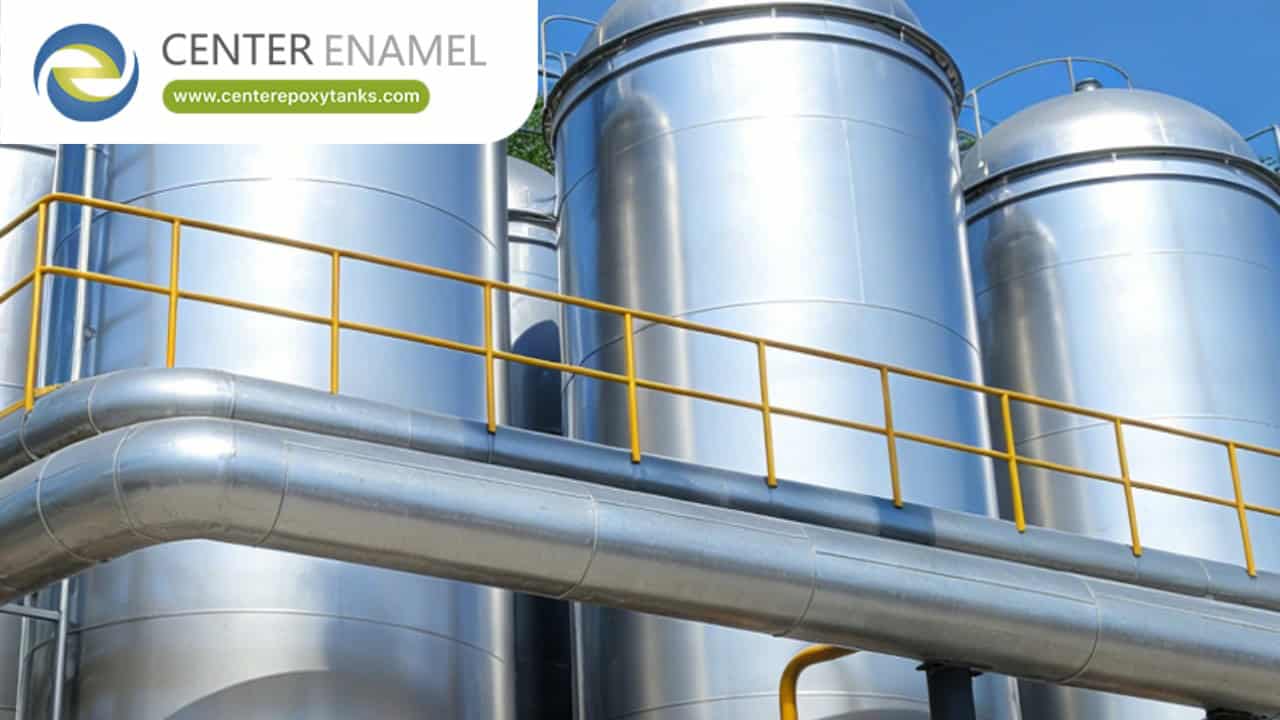
Stainless Steel Chemical Storage Tanks: An Engineering Guide
Stainless steel chemical storage tanks are the gold standard for industrial containment, offering an optimal balance of structural strength, chemical inertness, and long-term durability. Unlike plastic or carbon steel alternatives, stainless steel provides an inherent resistance to oxidation, making it the preferred choice for refineries, pharmaceutical facilities, and chemical processing plants.
However, the "stainless steel" label covers a wide range of alloys. Choosing the correct specification is a critical engineering decision that directly impacts facility safety and asset lifecycle.
Material Selection: The "Grade" Matters
The primary determinant of a tank’s success is the alloy grade. Chromium, nickel, and molybdenum are the key alloying elements that dictate how a tank will react to your specific media.
Grade | Composition Key | Corrosion Resistance | Best For |
304 | 18% Cr, 8% Ni | Good (General) | Food processing, non-aggressive chemicals |
316 | 16% Cr, 10% Ni, 2-3% Mo | Excellent | Marine environments, acidic chemical processing |
316L | 16% Cr, 10% Ni, 2-3% Mo, Low Carbon | Superior (After welding) | Critical chemical containment, high-purity systems |
Duplex 2205 | Higher Cr & Mo, N | Exceptional (SCC resistance) | High-pressure, aggressive chloride environments |
Why 316L is the Industry Standard
For chemical storage, 316L is frequently specified over standard 316. The "L" stands for "Low Carbon" (≤0.03%). This is crucial because, during the welding process, higher carbon content can lead to "sensitization"—the precipitation of chromium carbides at the grain boundaries, which significantly weakens corrosion resistance. By choosing 316L, you ensure the tank remains robust and leak-proof even in the heat-affected zones of the weld.
Engineering Design & Compliance
A high-quality tank is more than just a metal shell; it is a system designed to comply with rigorous international codes.
● API 650: The global benchmark for welded steel storage tanks. It governs shell thickness, bottom construction, and seismic/wind load requirements.
● ASME Standards: Often required for pressure vessels and high-purity process tanks to ensure structural integrity under fluctuating process conditions.
● Passivation: A post-fabrication chemical treatment that removes free iron from the surface and enhances the chromium-oxide protective layer. This is an essential step for chemical-grade tanks to prevent localized pitting.
● Weld Finishing: For chemical service, welds must be free of porosity, slag, and undercut. Mechanical polishing or electropolishing is often used to ensure the internal surface is non-porous and easy to sanitize.
Operational Safety & Maintenance
Even the most corrosion-resistant material requires a proactive maintenance strategy.
1. Chemical Compatibility Verification: Always cross-reference your specific chemical with a compatibility chart. For example, while 316L is excellent for nitric acid, it is generally not recommended for hydrochloric acid at any concentration.
2. Regular Inspection: Annual professional inspections should include ultrasonic thickness measurements to detect localized wall thinning (pitting) that might be invisible to the naked eye.
3. Venting and Pressure Relief: Chemicals can produce dangerous vapors. Ensure your tank is equipped with calibrated pressure relief valves (PRVs) and rupture discs to prevent over-pressurization during thermal swings or filling cycles.
4. Secondary Containment: Never rely on the tank alone. Regulatory compliance usually mandates an external containment area (bunding) capable of holding at least 110% of the tank's total capacity.
Frequently Asked Questions (FAQ)
Q: Why is molybdenum added to 316/316L stainless steel?
A: Molybdenum is the "secret ingredient" that provides enhanced resistance to pitting and crevice corrosion, particularly in environments containing chlorides (like salt or bleach) or acidic compounds.
Q: Can I use a 304 tank for acidic chemical storage?
A: Generally, no. Grade 304 is designed for general-purpose or food-grade storage. Acids tend to be aggressive, and 304 lacks the molybdenum content necessary to prevent rapid pitting and corrosion in acidic environments.
Q: What is the lifespan of a stainless steel chemical tank?
A: When properly specified (correct grade) and maintained, high-quality stainless steel tanks can provide a service life of 30 to 50 years or more, significantly outlasting plastic or fiberglass alternatives.
Q: How do I know if my tank requires passivation?
A: If your tank will hold reactive or aggressive chemicals, passivation is highly recommended. It artificially accelerates the formation of the chromium-oxide passive layer, ensuring the tank starts its service life with maximum possible corrosion resistance.


