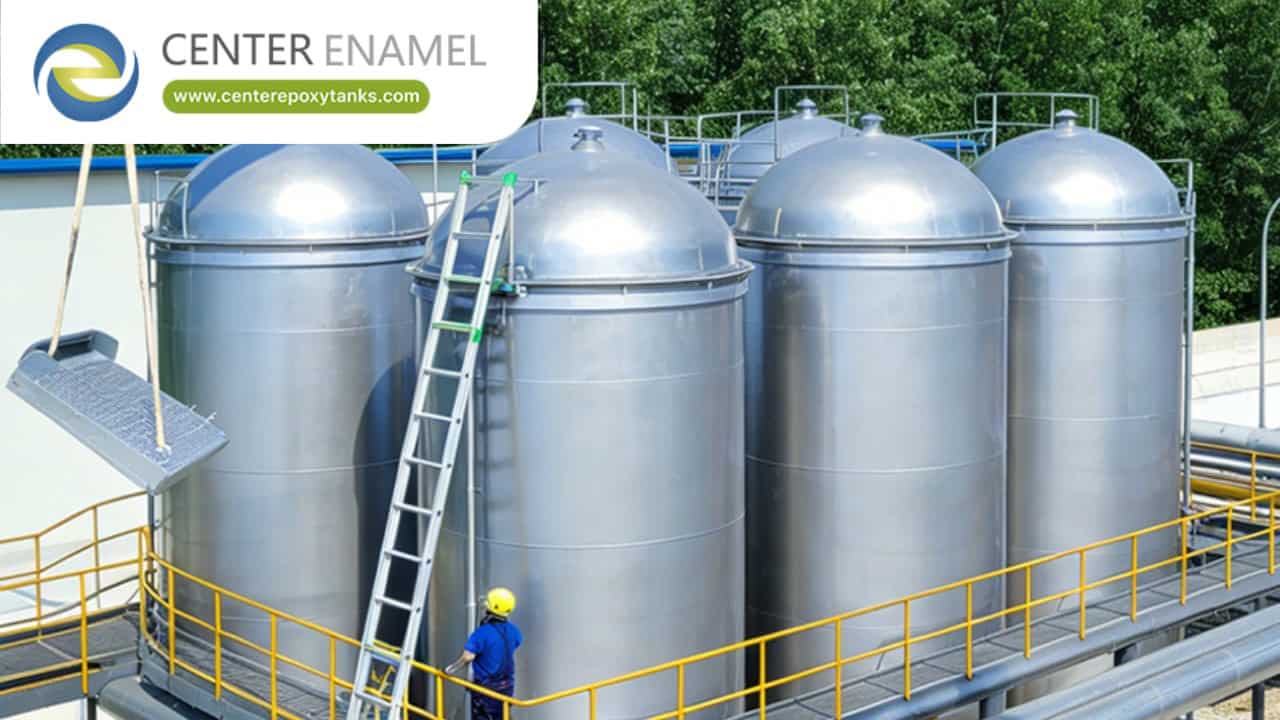
Industrial Chemical Tanks: The Different Types & Design Features
Industrial chemical storage tanks are the backbone of refinery, manufacturing, and wastewater treatment facilities. Selecting the appropriate vessel involves more than just calculating volume; it requires a deep understanding of chemical compatibility, structural integrity, and regulatory compliance to prevent environmental hazards and ensure operational longevity.
Common Types of Industrial Chemical Tanks
Chemical tanks are primarily categorized by their construction material and structural design. Each material offers distinct advantages depending on the media being stored and the environmental conditions.
1. Classification by Material
Material | Ideal Applications | Primary Advantages |
Stainless Steel (304/316L) | Solvents, high-purity chemicals, fuels | High strength, fire-resistant, hygienic, long lifespan. |
Fiberglass Reinforced Plastic (FRP) | Corrosive acids, alkalis, brine | Superior corrosion resistance, lightweight, cost-effective for large sizes. |
Polyethylene (HDPE/XLPE) | Mild acids, water, chemical reagents | Lightweight, non-reactive, cost-effective, excellent for small-to-medium volumes. |
Carbon Steel (w/ Liner) | Large-scale hydrocarbon storage | Economical for massive volumes; requires coating/lining for chemical service. |
2. Classification by Structural Design
● Vertical Cylindrical Tanks: The most common design for bulk storage, optimizing footprint for large-volume industrial applications.
● Horizontal Tanks: Often used for skid-mounted systems, transport, or facilities with limited vertical height clearance.
● Double-Walled (Bunded) Tanks: Features an inner primary tank and an outer secondary shell, providing an integrated containment solution that prevents environmental contamination if the primary wall is compromised.
Critical Design Features for Chemical Storage
Beyond the material selection, professional-grade industrial tanks must integrate specific design features to ensure safety and regulatory compliance.
Structural Standards (API 650 & API 620)
For large-scale welded steel storage, the API 650 standard is the gold standard for atmospheric-pressure tanks, while API 620 governs larger, low-pressure vessels. These standards dictate:
● Shell Thickness: Calculated based on the specific gravity of the media and the height of the liquid column.
● Seismic/Wind Loads: Engineering designs must account for site-specific environmental forces to prevent structural failure.
● Weld Integrity: Strict requirements for Non-Destructive Examination (NDE), such as ultrasonic or radiographic testing, are mandatory for high-hazard storage.
Operational Safety Features
● Secondary Containment: Regulations almost universally require "bunding" or dike walls capable of holding at least 110% of the tank’s capacity to prevent spills from reaching the soil or groundwater.
● Venting and Pressure Relief: Chemicals can produce vapors that create over-pressurization. Tanks must be equipped with Pressure/Vacuum Relief Valves (PVRV) or scrubbers to safely manage vapor volume.
● Corrosion Protection: For metallic tanks, cathodic protection or specialized epoxy/glass-flake linings are often used to mitigate the risk of internal corrosion or external oxidation.
Frequently Asked Questions (FAQ)
How do I select the right material for my chemical storage tank?
Selection depends on your specific media's chemical compatibility, operating temperature, and concentration. Always consult the Material Safety Data Sheet (SDS) for your chemical. If your chemical is highly corrosive (e.g., strong acids), FRP or specialized stainless steel (316L) is often preferred over carbon steel.
What is the advantage of a double-walled tank over a single-walled tank?
A double-walled tank provides an integrated secondary containment layer. If the inner tank develops a leak, the outer shell captures the chemical, preventing environmental contamination and often eliminating the need for a separate, expensive concrete containment dike.
Do all industrial chemical tanks need to be built to API 650 standards?
API 650 specifically applies to large, welded steel tanks. Smaller tanks or those made from plastics (FRP, HDPE) follow different standards (such as ASTM D3299 for FRP). Always ensure your tank design meets the standard appropriate for its size, material, and contents.
How often should chemical storage tanks be inspected?
Industrial standards typically require a visual inspection annually, with more detailed "out-of-service" inspections (per API 653) performed every 10 to 20 years depending on the tank's age, construction, and the corrosivity of the stored material.
Follow-up Question: Would you like to explore specific engineering standards for non-metallic tanks, such as FRP or HDPE, or are you focused on large-scale welded steel infrastructure?


