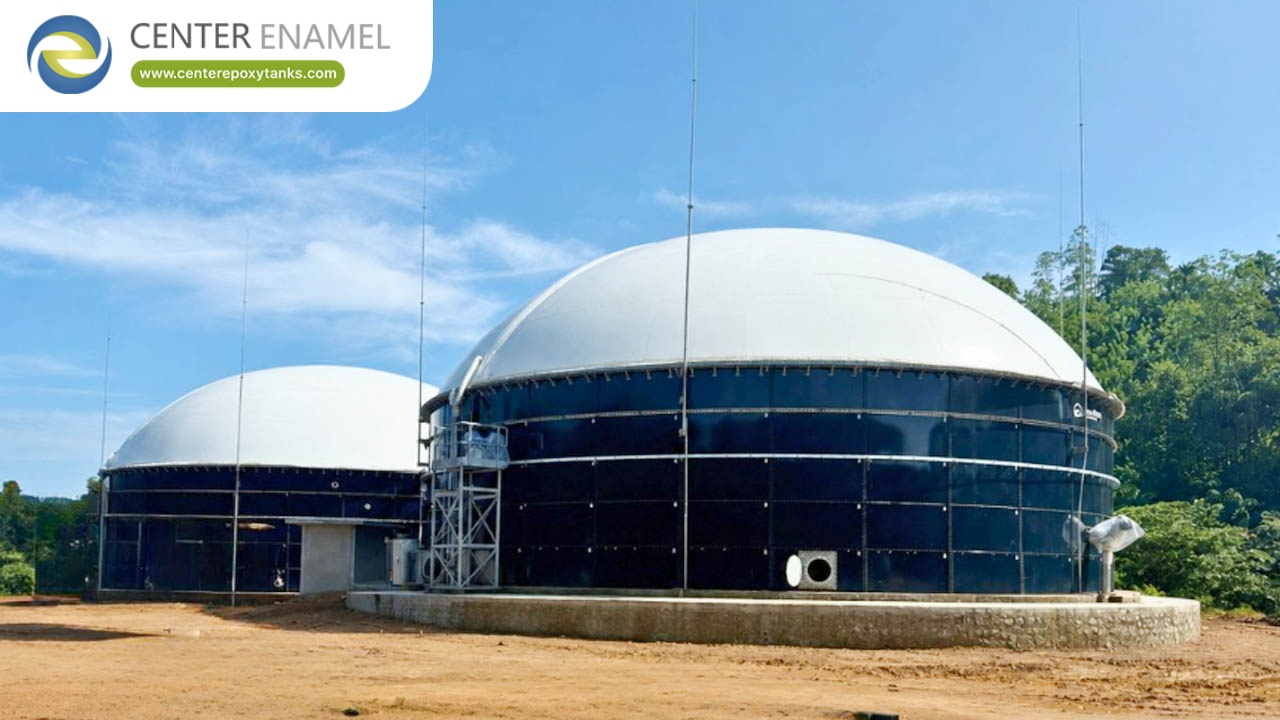
Single Membrane Roofs for Agricultural Biogas Projects: Engineering, Design, and Operational Advantages
As global agriculture shifts toward sustainable circular economies, farm-scale anaerobic digestion (AD) plants have become vital for converting livestock manure, energy crops, and organic agricultural waste into green energy and nutrient-rich digestate. At the structural cap of these digestion and storage systems lies the roof—a critical component responsible for environmental compliance, odor suppression, and weather protection. For agricultural facilities seeking a robust, economical, and dependable cover solution, the single membrane roof has emerged as a premier engineering choice.
Fabricated from high-grade, reinforced polymer materials (such as specially formulated PVC or FPP fabrics) engineered to withstand harsh weather, ultraviolet (UV) radiation, and corrosive biogas byproducts, single membrane roofs provide an efficient sealing solution. As a globally trusted leader in advanced liquid storage and containment infrastructure, Shijiazhuang Zhengzhong Technology Co., Ltd. (Center Enamel) delivers precision-engineered tank covers and membrane solutions designed to optimize agricultural biogas and waste storage operations worldwide.
Core Functions of Single Membrane Roofs in Agriculture
Unlike complex multi-layer gasholder domes or heavy concrete slabs, single membrane roofs fulfill specific, highly efficient operational mandates on modern farms:
Strict Odor and Emissions Containment: In many regions, environmental regulations require liquid manure and digestate storage tanks to be tightly covered. Single membrane systems prevent the escape of unpleasant odors and volatile emissions into surrounding rural communities.
Complete Precipitation and Runoff Elimination: By sealing the top of steel or concrete silos, membrane covers block rainwater and snow from diluting slurry or overloading downstream wastewater treatment and land-application capacities.
Support and Tension Architecture: Typically structured as cone-shaped configurations spanning between a central support mast (or column) and the perimeter of the tank wall, single membranes utilize specialized tensioning systems to maintain structural integrity under wind and snow loads.
Engineering Superiority: Material Resilience and Design Flexibility
Agricultural biogas environments are chemically aggressive, exposing structural elements to moisture, methane traces, ammonia, and hydrogen sulfide ($H_2S$). Single membrane engineering addresses these challenges through advanced material science:
High Chemical and UV Resistance: Premium thermoplastic fabrics feature specialized protective polymer coatings that resist degradation from intense sunlight and acidic biogas condensate.
Lightweight Structural Profile: Eliminating heavy beams or concrete formwork drastically reduces dead loads on the underlying tank walls (whether glass-fused-to-steel, welded steel, or concrete), lowering overall foundation costs.
Quick Fabrication and Installation: Factory-cut using automated CNC machinery and high-frequency welded to custom silo dimensions, single membrane covers allow rapid on-site installation by experienced technicians.
Data Table: Comparison of Biogas and Silo Roof Technologies
Technical Parameter | Single Membrane Roofs | Double Membrane Gas Holder Roofs | Rigid Concrete / Steel Fixed Roofs |
Primary Agricultural Function | Odor control, precipitation elimination, and non-pressurized storage / cover | Dual-purpose active biogas storage (variable volume) and weather shielding | Permanent structural enclosure for heavy industrial or high-load applications |
Gas Storage Capability | Non-gas-tight or low-pressure auxiliary options; primarily protective | High variable gas storage volume via permanently pressurized outer membrane | Zero variable gas storage; requires separate external gasholder units |
Weight & Wall Load Impact | Extremely lightweight; minimal stress on supporting silo walls | Lightweight membrane structure with low profile pressure on tank rims | High dead weight; requires robust structural wall and foundation design |
Installation Speed & Cost | Highly cost-effective; rapid shop pre-fabrication and fast site deployment | Moderate investment cost due to dual-membrane blower and control systems | Slow construction timeline involving formwork, pouring, or heavy crane erection |
Frequently Asked Questions (FAQ)
Q: What is a single membrane roof in agricultural biogas projects?
A: It is a high-strength, reinforced polymer membrane cover stretched across agricultural tanks (such as slurry, digestate, or water silos) to protect contents from rain, suppress odors, and comply with environmental regulations.
Q: Are single membrane roofs used for storing pressurized biogas?
A: Standard single membrane roofs are typically utilized for non-gas-tight or basic protective applications (like slurry and digestate storage) where active pressurized gas containment is not required. For dynamic high-volume gas storage, double membrane gasholders are specified.
Q: How do single membrane roofs withstand wind and snow loads?
A: They utilize engineered central support masts (columns) combined with robust perimeter tensioning hardware, high-tensile strapping, and slope designs that prevent water pooling and snow accumulation.
Q: What materials are used to manufacture agricultural membrane roofs?
A: They are typically constructed from high-durability, UV-stabilized PVC or FPP (flexible polypropylene) reinforced fabrics with specialized polymer coatings that offer high resistance to agricultural chemicals and tearing.


