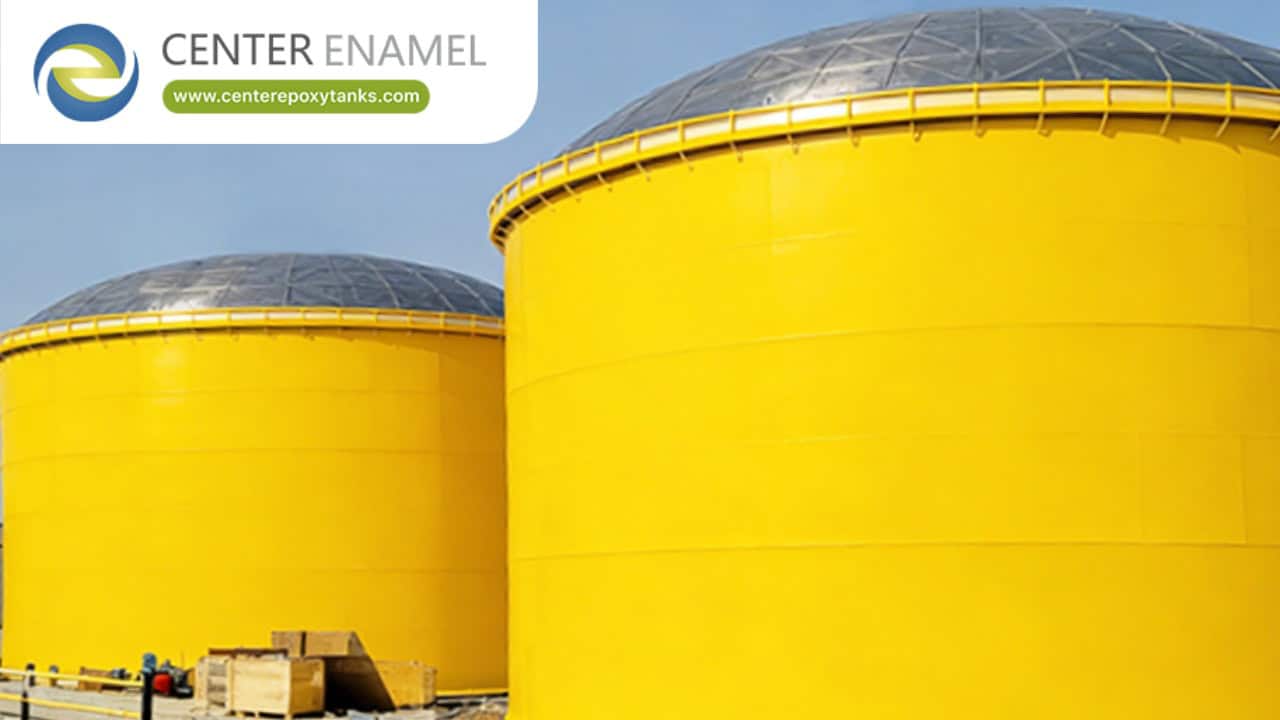
Robust Fuel Oil Storage Tanks - Built for Heavy Product, Heating and Long Campaigns
Fuel oil is stored to be burnt, and it is stored in quantity - which means the tank has to do two things reliably for years: keep the oil pumpable and keep water out of it. Heavy fuel oil is viscous, often heated, and prone to laying down sludge; water in the tank causes foaming, corrosion at the bottom and, in the worst case, a boil-over when hot oil is charged onto a water layer. Robustness here is about details, not plate thickness.
Engineered by Shijiazhuang Zhengzhong Technology Co., Ltd. (Center Enamel), robust fuel oil tanks are built to API 650 with heating, insulation, water exclusion and sediment management designed in from the start, so the tank stays operable across long campaigns rather than needing attention between them.
1. What Makes a Fuel Oil Tank Robust?
Correct shell design, heating that avoids local overheating, insulation that reduces cycling, water exclusion, and details that let the tank be inspected and cleaned. None of these are exotic; all of them are where cheap tanks are found wanting.
· Shell Design: Sized and detailed to API 650 for the product density and the site's wind and seismic loads.
· Heating Arrangement: Coils or heaters are sized and positioned so the oil is warmed evenly without local overheating.
· Insulation: Reduces heat loss and reduces the temperature cycling that drives breathing and condensation.
· Water Exclusion: Roofs, vents and seals are detailed to keep rainwater out of the tank.
· Inspection and Cleaning: Access is sized so the tank can be examined and cleaned on a realistic interval.
2. How Is Heavy Fuel Oil Kept Pumpable?
By heating it to the temperature the viscosity requires and conserving that heat. The tank's heating capacity, insulation and temperature control together determine whether the oil can be pumped when it is needed.
· Storage Temperature: Set from the oil's viscosity curve rather than from habit.
· Heating Capacity: Sized for heat-up from cold as well as for maintaining temperature.
· Even Heat Distribution: Coil layout avoids hot spots that degrade the oil and foul the surface.
· Insulation and Cladding: Conserves heat and protects the insulation from weather damage.
· Temperature Monitoring: Instrumentation confirms the oil is within its pumping range.
3. Why Does Water Matter So Much in Fuel Oil?
Because it causes foaming, promotes bottom corrosion, and creates a boil-over hazard when hot oil is charged onto a water layer. Keeping water out is cheaper and safer than dealing with it once it is in.
· Boil-Over Hazard: Water under hot oil can flash to steam violently - the reason water exclusion is treated as a safety measure.
· Foaming: Water in the oil causes foaming during heating and transfer.
· Bottom Corrosion: A water layer at the floor drives corrosion where it is hardest to see.
· Microbial Growth: Water-oil interfaces support microbial growth that produces sludge and acids.
· Routine Draw-Off: A water draw-off at the lowest point lets any water that does arrive be removed.
Evaluation Criterion | Purpose-Built Fuel Oil Tank | General Purpose Tank |
Heating provision | Sized from the viscosity curve | Often undersized or omitted |
Insulation | Specified and weather protected | Sometimes omitted |
Water exclusion and draw-off | Designed in | Left to operation |
Sludge and sediment access | Sized for the real cleaning interval | Standard access |
Temperature instrumentation | Provided | Sometimes absent |
Engineering Assurance and Project Support
Every welded oil tank delivered by Shijiazhuang Zhengzhong Technology Co., Ltd. (Center Enamel) is designed to API 650 with shell courses sized by the one-foot method and checked for wind, seismic and hydrostatic load cases, or to EN 14015 and the Eurocodes where the site is European. Shell plate is shot-blasted to Sa 2.5 and coated to a documented dry film thickness, longitudinal and annular plate welds are examined by radiography or ultrasonic testing to the acceptance level written into the purchase order, and every tank is hydrostatically tested and dimensionally surveyed before hand-over. Fuel oil tanks are supplied to API 650 with heating, insulation and cladding, water draw-off, sediment management, instrumentation and access, delivered with hydrostatic test and coating records.
"Robustness on a fuel oil tank is not thicker plate - it is heating you can rely on, insulation that lasts, and a water draw-off somebody actually uses."
Frequently Asked Questions (FAQ)
How hot should heavy fuel oil be stored?
At the temperature its viscosity curve requires for reliable pumping, plus a margin for transfer losses. That value comes from the oil's specification, not from habit, and it drives both the heating capacity - which must handle heat-up from cold - and the insulation. Temperature instrumentation then confirms the oil stays within its pumping range.
Why is water such a problem in fuel oil tanks?
Water causes foaming during heating, drives corrosion at the floor where it is hardest to see, and supports microbial growth that produces sludge and acids. Most seriously, hot oil charged onto a water layer can cause a boil-over, which is why water exclusion is treated as a safety measure and a draw-off at the lowest point is standard.
Does a fuel oil tank need a floating roof?
Usually not. Heavy fuel oil has low vapour pressure at storage temperature, so the vapour loss prevented is small and rarely justifies the deck and its maintenance. Distillate fuels such as diesel and gasoil are different and often do justify vapour control on larger tanks.
Can the tank be customised for our fuel?
Yes. Capacity and geometry, shell design, heating type and capacity, insulation and cladding, water draw-off and sump detail, sediment access, coating or alloy selection, instrumentation and venting are all engineered to your fuel specification and site conditions.


