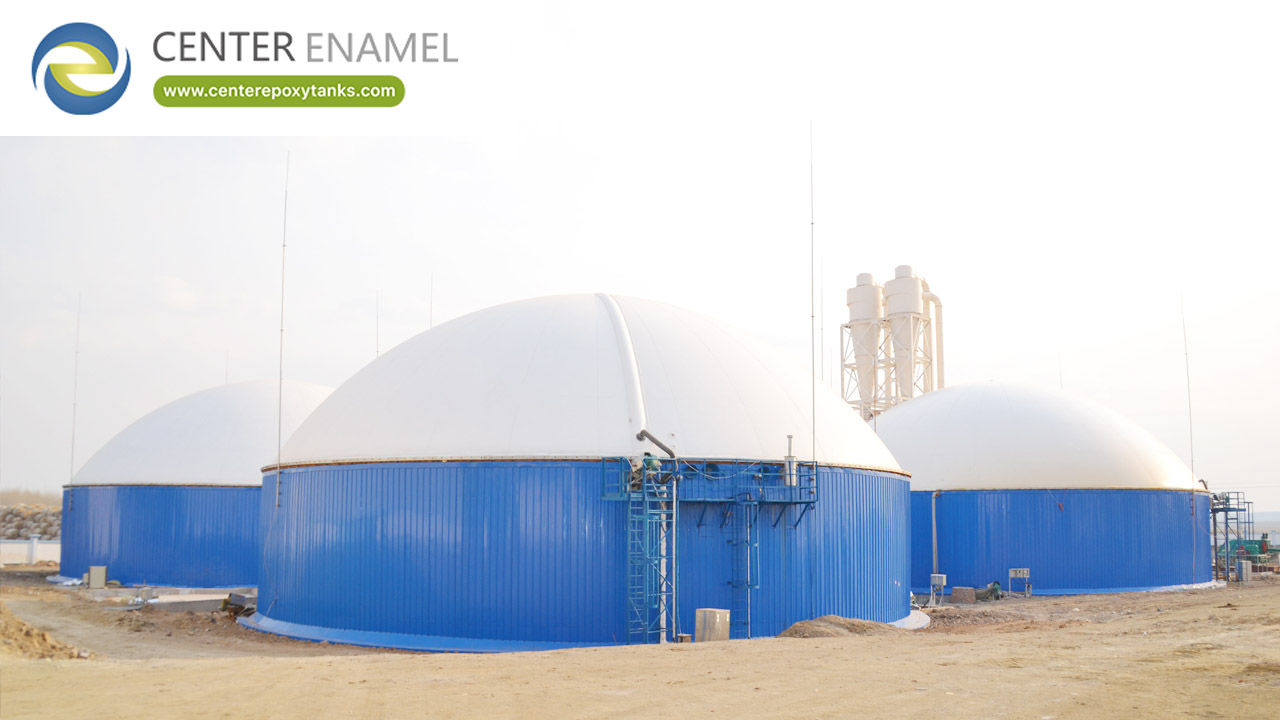
PVC Coated Gas Holder: Advanced Biogas Storage Engineering
A PVC coated gas holder is a high-performance, flexible containment system designed for the collection and storage of biogas produced during anaerobic digestion. Engineered with high-tenacity polyester base fabrics and specialized PVC/PVDF coatings, these gas holders offer superior methane impermeability (400 cm3/m2 .d .bar) and a 15-25 year service life. Center Enamel utilizes high-frequency (HF) welding and automated pressure-control blowers to ensure 100% airtight storage and consistent gas delivery for CHP (Combined Heat and Power) systems globally.
1. Technical Specification & Material Matrix
Feature | Technical Specification | Strategic Reliability Value |
Base Fabric | High-Tenacity Polyester (1100-1500 dtex) | Provides the structural "skeleton" for wind and snow loads. |
Coating Type | PVC with PVDF Top-Coat | Enhanced UV resistance and self-cleaning properties. |
Gas Permeability | 400cm3 / (m2 . 24h . 0.1MPa) | Minimizes CH4 loss and prevents localized odors. |
Flame Retardancy | B1 / M2 / DIN 4102-1 Standards | Critical for fire safety in volatile biogas zones. |
Tensile Strength | 4000/3500 N/5cm (Warp/Weft) | Resistant to tearing under high-pressure expansion. |
Temperature Range | -30°C to +70°C | Reliable performance in arctic and tropical climates. |
2. Structural Design: The Double-Membrane Advantage
Inner Membrane: Methane Containment
The inner membrane is the primary storage chamber. Because it is made of highly flexible PVC-coated fabric, it inflates and deflates dynamically based on the volume of gas produced. This Variable Volume design allows for constant pressure delivery to boilers or engines without the need for expensive high-pressure compression.
Outer Membrane: Atmospheric Shield
The outer membrane is kept permanently inflated by a low-wattage air blower. This creates a pressurized "buffer zone" that serves two critical functions:
● Structural Integrity: It maintains a constant dome shape, shedding rainwater and resisting wind speeds up to 150 km/h.
● Thermal Insulation: The air gap acts as an insulator, helping maintain the internal temperature of the digester, which is vital for microbial activity and consistent biogas yield.
3. Advanced Fabrication: High-Frequency (HF) Welding
Unlike hot-air welding, Center Enamel utilizes High-Frequency (HF) Welding. This process uses electromagnetic energy to agitate the molecules of the PVC coating, creating a fused bond that is mettalurgically stronger than the fabric itself.
● Zero Leakage: HF welding ensures a seamless, gas-tight joint at the molecular level.
● Durability: The seams are resistant to the chemical degradation caused by Hydrogen Sulfide (H2S) and moisture present in raw biogas.
4. Quality Assurance & Safety Protocols
● Pneumatic Pressure Testing: Every gas holder undergoes a 24-hour pressure test to verify the integrity of the HF-welded seams.
● Safety Valve Integration: Systems include a water-seal or mechanical PVRV (Pressure Vacuum Relief Valve) to prevent over-inflation during high-production peaks.
● Gas Detection Sensors: Integrated methane sensors monitor the inter-membrane space to provide early warning of any inner-membrane breaches.
5. Technical FAQ: PVC Gas Holder Performance
Q: Does the PVC coating degrade under UV exposure?
A: Standard PVC can degrade, but Center Enamel uses a PVDF (Polyvinylidene Fluoride) lacquer on the outer surface. This provides a "self-cleaning" effect and blocks UV radiation, extending the membrane's life significantly.
Q: Can these gas holders be installed on existing concrete tanks?
A: Yes. We provide specialized Stainless Steel Anchor Plates and sealing gaskets to mount PVC gas holders onto concrete ring-walls or independent concrete bases.
Q: How does the system handle extreme snow loads?
A: The pressurized outer membrane is engineered to maintain its shape under calculated snow loads. For extreme climates, we increase the air pressure in the inter-membrane space to ensure snow sheds off the dome effectively.


