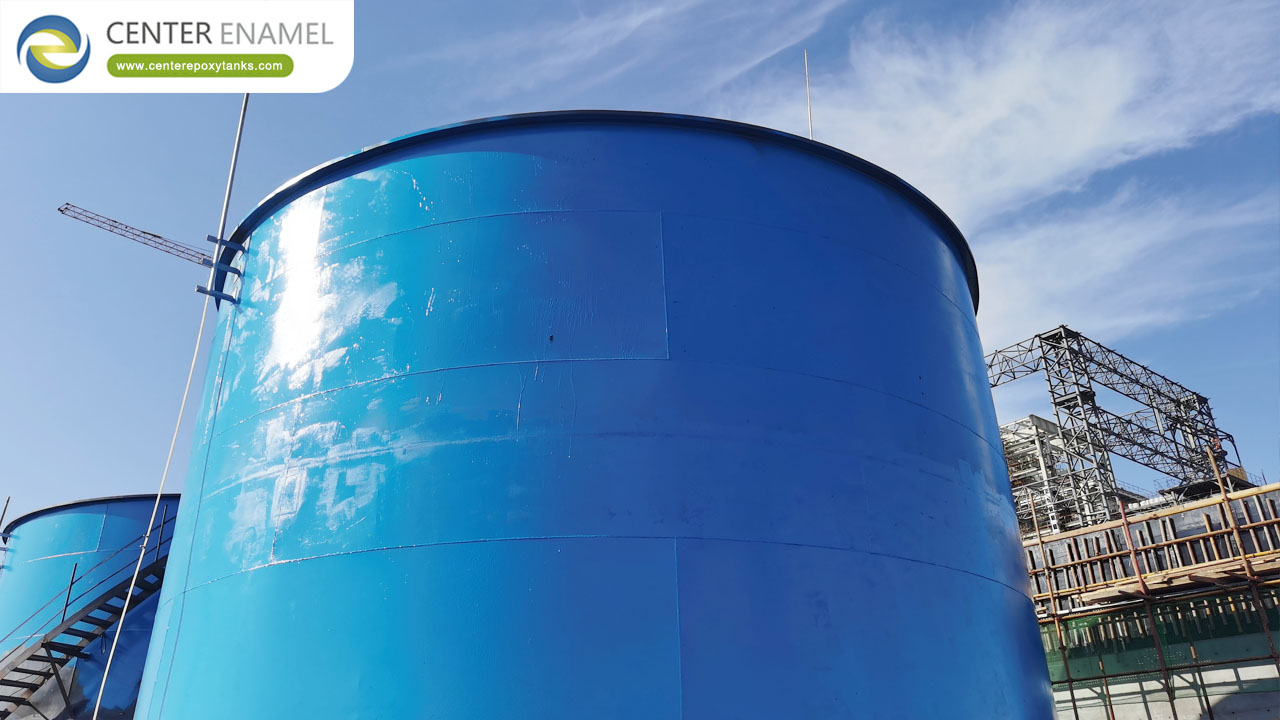
Protective Coatings on Welded Steel Storage Tanks: Engineering for Longevity
Why are protective coatings critical for welded steel tanks? Welded steel storage tanks are the backbone of global industrial infrastructure, but they are inherently vulnerable to oxidation and chemical attack. Without high-performance Protective Coatings, the interaction between the steel substrate and stored media (such as corrosive wastewater, crude oil, or acidic chemicals) leads to rapid structural thinning and catastrophic failure. Modern coating technology, particularly Fusion Bonded Epoxy (FBE), provides a monolithic barrier that extends the service life of welded assets by over 30 years.
1. The Science of Corrosion Protection in Welded Tanks
Corrosion in welded tanks often begins at the "Heat Affected Zone" (HAZ) near the welds, where the steel's molecular structure has been altered. Protective coatings function through three primary mechanisms:
● Barrier Protection: Preventing water, oxygen, and electrolytes from reaching the steel surface.
● Inhibitive Protection: Using pigments within the coating to interfere with the corrosion chemistry.
● Sacrificial (Galvanic) Protection: Utilizing zinc-rich primers that corrode preferentially to protect the underlying steel.
2. Types of High-Performance Coatings
As a leading China storage tank manufacturer, Center Enamel specializes in coatings that meet ISO 12944 (Corrosion Protection of Steel Structures) and AWWA standards:
Fusion Bonded Epoxy (FBE)
FBE is a thermoset polymer coating applied in a factory-controlled environment. It is the gold standard for Slaughterhouse Wastewater Tanks and Winemaking Effluent due to its extreme chemical resistance.
● The Process: Steel panels are preheated and epoxy powder is electrostatically applied, melting and molecularly fusing to the steel.
● Benefit: Provides a non-porous finish with superior adhesion that cannot be achieved with field-applied paints.
Zinc-Rich Epoxy Primers
Often used as a base layer for welded tanks in coastal or high-humidity environments. The zinc provides cathodic protection, preventing "creep" if the topcoat is mechanically damaged.
Polyurethane Topcoats
Typically applied to the tank exterior, polyurethane provides excellent UV resistance, ensuring the tank maintains its aesthetic finish and structural integrity under intense solar exposure.
3. Factory-Applied vs. Field-Applied Coatings
One of the most critical decisions in tank procurement is where the coating is applied.
Feature | Factory-Applied (Center Enamel) | Field-Applied (Traditional) |
Surface Prep | Automated grit blasting to SSPC-SP10. | Manual blasting; subject to humidity/dust. |
Curing Environment | Temperature and humidity controlled. | Subject to weather, wind, and rain. |
Inspection | 1500V High-Voltage Spark Testing. | Visual inspection or low-voltage testing. |
Quality Consistency | 100% uniform thickness. | Variable thickness; prone to human error. |
4. Maintenance and Total Cost of Ownership (TCO)
Selecting a high-tier protective coating on a Welded Steel Storage Tank significantly reduces the TCO.
● Reduced Downtime: High-durability coatings like FBE eliminate the need for sandblasting and repainting every 5–10 years.
● Leak Prevention: By preventing "pitting" corrosion at the weld seams, coatings mitigate the risk of environmental fines and costly liquid loss.
● Asset Resale: Tanks with verified coating integrity maintain a higher asset value over their operational lifecycle.
5. Why Choose Center Enamel for Coated Tank Solutions?
With a 150,000 m² automated facility and a history of innovation since 2008, Shijiazhuang Zhengzhong Technology Co., Ltd (Center Enamel) is a global authority in coating science.
● Advanced R&D: Our team holds nearly 200 patents in enameling and coating technology.
● Global Compliance: Our coated solutions are certified to NSF/ANSI 61, ISO 28765, and FM Global.
● Integrated Engineering: We ensure the coating is perfectly matched to the specific chemistry of your stored media, from high-BOD organic waste to volatile hydrocarbons.


