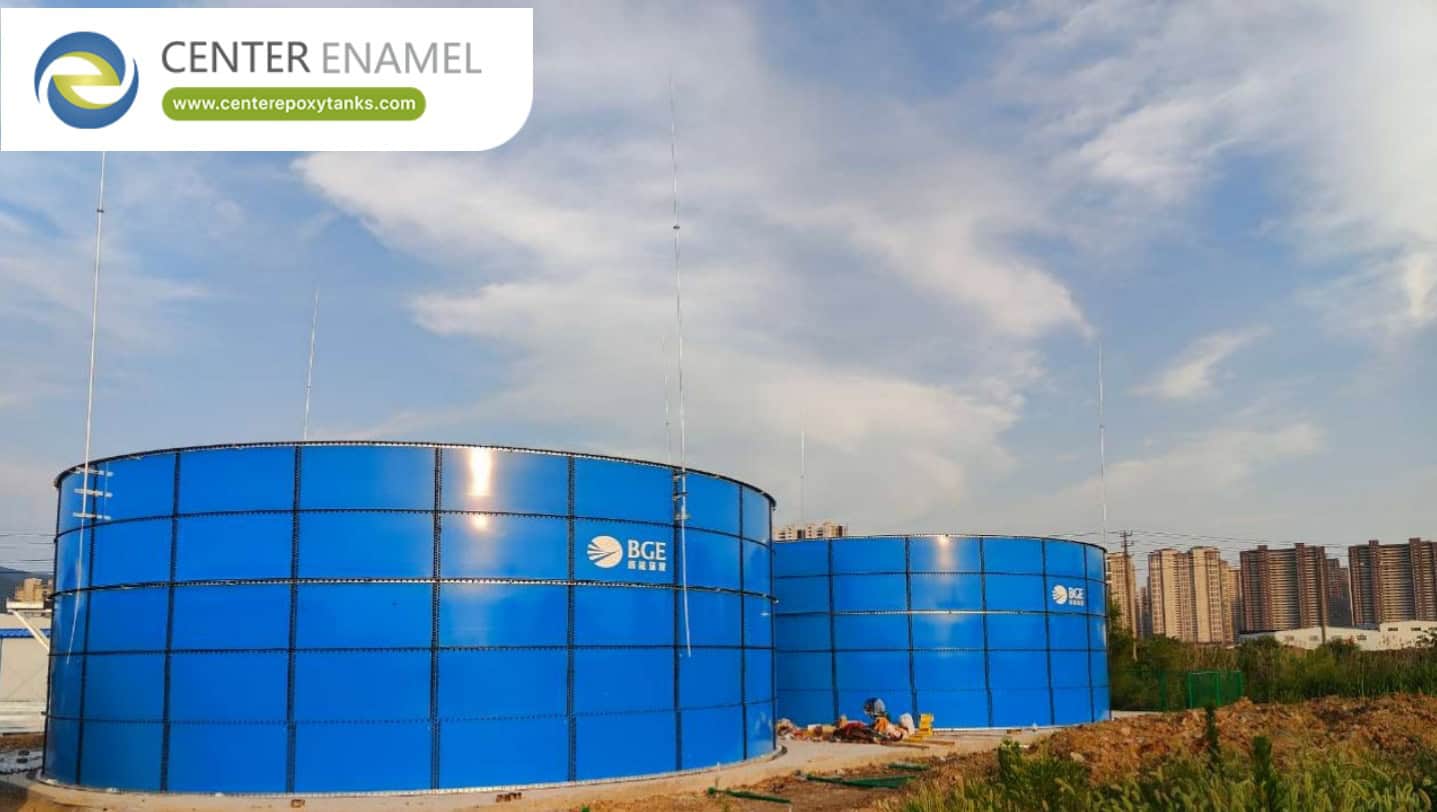
Epoxy Coated & GFS Steel Tank Installation: Technical Execution Guide
Professional installation of epoxy-coated and Glass-Fused-to-Steel (GFS) tanks follows a modular, bottom-up assembly process. Key phases include: 1) Site Foundation Preparation (ensuring precise load-bearing and leveling); 2) Modular Panel Erection (using specialized jacks to assemble rings at ground level); 3) Precision Bolting & Sealing (utilizing torque-specific fasteners and industrial-grade gaskets/sealants to ensure gas/liquid-tight integrity); and 4) Post-Installation Testing (including vacuum-box testing for seams and holiday detection for coating integrity). Proper execution requires strict adherence to manufacturer specifications to prevent galvanic corrosion and ensure a multi-decade service life.
1. Pre-Installation: Site & Component Logistics
Before the first panel is lifted, the "Source of Truth" document—the structural drawing—must be verified against site conditions.
Foundation Verification: Concrete pads must be cured, level (within tolerances of $pm 3text{mm}$ across the diameter), and free of debris.
Inventory Synchronization: Every crate must be cross-referenced against the packing list on Day 1. Discovering a missing bolt or panel mid-assembly is the primary cause of project delays and increased labor costs.
Dewatering Protocols: In high-water-table areas, ensure continuous pumping. The tank must never "float" or shift before it is fully anchored to the foundation.
2. The Modular Assembly Process
Modern bolted tanks utilize a top-down or ring-by-ring assembly method, which prioritizes safety by keeping the majority of the work at chest height.
The First Ring: Positioning the bottom ring on the foundation is the most critical step. The angle/base rail must be perfectly concentric and sealed to the concrete using specialized water-swelling rubber strips or high-grade sealants.
Hydraulic Jacking: For large tanks, the roof and top ring are assembled first at ground level. Hydraulic jacks then lift the structure, allowing the next ring to be bolted underneath. This eliminates the need for extensive scaffolding.
Panel Overlap & Sealing: Panels must be overlapped in the specific sequence defined by the manual. Between every interface, high-performance sealant is applied. The sealant must be squeezed out during bolt-tightening to form a perfect "fillet," ensuring a continuous barrier against leakage.
3. Bolting and Sealant Integrity
The connection system is the "weak link" in any bolted tank project. Improper torque is the leading cause of premature failure.
Torque Specification: Bolts must be tightened to the manufacturer's precise torque range (e.g., 50–70 Nm). Under-tightening leads to leaks; over-tightening can crack the epoxy or enamel coating, exposing the steel to corrosion.
Curing Periods: Do not rush the testing phase. Sealants require a mandatory cure period (typically 7 days, depending on ambient humidity) before the tank can be filled with test media.
Comparative Installation Matrix
Phase | Bolted Epoxy/GFS Tank | Welded Steel Tank |
Construction Speed | High (Modular/Jacking) | Low (Site Welding) |
Labor Requirement | Specialized Technicians | Certified Welders |
Integrity Testing | Torque Check & Holiday Test | NDT (Radiographic/Ultrasonic) |
Weather Impact | Low | High (Wind/Rain affects welds) |
Reliability | Consistent (Factory-Made) | Variable (Field-Dependent) |
Critical Quality Control (QC) Checklist
Holiday Testing: Use a pinhole detector on all panels after assembly to ensure that no micro-scratches occurred during transport or installation.
Vacuum Box Testing: Essential for checking seam seals. A vacuum box is placed over joints to identify leaks before the tank is filled.
Anode Check: If the tank includes cathodic protection, verify that sacrificial anodes are correctly installed and connected to prevent galvanic corrosion at the base.
Peripheral Seal: Ensure the external base seal is uniform, preventing moisture from wicking into the foundation/tank interface.
Expert Insight: Preventing Common Failures
Most "installation failures" are actually "maintenance precursors." For instance, failing to clear the tank interior of metal shavings from bolt-drilling results in rust spots on the floor plates within the first year.
The Rule of Cleanliness: Always sweep the tank floor before final roof closure.
The Rule of Curing: Never initiate hydraulic testing until the sealant has reached 100% cure (consult technical data sheets for specific curing curves based on regional temperature).
Consult an Installation Expert
Installation is not just assembly; it is the final act of quality control. Whether you are executing a greenfield project or retrofitting an existing site, utilizing a certified installation team is the single most effective way to protect your infrastructure investment.
Are you currently preparing for an epoxy-coated tank installation or a site-erection project?
[Contact our engineering team] to request our comprehensive Assembly & QC Manual, or to discuss the logistics of your upcoming site.
Would you like a technical breakdown of the specific sealant types recommended for aggressive industrial chemical storage versus standard potable water tanks?


