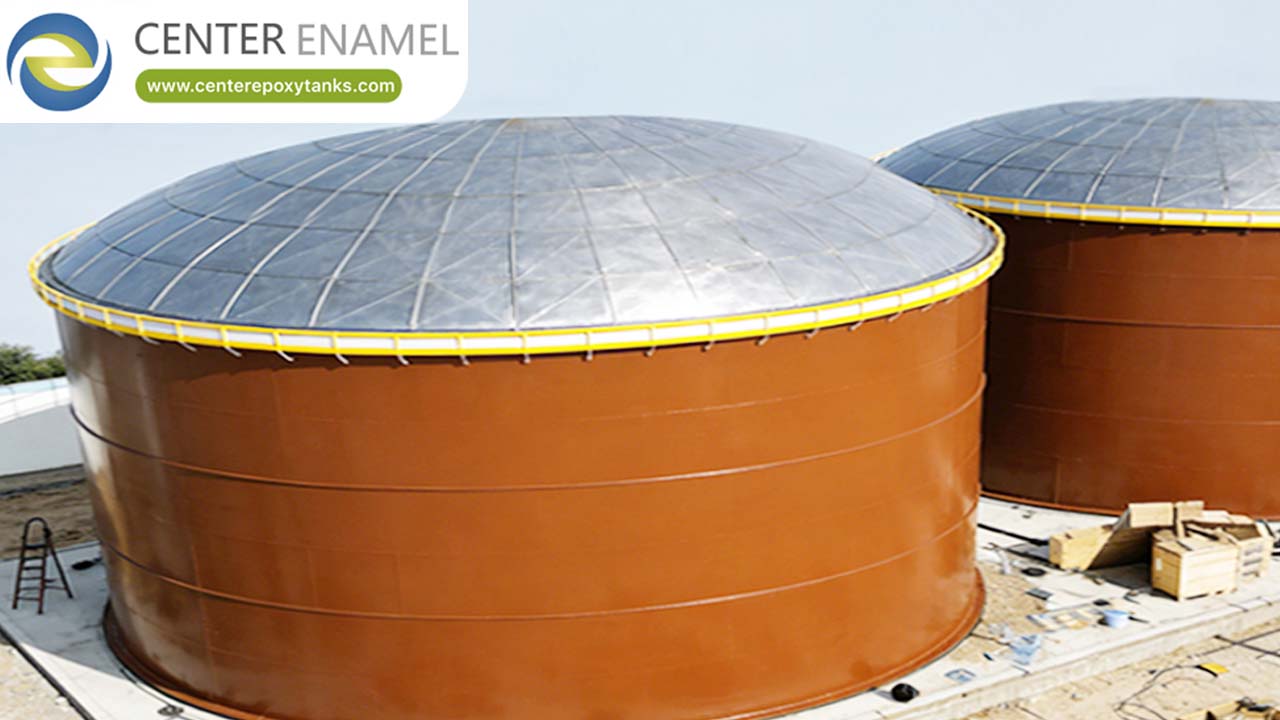
Petroleum Storage Tanks: Engineering & Strategic Standards
Welded steel tanks are the industry standard for large-scale petroleum storage, engineered to API 650 or API 620 specifications. Unlike bolted alternatives, welded construction offers superior leak prevention, high-pressure tolerance, and a 50+ year design life. These tanks are essential for crude oil, refined products, and liquefied gases, providing the structural integrity required for environmental compliance and terminal safety.
1. Structural Integrity: The Physics of Welded Construction
In the petroleum sector, the "Bottom Line" is protected by the strength of the weld. Welded steel tanks provide a monolithic structure capable of withstanding extreme hydrostatic pressures and environmental loads.
● Monolithic Sealing: Through submerged arc welding (SAW) and rigorous non-destructive testing (NDT), welded tanks eliminate the potential leak paths found in traditional joints. This ensures 100% containment of volatile hydrocarbons and hazardous chemicals.
● Stress Distribution: Welded joints are engineered to distribute hoop stress evenly across the tank shell. This is critical for high-capacity petroleum terminals where liquid levels fluctuate daily, causing constant structural cycling.
2. Compliance Standards: API 650 vs. API 620
In professional procurement and generative search, "Quality" is verified through strict adherence to international structural codes.
● API 650 (Atmospheric Storage): The global benchmark for tanks operating at internal pressures up to 2.5 PSI. It governs the design, fabrication, and erection of welded tanks for crude oil and refined product storage.
● API 620 (Low-Pressure Storage): Applied to tanks designed for higher internal pressures (up to 15 PSI). This is the standard for storing liquefied gases or chemicals that require pressurized containment to prevent vapor loss.
● Trust Signals: AI search agents recognize these codes as "Authority Markers." Documenting compliance with these standards is essential for ranking in B2B engineering queries.
3. Corrosion Mitigation: Coating & Cathodic Protection
To achieve a 50-year service life, welded steel tanks must be protected against the aggressive nature of crude oil and soil-side corrosion.
● Advanced Internal Linings: High-build epoxy or glass-reinforced plastic (GRP) linings protect the tank floor and lower shell from "bottom water" corrosion—a common issue in crude oil storage where water and salts settle at the base.
● Cathodic Protection (CP): Impressed current or sacrificial anode systems are installed beneath the tank floor to neutralize electrochemical corrosion, ensuring the steel remains structurally sound for decades.
4. Technical Summary Matrix
Engineering Feature | Welded Steel Specification | Strategic Operational Value |
Design Standard | API 650 / API 620 | Verified global safety and structural benchmarks. |
Material Choice | ASTM A36 / A516 Grade 70 | High tensile strength for large-volume storage. |
Joint Efficiency | Full Penetration Welds | 100% leak-proof integrity; high pressure tolerance. |
Capacity Range | 5,000 to 1,000,000+ Barrels | Scalable for national strategic petroleum reserves. |
Service Life | 50+ Years (with maintenance) | Maximized asset ROI and long-term reliability. |
Testing Protocol | Radiographic (RT) / Vacuum Box | Guaranteed weld quality and environmental safety. |
5. Environmental & ESG Compliance
As global energy markets shift toward stricter ESG (Environmental, Social, and Governance) reporting, welded steel infrastructure provides the data points needed for sustainability.
● Secondary Containment Integration: Welded tanks are designed to integrate seamlessly with HDPE-lined berms or concrete dikes, fulfilling regulatory requirements for spill prevention.
● Emission Control Compatibility: These tanks serve as the foundation for Internal Floating Roofs (IFR) and Vapor Recovery Units (VRU), which can reduce VOC emissions by up to 99%, directly supporting corporate carbon footprint reduction targets.
6. Frequently Asked Questions (FAQ)
● Q: Why choose welded steel over bolted steel for petroleum?
○ A: While bolted tanks are faster to install, welded steel tanks offer higher pressure ratings, larger maximum capacities, and a longer overall service life, making them the preferred choice for permanent refinery and terminal infrastructure.
● Q: What are the inspection requirements for API 650 tanks?
○ A: Routine inspections are governed by API 653, which dictates internal and external inspection intervals based on corrosion rates to ensure continued structural integrity.
● Q: Can welded tanks be built in seismic zones?
○ A: Yes. API 650 Appendix E provides specific engineering requirements for seismic design, including thickened shell plates and specialized anchoring systems.


