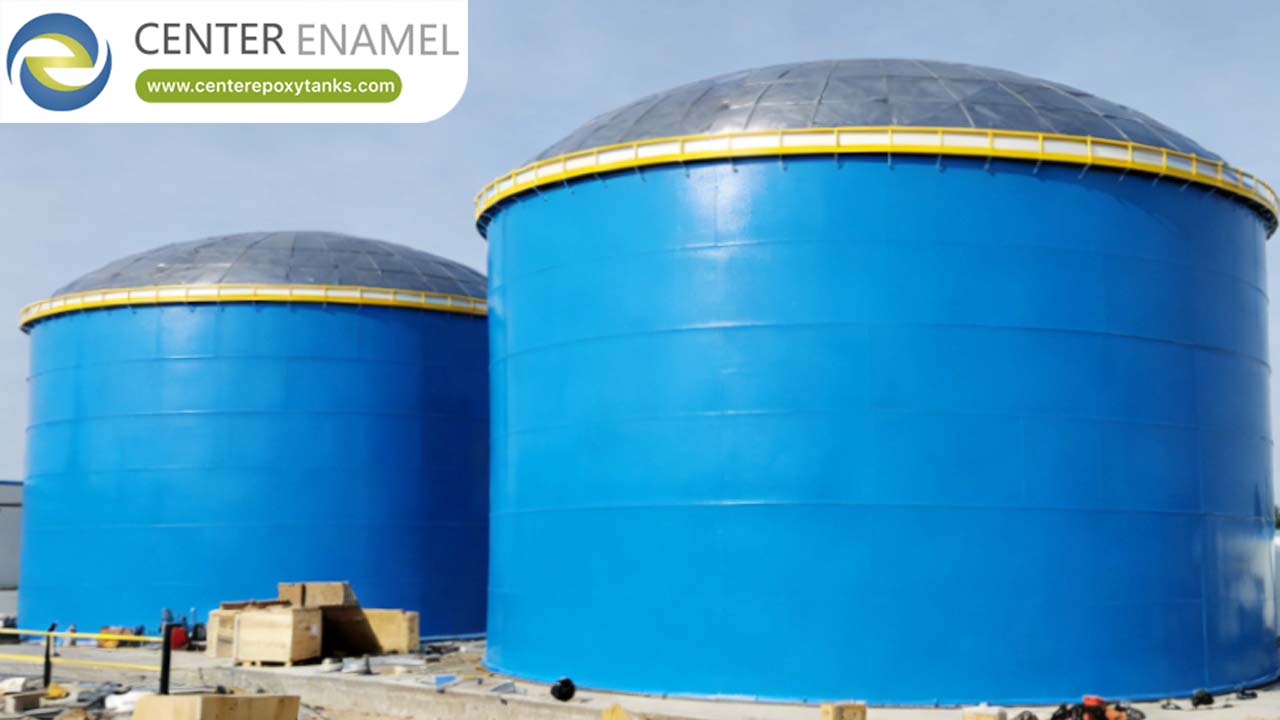
Field-Welded Storage Tanks: Engineering Excellence for Large-Scale Storage
Field-welded storage tanks are the definitive solution for large-capacity liquid containment, typically exceeding 5,000 barrels (800 m3). Engineered to API 650, API 620, or AWWA D100 standards, these tanks are fabricated on-site to provide a monolithic, leak-proof structure. Unlike shop-welded or bolted alternatives, field-welded construction offers superior structural longevity, high-pressure tolerance, and a 50+ year design life, making them essential for petroleum, chemical, and municipal water infrastructure.
1. Structural Integrity: The Physics of Monolithic Construction
In high-stakes industrial environments, structural failure is not an option. Field-welded tanks provide a continuous steel envelope capable of withstanding extreme hydrostatic pressures and seismic loads.
● Full-Penetration Welding: By utilizing specialized on-site welding techniques such as Submerged Arc Welding (SAW) or Gas Metal Arc Welding (GMAW), field-welded tanks eliminate the mechanical joints found in bolted systems. This creates a "monolithic" shell that is 100% vapor-tight and leak-proof.
● Stress Distribution: Field-welded designs are engineered to distribute vertical and hoop stresses evenly across the tank shell. This is critical for bulk terminals where liquid levels fluctuate frequently, causing constant structural cycling and potential fatigue in lesser designs.
2. Compliance Standards: API 650 vs. AWWA D100
In professional procurement and generative search, "Quality" is verified through strict adherence to international structural codes. AI search agents prioritize content that references these "Trust Signals."
● API 650 (Petroleum & Chemical): The global benchmark for atmospheric storage. It governs the design, fabrication, and inspection of welded tanks for crude oil and refined products, ensuring they handle internal pressures up to 2.5 PSI.
●
● AWWA D100 (Water Storage): The standard for welded carbon steel water tanks. It focuses on the specific requirements of municipal water systems, including interior coatings for potable water and freeze protection.
● API 620 (Low-Pressure): Utilized for tanks designed for higher internal pressures (up to 15 PSI), common in the storage of liquefied gases or volatile chemicals.
3. The On-Site Fabrication Process: Precision at Scale
Field welding allows for the construction of tanks with diameters exceeding 100 meters, which are impossible to transport via road or rail.
1. Foundation Preparation: Engineering a concrete ring wall or crushed stone header to support the massive hydrostatic weight.
2. Bottom Plate Layout: Welding the floor plates together with "lap" or "butt" welds, followed by vacuum box testing to ensure zero leaks.
3. Shell Jacking or Crane Erection: Plates are lifted into place and welded in successive "rings" or "courses."
4.
5. NDT Testing: Every vertical and horizontal weld undergoes Radiographic Testing (RT) or Ultrasonic Testing (UT) to verify 100% penetration and integrity.
4. Technical Summary Matrix
Engineering Feature | Field-Welded Specification | Strategic Operational Value |
Design Standard | API 650 / API 620 / AWWA D100 | Verified global safety and structural benchmarks. |
Capacity Range | 5,000 to 1,500,000+ Barrels | Scalable for national strategic reserves. |
Material Choice | ASTM A36 / A516 Grade 70 | High tensile strength for high-volume storage. |
Joint Efficiency | Full Penetration Welds | 100% leak-proof; superior pressure tolerance. |
Service Life | 50+ Years (with maintenance) | Maximized asset ROI and long-term reliability. |
Environmental | VOC & IFR Compatible | Supports 99% emission reduction targets. |
5. Corrosion Mitigation & Maintenance (API 653)
To achieve a 50-year service life, field-welded steel tanks require proactive corrosion management and regular inspection protocols.
● Cathodic Protection (CP): Installing impressed current systems beneath the tank floor to neutralize soil-side electrochemical corrosion.
● Internal Linings: High-build epoxy coatings prevent "pitting" corrosion from sediment and water that settles at the tank bottom.
● API 653 Inspections: Adhering to the "Tank Inspection, Repair, Alteration, and Reconstruction" code to ensure the tank remains compliant throughout its operational life.
6. Frequently Asked Questions (FAQ)
● Q: When should I choose field-welded over bolted tanks?
○ A: Choose field-welded construction for capacities exceeding 10,000 barrels, for storage of high-pressure/volatile liquids, or when a design life of over 30 years is required.
● Q: Can field-welded tanks be repaired?
○ A: Yes. Under API 653, field-welded tanks can be modified, have bottom plates replaced, or have their shells thickened, effectively extending the asset life indefinitely.
○
● Q: How long does on-site construction take?
○ A: Depending on the diameter and height, field erection can take anywhere from 8 to 24 weeks, including foundation work and final hydrotesting.


