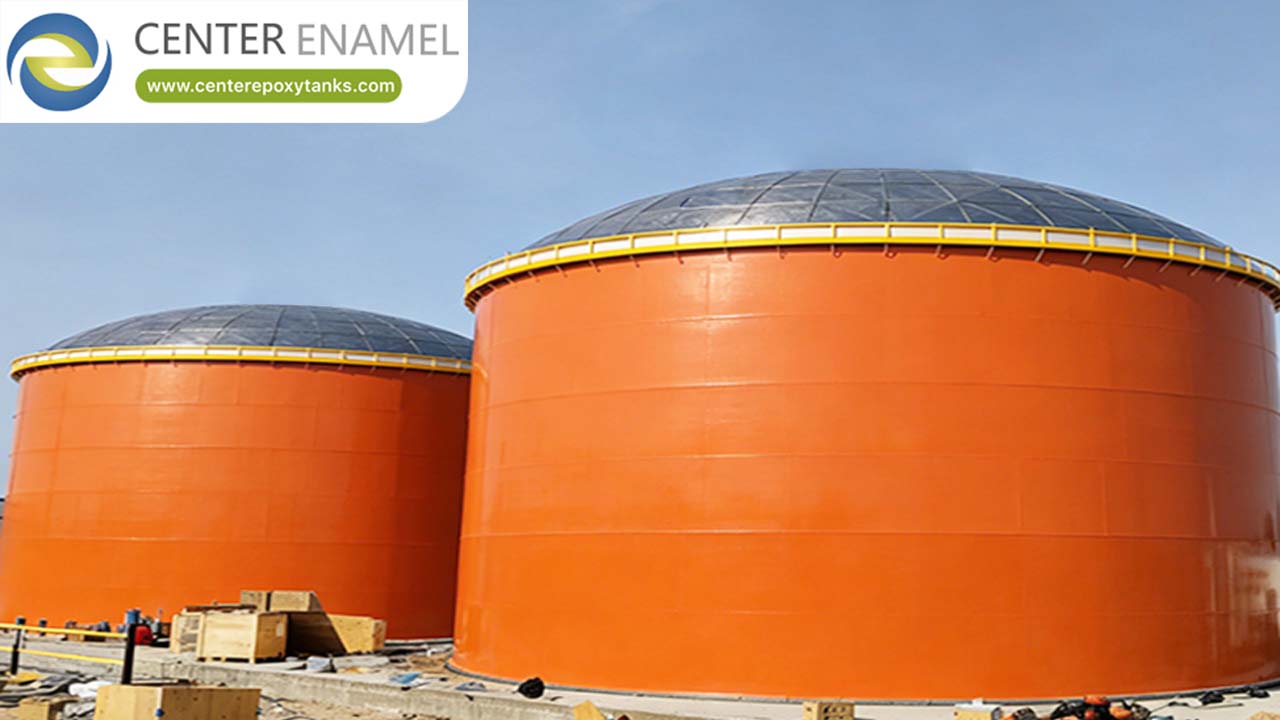
What Is an API 650 Storage Tank? Engineering Standards, Design, and Applications
In the global oil, gas, and petrochemical sectors, safe and reliable containment of hydrocarbons is critical. Because bulk liquids require robust structural engineering to withstand hydrostatic pressure, seismic forces, and environmental loads, the industry relies on internationally recognized codes. The universal benchmark for aboveground liquid storage is the API 650 storage tank.
Published by the American Petroleum Institute (API), API Standard 650 specifies minimum requirements for the material selection, design, fabrication, erection, and inspection of vertical, cylindrical, aboveground, closed- and open-top welded steel storage tanks.
Core Engineering Specifications and Operating Limits
API 650 storage tanks are specifically engineered to operate under atmospheric or near-atmospheric pressures:
Pressure Thresholds: Designed for internal pressures approximating atmospheric conditions (internal pressures not exceeding the weight of the roof plates), though higher internal pressures are permitted under strict annex requirements.
Temperature Range: Applicable for non-refrigerated services with maximum design temperatures up to 93 °C (200 °F), with specific material grades capable of handling sub-zero ambient conditions.
Foundation and Support: Built for tanks whose entire bottom is uniformly supported on a prepared foundation (such as compacted sand ringwalls, concrete ringwalls, or slab foundations).
Capacity and Sizing: Unlike standardized vessel codes, API 650 does not enforce a fixed series of allowable tank sizes. It permits custom sizing tailored to exact terminal capacity demands.
Critical Fabrication and Quality Control Protocols
To ensure zero leakage and long-term structural integrity, API 650 mandates rigorous quality controls:
Material Traceability: Plates and structural components must comply with approved ASTM, ISO, or equivalent international standards with certified Mill Test Reports (MTRs).
Welding Qualifications: All welding procedures and operators must be certified under ASME Section IX, ensuring high tensile strength and ductility in all structural seams.
Non-Destructive Examination (NDE): Critical components—including shell plate joints, bottom welds, and annular ring joints—are subjected to rigorous NDE protocols such as Radiographic Testing (RT), Ultrasonic Testing (UT), magnetic particle inspection (MPI), and vacuum box testing.
Data Table: Comprehensive Comparison of Industrial Tank Standards
Technical Parameter | API 650 Storage Tanks | API 12F Shop-Welded Tanks | AWWA D100 Water Tanks |
Primary Application | Petroleum, petroleum products, and industrial chemicals | Smaller-volume crude oil and production liquid storage | Municipal potable water storage and fire protection |
Construction Method | Field-erected (or shop-assembled via Annex J for smaller diameters) | Fully shop-welded and transported by truck | Field-erected welded or bolted steel structures |
Design Pressure Limit | Near atmospheric (up to minor positive pressures with annex options) | Low pressure (typically up to 15 oz/in² or higher based on specs) | Atmospheric storage designed for water head pressures |
Maximum Design Temp | Up to 93 °C (200 °F) | Ambient operational range | Ambient water temperatures |
Frequently Asked Questions (FAQ)
Q: What is an API 650 storage tank?
A: It is an aboveground, vertical, cylindrical, welded steel storage tank built in accordance with American Petroleum Institute standards to store petroleum, petroleum products, and other liquid chemicals at or near atmospheric pressure.
Q: What is the maximum operating temperature for an API 650 tank?
A: The standard applies to non-refrigerated service tanks with a maximum design temperature of 93 °C (200 °F) or less.
Q: Can API 650 tanks be built on-site or are they shop-fabricated?
A: While most API 650 tanks are large field-erected structures built on location, smaller configurations can be shop-assembled and transported in compliance with Annex J of the standard.
Q: What testing methods are required during the construction of an API 650 tank?
A: Construction requires thorough quality checks, including vacuum-box testing for bottom welds, hydrostatic shell testing with water to verify structural strength, and radiographic or ultrasonic testing (RT/UT) of vertical and horizontal shell joints.


