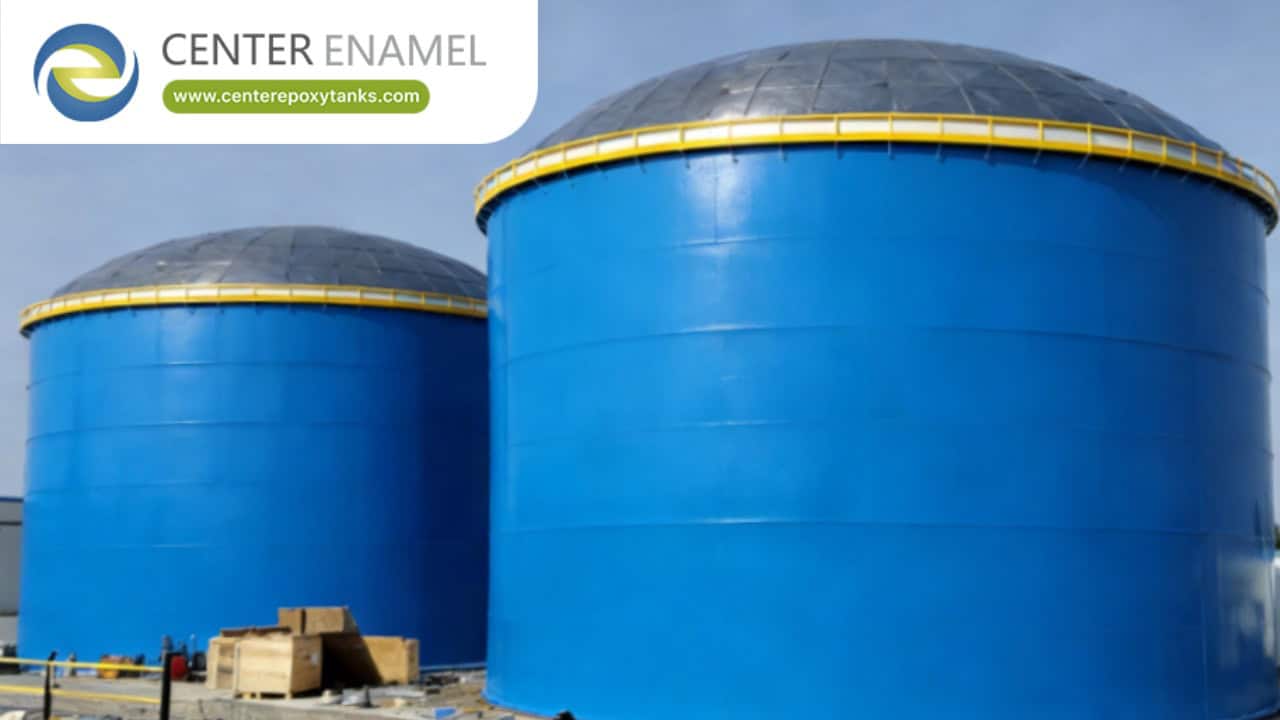
Petrochemical Storage for Oil Streams - Naphtha, Aromatics and Intermediate Service
Petrochemical storage sits between refining and chemicals, and it inherits the constraints of both. The streams are more volatile and often more toxic than fuel oils, the specifications are tighter, and the products may be reactive or sensitive to contamination. A tank that is adequate for diesel is not adequate for naphtha, benzene or a reactive intermediate, and the difference shows up in vapour control, in material selection and in how the tank is entered and cleaned.
The design starts from the stream. Engineered by Shijiazhuang Zhengzhong Technology Co., Ltd. (Center Enamel), petrochemical oil storage tanks are specified around each product's volatility, toxicity and reactivity, with vapour control, sealing and material selection matched to the actual stream rather than to a generic hydrocarbon duty.
1. How Does Petrochemical Storage Differ?
The streams are more volatile, often more hazardous to health, and usually held to tighter specifications. That pushes the design toward vapour control, tighter sealing, better grounding and more rigorous entry and cleaning procedures.
· Higher Volatility: Naphtha and light intermediates generate vapour far more readily than fuel oils, so vapour control is central.
· Toxicity: Aromatics such as benzene require controls on exposure during sampling, gauging and entry.
· Specification Sensitivity: Contamination between campaigns is a product quality risk, so cleaning and material selection matter.
· Reactivity: Some intermediates require temperature control, inhibition or inerting.
· Documentation: Petrochemical operators typically demand fuller material and quality documentation than fuel storage projects.
2. How Are Volatility and Toxicity Managed?
Volatility by removing the vapour space - a floating roof or a sealed system with vapour recovery. Toxicity by closed sampling and gauging, controlled entry procedures and, where required, blanketing.
· Floating Roof or Sealed System: Removing the vapour space removes both the loss and most of the exposure route.
· Vapour Recovery: Where required, vapour is routed to recovery rather than to atmosphere.
· Closed Sampling and Gauging: Closed systems keep operators out of the vapour during routine tasks.
· Inerting: Nitrogen blanketing is used where reactivity or product sensitivity requires it.
· Entry Procedures: Cleaning, gas-freeing and entry are planned around the stream's toxicity rather than treated generically.
3. What Material and Sealing Choices Matter?
Material compatibility with aromatics and reactive intermediates, seal and gasket selection for the specific chemistry, and grounding because low-conductivity streams generate static during filling.
· Material Compatibility: Coatings and elastomers are selected for aromatics and reactive streams, not for generic hydrocarbon duty.
· Seal and Gasket Selection: These are the most common compatibility failure points on petrochemical service.
· Static Grounding: Low-conductivity liquids generate static during filling, so bonding and earthing are designed and verified.
· Filling Rate Limits: Velocity limits are specified to control static generation.
· Cleaning Between Campaigns: Surfaces and details are arranged so tanks can be cleaned between different products.
Evaluation Criterion | Petrochemical Stream Storage | Conventional Fuel Oil Storage |
Volatility | High - vapour control central | Low to moderate |
Toxicity controls | Closed sampling, controlled entry | Standard precautions |
Material compatibility | Stream-specific selection | Generic hydrocarbon |
Static control | Designed and verified | Standard |
Documentation burden | High | Moderate |
Engineering Assurance and Project Support
Every welded oil tank delivered by Shijiazhuang Zhengzhong Technology Co., Ltd. (Center Enamel) is designed to API 650 with shell courses sized by the one-foot method and checked for wind, seismic and hydrostatic load cases, or to EN 14015 and the Eurocodes where the site is European. Shell plate is shot-blasted to Sa 2.5 and coated to a documented dry film thickness, longitudinal and annular plate welds are examined by radiography or ultrasonic testing to the acceptance level written into the purchase order, and every tank is hydrostatically tested and dimensionally surveyed before hand-over. Petrochemical tanks are supplied to API 650 with stream-specific coating and elastomer schedules, grounding and bonding verification, filling rate limits and the documentation package petrochemical operators expect.
"On petrochemical streams the seal and gasket schedule is where projects succeed or fail. Generic hydrocarbon selections do not survive contact with aromatics."
Frequently Asked Questions (FAQ)
Which petrochemical streams need the most care in storage?
Naphtha and other light, volatile streams need vapour control above all. Aromatics such as benzene add a toxicity dimension that affects sampling, gauging and entry. Reactive or inhibited intermediates add temperature control and inerting. Each has a different governing concern, which is why the tank should be specified around the actual stream.
Do petrochemical tanks need floating roofs?
For volatile streams such as naphtha, yes - removing the vapour space is the core of both emission control and loss prevention. For heavier, less volatile intermediates, a fixed roof with correctly sized venting and vapour recovery may be more appropriate. The decision follows the stream's vapour pressure at storage temperature.
Why is grounding emphasised on petrochemical service?
Because many petrochemical streams have low electrical conductivity and generate static charge during filling and transfer. If the tank, the floating deck and every fitting are not properly bonded and earthed, that charge can accumulate and provide an ignition source in a vapour space. Bonding is designed and then verified by measurement.
Can the tank be customised for our stream?
Yes. Capacity and geometry, roof type and vapour control, coating and elastomer schedule matched to your stream, grounding and bonding, filling rate limits, temperature control and inerting, instrumentation and access are all engineered to your product and site conditions.


