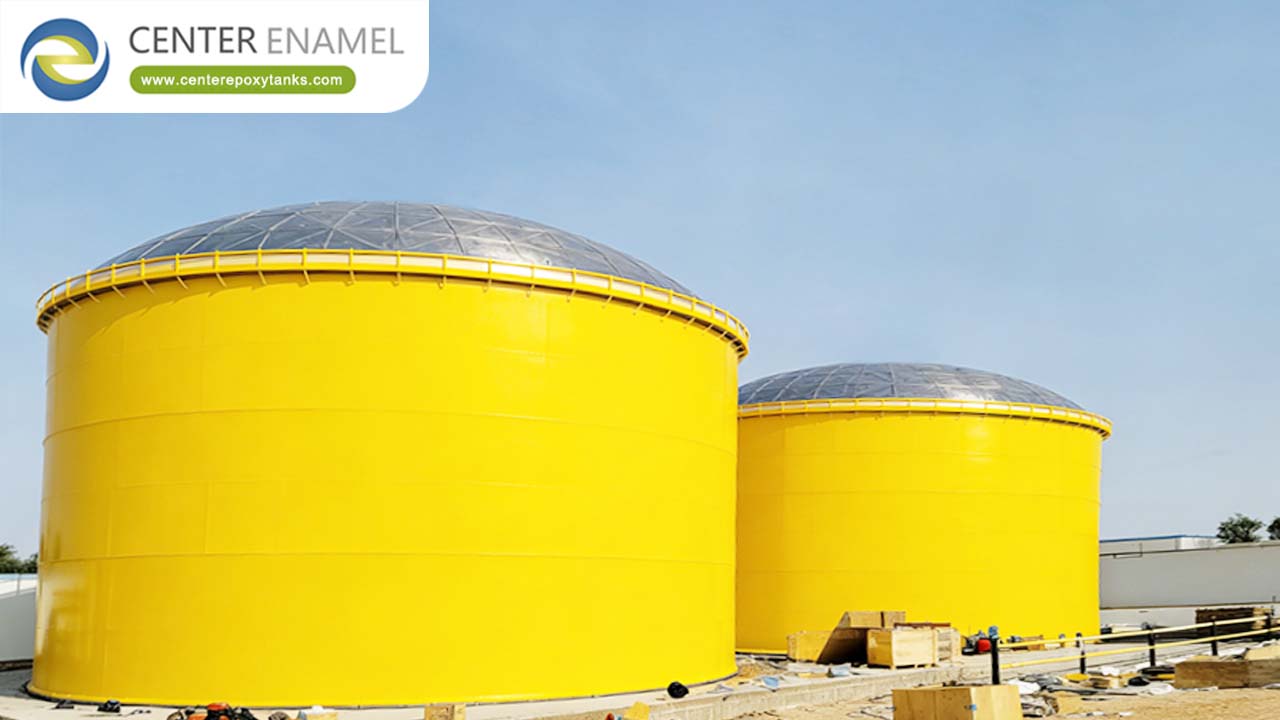
Olive Oil Storage Tanks - Protecting Quality From Press to Bottling
Olive oil is stored, not just held. It continues to change in the tank: free fatty acids rise if water is present, peroxide values climb if oxygen is available, and aroma compounds are lost to oxidation and to contact with the wrong metal. Extra virgin classification depends on those parameters holding at the point of sale, which means the storage tank is part of the quality system.
Engineered by Shijiazhuang Zhengzhong Technology Co., Ltd. (Center Enamel), olive oil storage tanks are built around the three things that preserve quality: stable cool temperature, exclusion of oxygen, and an inert, cleanable product contact surface.
1. What Does Olive Oil Need From a Storage Tank?
Cool stable temperature, no oxygen, no light, no reactive metal, and a surface that can be cleaned without residue. Sediment also has to be removable, because it accelerates degradation if it stays in contact with the oil.
· Temperature Stability: Cool, stable storage slows both hydrolysis and oxidation.
· Oxygen Exclusion: A blanketed or floating-cover headspace removes the oxygen that drives oxidation.
· Light Exclusion: Opaque tanks or dark storage prevent light-driven degradation.
· Inert Surface: Stainless or an approved food-grade lining avoids metal-catalysed oxidation.
· Sediment Removal: A cone or sloped bottom lets sediment be drawn off before it affects the oil.
2. Why Is Temperature So Important?
Because both degradation mechanisms accelerate with it. Warmth speeds oxidation and, together with any water present, speeds the hydrolysis that raises free acidity - the parameter that decides classification.
· Oxidation Rate: Rises with temperature, increasing peroxide values.
· Hydrolysis: Water plus warmth converts triglycerides to free fatty acids.
· Typical Storage Range: Cool, stable storage in the mid-teens to low twenties Celsius is commonly specified.
· Stability Matters: Cycling is worse than a slightly higher constant temperature.
· Cooling Provision: Where ambient conditions exceed the target, cooling or insulation is provided.
3. How Is Oxygen Excluded?
By minimising headspace and controlling what is in it. A floating cover removes the headspace entirely; nitrogen blanketing displaces oxygen where a fixed headspace remains.
· Nitrogen Blanketing: A nitrogen pad displaces oxygen and is maintained at slight positive pressure.
· Floating Cover: A floating deck or cover removes the headspace so there is no gas volume to control.
· Headspace Monitoring: Oxygen content is measured to confirm the strategy is working.
· Sealed Transfers: Filling and emptying are arranged to avoid drawing air into the tank.
· Breather Control: Any breather is specified for the duty so air is not admitted during level changes.
Evaluation Criterion | Quality-Designed Olive Oil Tank | General Purpose Oil Tank |
Headspace control | Nitrogen blanketing or floating cover | Open vent |
Temperature control | Stable, often cooled or insulated | Ambient |
Product contact surface | Stainless or approved food-grade lining | Carbon steel |
Light | Excluded | Not considered |
Sediment management | Cone bottom with draw-off | Flat bottom |
Engineering Assurance and Project Support
Every welded oil tank delivered by Shijiazhuang Zhengzhong Technology Co., Ltd. (Center Enamel) is designed to API 650 with shell courses sized by the one-foot method and checked for wind, seismic and hydrostatic load cases, or to EN 14015 and the Eurocodes where the site is European. Shell plate is shot-blasted to Sa 2.5 and coated to a documented dry film thickness, longitudinal and annular plate welds are examined by radiography or ultrasonic testing to the acceptance level written into the purchase order, and every tank is hydrostatically tested and dimensionally surveyed before hand-over. Olive oil tanks are supplied in 304L or 316L with a specified finish, cone or sloped bottoms with sediment draw-off, blanketing or floating cover provision, insulation and cooling where required, and cleaning access sized for real changeover.
"Olive oil keeps changing in the tank. Storage either protects the classification or quietly costs you it."
Frequently Asked Questions (FAQ)
What temperature should olive oil be stored at?
Cool and, above all, stable - commonly in the mid-teens to low twenties Celsius. Stability matters as much as the absolute value, because cycling accelerates degradation more than a slightly higher constant temperature. Where ambient conditions exceed the target, insulation or cooling is provided.
Why is stainless steel used for olive oil tanks?
Because olive oil is sensitive to metal-catalysed oxidation and must be cleaned between campaigns. Stainless provides an inert, cleanable product contact surface that does not shed corrosion product or catalyse oxidation. Food-grade gaskets and the exclusion of copper, brass and bare iron from all product contact parts matter just as much as the shell material.
Does olive oil storage need nitrogen blanketing?
It is the standard control where quality is being protected. Blanketing displaces oxygen from the headspace and is maintained at slight positive pressure, with oxygen content monitored to confirm it is working. A floating cover achieves the same result by removing the headspace altogether.
Can the tank be customised for our oil?
Yes. Capacity and geometry, grade and surface finish, cone or sloped bottom with sediment draw-off, blanketing or floating cover, insulation and cooling, sealed transfers, sampling points and cleaning access are all engineered to your oil and quality targets.


