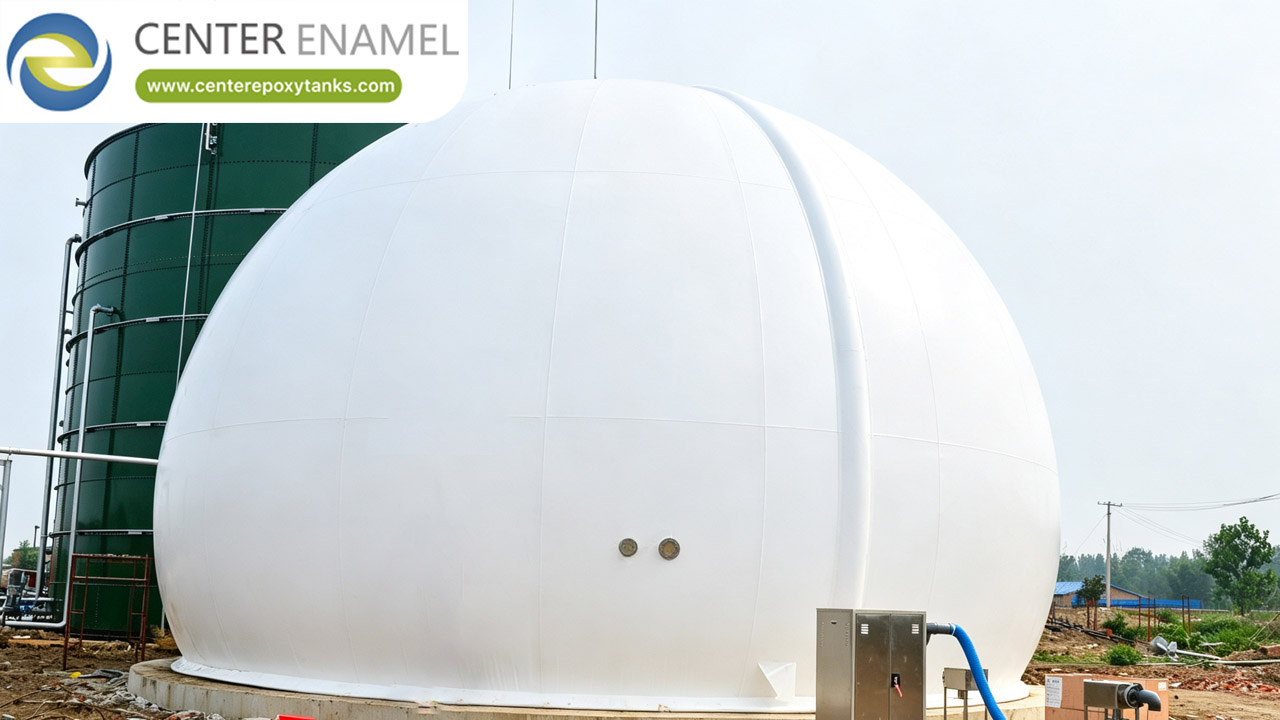
Optimizing BIO CNG Production: The Critical Role of Biogas Holders
In the transition from raw biogas to high-purity BIO CNG (Compressed Biogas), the gas holder serves as the pulse of the facility. It is not merely a storage vessel; it is a critical pressure-buffer system that ensures the upgrading and compression units receive a consistent, high-quality feed. For BIO CNG plants, where gas quality and pressure stability are paramount, Double Membrane Gas Holders are the established industry standard.
The Engineering Challenge: Why BIO CNG Plants Require Specialized Storage
Unlike simple biogas plants that burn gas directly for heat, BIO CNG plants must purify gas to biomethane standards (>95% methane). This upgrading process is highly sensitive to:
Pressure Fluctuations: Inconsistent pressure levels can cause "tripping" or reduced efficiency in membrane or PSA (Pressure Swing Adsorption) upgrading units.
Gas Impurities: H2S and moisture can degrade sensitive upgrading equipment if not managed within a stable containment environment.
Variable Production Rates: Digesters produce gas at different rates throughout the day; the gas holder must compensate for these variances to ensure a steady "baseline" feed to the compressor.
Why Double Membrane Holders Are the BIO CNG Gold Standard
Double membrane holders consist of two layers: an air-inflated outer membrane for structural protection and an inner membrane for flexible gas storage. This design is uniquely suited for the requirements of biomethane production.
Performance Comparison: BIO CNG Storage Solutions
Feature | Double Membrane Holder | Fixed Steel/Concrete Roof | Traditional Gas Bags |
Pressure Stability | High (Constant) | Low | Variable |
Volume Flexibility | Dynamic | Fixed | Low |
H2S/Corrosion Resistance | Superior (PVDF/Specialized) | Low (Requires Coating) | Moderate |
Operational ROI | Highest | Low | Low |
Integration with Upgrading | Seamless | Difficult | Moderate |
Technical Advantages for BIO CNG Facilities
1. Constant Pressure for Upgrading Efficiency
BIO CNG upgrading systems (such as PSA or membrane filtration) require a precise, stable inlet pressure to achieve optimal purity. The air-inflated outer membrane of our holders applies a constant, positive pressure to the stored gas, acting as a "buffer" that smoothes out production peaks and valleys from the digester.
2. High Resistance to H2S
Raw biogas is highly corrosive. Our gas holders utilize specialized, chemically inert membrane fabrics (often PVDF-coated) specifically formulated to resist degradation from Hydrogen Sulfide (H2S) and siloxanes. This ensures a leak-free operational life of 15+ years, even in highly aggressive biogas environments.
3. Scalable and Modular Design
As your BIO CNG plant scales up—perhaps adding more digesters or increasing feedstocks—the gas holder must adapt. Our modular designs allow for easy expansion or reconfiguration, protecting your capital investment as your production capacity grows.
4. Integration with Plant SCADA/PLC
Modern BIO CNG plants operate on high-speed automation. Our gas holders feature integrated level and pressure sensors that communicate directly with your plant’s PLC/SCADA system. This provides operators with real-time data on gas volume and pressure, ensuring the upgrading system always operates within its optimal input range.
Frequently Asked Questions (FAQ)
Q: Why is pressure stability so important for a BIO CNG plant?
A: Upgrading systems (like membrane separators) are designed to function within a specific pressure window. If pressure drops or spikes, the system may fail to reach the required purity level (methane content) or cause the compressor to stall. A double membrane holder provides a stable, uniform input pressure.
Q: Do these holders require additional booster fans?
A: Generally, no. Double membrane holders operate at a consistent low pressure (typically 2–50 mbar). This is usually sufficient to feed the primary stage of your upgrading compressors without needing additional booster equipment.
Q: Are the membranes safe for outdoor installation?
A: Yes. The outer air-inflated membrane acts as an "all-weather shell," protecting the gas-containing inner membrane from rain, snow, UV radiation, and wind. They are engineered to remain fully functional in diverse climates.
Q: Can these holders be retrofitted onto existing biogas plants?
A: Absolutely. Whether you are building a new facility or upgrading an existing biogas plant for biomethane production, double membrane holders can be installed as standalone units or mounted directly onto existing digesters.
Q: What is the expected lifespan of these biogas holders?
A: With proper installation and routine visual checks, these systems are engineered for a service life of 15 to 20 years. The chemical-resistant fabric is designed to maintain its structural integrity despite constant contact with raw biogas.
Are you currently in the design phase for a new BIO CNG plant, or are you looking to optimize the storage and purification stage of an existing biogas facility? [Contact our engineering team] today for a technical consultation or a custom design proposal tailored to your production requirements.
Expert Follow-Up Question: To provide the most relevant technical recommendation, are you in the preliminary design phase for a new BIO CNG project, or are you retrofitting an existing biogas plant to move into high-purity biomethane production?


