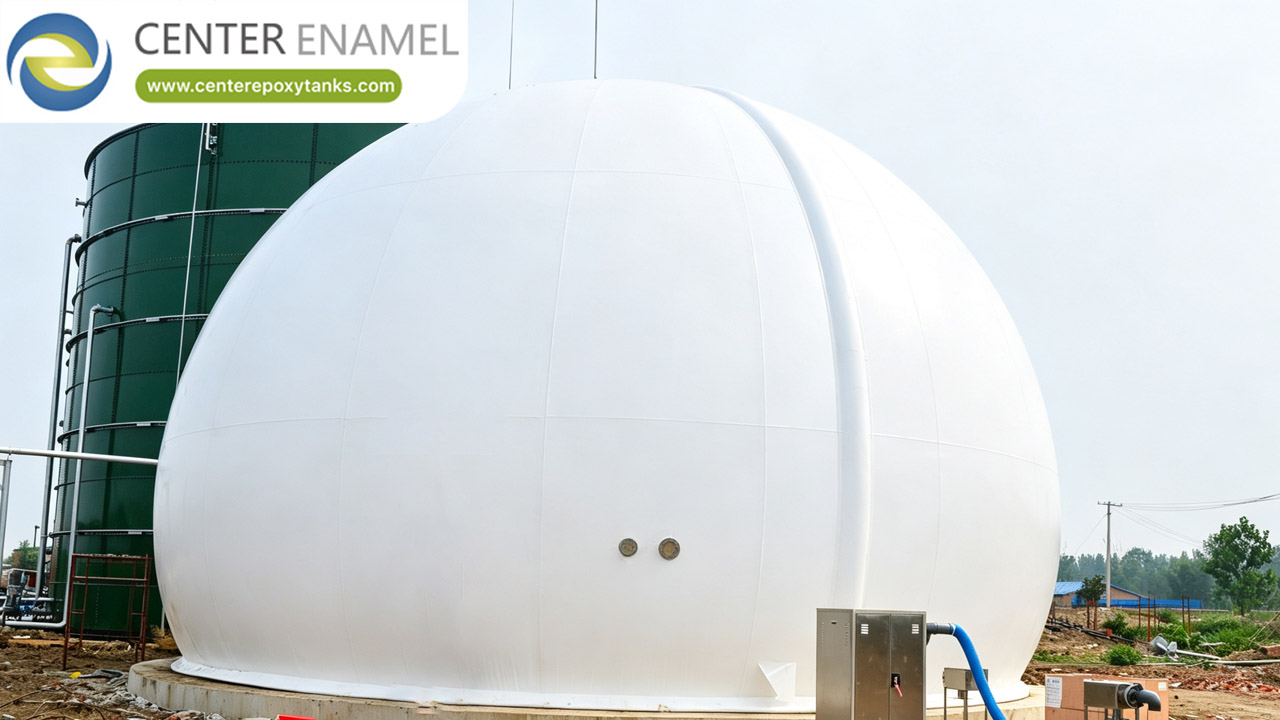
Double Membrane Holder: Design, Working Principle, and Industrial Applications
A double membrane holder (commonly referred to as a double-membrane gasholder) is an advanced flexible storage system engineered specifically to capture, store, and regulate biogas in municipal, agricultural, and industrial anaerobic digestion facilities. Acting as the dynamic "lung" of a renewable energy plant, the system bridges the gap between continuous, biological gas generation and fluctuating energy consumption by downstream Combined Heat and Power (CHP) engines or gas upgrading skids.
Unlike traditional, rigid steel or concrete storage tanks that feature fixed volumetric capacities and severe vulnerability to biogenic acid corrosion, modern double membrane holders utilize a sophisticated multi-layer textile structure that expands and contracts dynamically while providing stable operating pressure.
Core Architecture and Working Principle
The operational excellence of a double membrane holder relies on a tripartite or dual-layer fabric design separating containment, weather protection, and pressure regulation:
The Inner Membrane (Gas Containment): Fabricated from specialized low-permeability polymers (such as PVC-coated polyester or specialized PELD/FPP blends), the inner layer forms a completely hermetic chamber in direct contact with the biogas. It rises and falls freely based on actual gas production volumes.
The Outer Membrane (Weather Shell): Acting as the visible outer dome, this layer is crafted from high-tenacity polyester fabric treated with UV-resistant coatings and anti-fungal agents. It protects the inner membrane from wind, rain, snow, and direct solar radiation.
The Interstitial Air Support System: An explosion-proof (ATEX-certified) continuous blower injects ambient air into the sealed space between the inner and outer membranes. This maintains a constant positive pressure (typically 2 mbar to 20 mbar), forcing the inner membrane downward to deliver a steady stream of biogas under uniform pressure.
Key Engineering Advantages
Constant Gas Delivery Pressure: Controlled by an outer membrane exhaust valve and continuous air blower regulation, the holder maintains a steady internal pressure balance, ensuring stable fuel feed to downstream equipment.
Corrosion Immunity: Built from chemically inert synthetic fabrics, double membrane holders are 100% immune to hydrogen sulfide (H2S) and organic acid degradation, eliminating the costly painting and relining required by steel structures.
Versatile Mounting Options: They can be installed either as top-mounted roof systems directly bolted to the top rim of Glass-Fused-to-Steel (GFS) or concrete anaerobic digesters, or as ground-mounted standalone units anchored to independent concrete slab foundations.
Data Table: Technical Specifications of Double Membrane Holders
Technical Parameter | Specification Range / Standard | Engineering Details |
Storage Capacity | 20 m3 to 10,000 m3+ | Customizable configuration based on plant volume requirements |
Membrane Material | High-tenacity PVC-coated polyester / FPP | Treated with UV blockers, anti-fungal agents, and low-wick yarn |
Working Gas Pressure | 2 mbar to 20 mbar (Customizable up to 50 mbar) | Regulated via continuous air support blower and safety relief valve |
Operating Temperature | -40 °C to +70 °C | Engineered for extreme cold weather and high heat environments |
H₂S Chemical Resistance | Up to 8,000 ppm | High tolerance against aggressive biogenic gas components |
Design Lifespan | 15 to 20 Years | Minimal maintenance overhead under regular scheduled inspection |
Frequently Asked Questions (FAQ)
Q: How does a double membrane holder maintain constant pressure without mechanical pistons?
A: An explosion-proof centrifugal blower continuously feeds ambient air into the interstitial space between the inner and outer membranes. A specialized pressure relief valve on the outer shell controls this airflow, maintaining a steady, uniform downward pressure on the inner gas chamber regardless of how full or empty the storage volume is.
Q: Can double membrane holders be mounted directly onto existing anaerobic digester tanks?
A: Yes. Top-mounted double membrane holders are frequently engineered to fit seamlessly onto bolted Glass-Fused-to-Steel (GFS) tanks, stainless steel tanks, and cast-in-place concrete silos using stainless steel clamping profiles and sealing gaskets.
Q: How do these holders handle heavy snow and high wind loads?
A: The outer membrane forms a rigid, aerodynamically stable dome supported by continuous air pressure. This air cushion provides exceptional structural rigidity to shed snow and withstand high wind shear, while optional belt-tensioning systems offer additional stability for demanding climates.
Q: What safety mechanisms prevent over-pressurization of the gas storage system?
A: Certified double membrane holders are equipped with comprehensive safety control infrastructure, including automated pressure monitoring sensors, mechanical hydraulic overpressure relief valves (water seals), and emergency flare integration to vent surplus gas safely during production surges.


