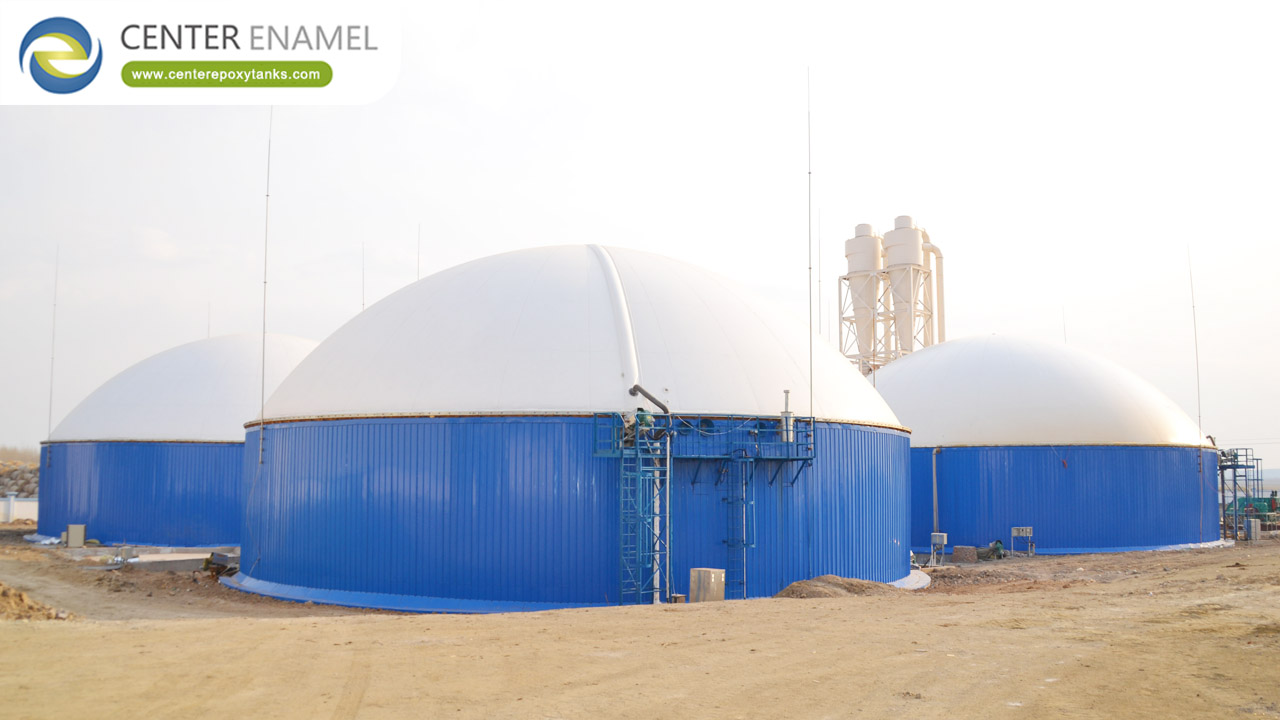
Double Membrane Covers for Anaerobic Digester Tanks: Engineering Efficient Biogas Storage and Renewable Integration
As global industries and municipalities pivot toward carbon neutrality and decentralized clean energy generation, anaerobic digestion (AD) facilities have become indispensable. Processing organic feedstocks—ranging from agricultural livestock slurry and food processing effluent to municipal wastewater sludge—anaerobic digesters break down organic matter to produce methane-rich renewable biogas.
However, biological gas generation is inherently dynamic, shifting continuously in response to organic loading rates, temperature fluctuations, and feeding schedules. To bridge the gap between irregular biological production and steady downstream energy consumption, modern facilities utilize double membrane covers for anaerobic digester tanks. Serving the dual purpose of a weather-tight reactor roof and an active, pressurized gas holder, this innovative dual-layer system maximizes plant efficiency and eliminates the need for separate, capital-intensive gas storage vessels.
Core Engineering Principles and System Architecture
The double membrane cover is an engineered pneumatic storage system comprising three primary structural components integrated directly onto the top rim of a concrete, bolted steel, or glass-fused-to-steel anaerobic digester tank:
Inner Membrane: Directly in contact with the corrosive biogas headspace, this flexible, gas-tight membrane expands and contracts dynamically based on immediate volumetric generation rates. It acts as the primary barrier preventing gas leakage and environmental interaction.
Outer Membrane: Maintained under constant pneumatic pressure by a dedicated, spark-resistant air blower system, the outer dome forms the protective external shape. It defends the system against wind shear, heavy snow loads, and torrential rain.
Inter-Membrane Air Space: The pressurized air cushion between the inner and outer membranes keeps the outer roof rigid while exerting a uniform, steady downforce on the inner gas storage membrane. This ensures that stored biogas is delivered to downstream combined heat and power (CHP) engines or boilers at a consistent, regulated operating pressure.
Technical Performance Matrix: Anaerobic Digester Roof Options
Technical Parameter | Double Membrane Digester Covers | Fixed Steel Digester Roofs | Monolithic Concrete Roof Slabs |
Gas Storage Integration | Integrated; acts as an elastic, active gas holder directly on the reactor | None; requires separate, high-cost external gas storage tanks | None; requires complex external gasholders or variable-level piston holders |
Footprint & Capital Cost | Highly compact footprint; significantly lowers total capital expenditure (CapEx) | Large footprint; requires extensive yard piping and separate civil foundations | Massive structural footprint with high material and labor costs |
Corrosion & Chemical Defense | Superior; constructed from inert, chemical-resistant PVC, PELD, and FPP fabrics | Moderate to poor; highly vulnerable to sulfuric acid pitting from H2S without costly linings | High vulnerability to biogenic sulfide corrosion (concrete crown rot) over time |
Volumetric Flexibility | Dynamic expansion; absorbs production surges and fluctuating biological gas outputs | Rigid, static volume limit requiring manual pressure relief management | Rigid static structure with zero elasticity for gas buffering |
Frequently Asked Questions (FAQ)
Q: What are the primary functions of a double membrane cover on an anaerobic digester?
A: A double membrane cover performs two essential functions simultaneously: it acts as a weather-tight structural roof for the anaerobic digester reactor, and it functions as an elastic, pressurized gas holder that buffers fluctuating biogas production before it reaches downstream utilization equipment.
Q: How do double membrane covers maintain a constant gas delivery pressure?
A: An automated air blower system continuously maintains a controlled air pressure in the space between the outer and inner membranes. This air pressure exerts a steady downward force on the inner gas storage membrane, ensuring consistent gas delivery pressure regardless of whether the storage volume is full or nearly empty.
Q: Are double membrane covers resistant to corrosive gases like hydrogen sulfide (H2S)?
A: Yes. The inner membranes are engineered from specialized, high-density polymers (such as FPP, PELD, or specially formulated PVC-coated fabrics) that offer exceptional chemical resistance to methane, moisture, and high concentrations of hydrogen sulfide (H2S) typical of anaerobic digestion.
Q: Can a double membrane cover be retrofitted onto an existing concrete or steel digester tank?
A: Yes. Because they feature modular clamping and anchoring profile systems, double membrane covers can be custom-engineered to mount directly onto the top wall crown or rim of existing concrete, welded steel, or glass-fused-to-steel digester tanks during plant upgrades.


