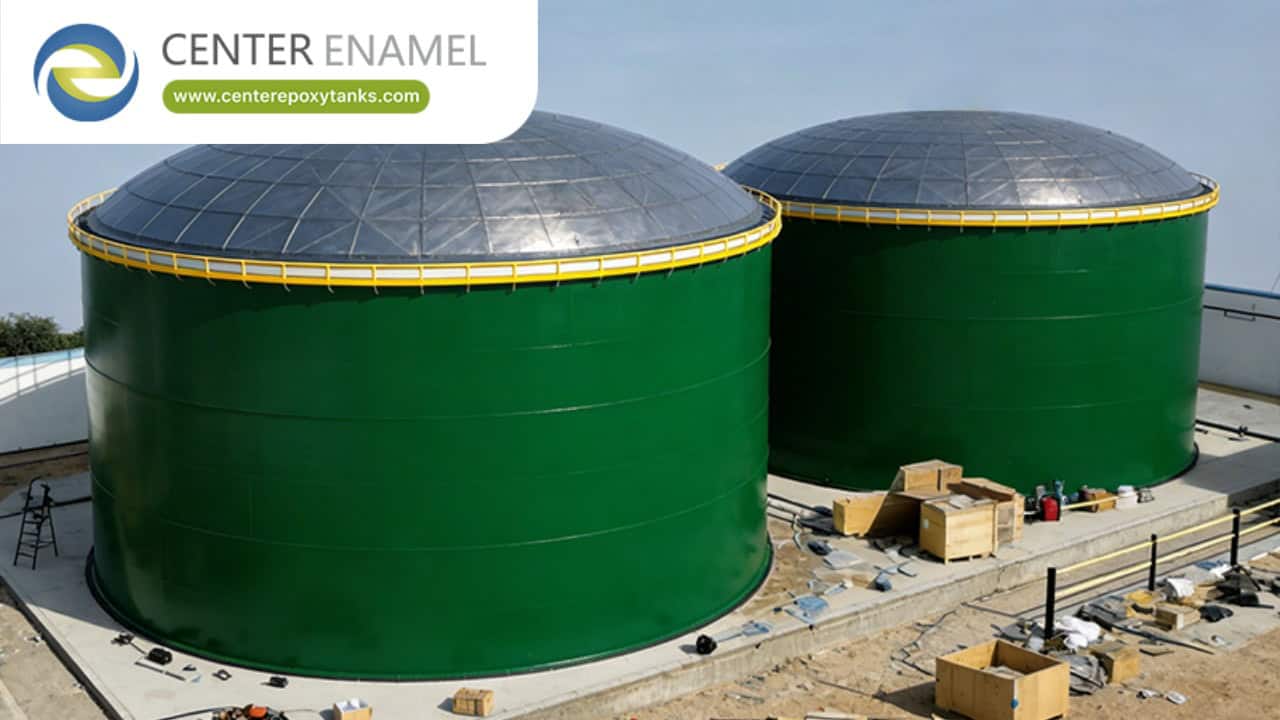
Oil Tank Dome Roofs: Vapor Control and Corrosion Protection for Bulk Oil Storage
On bulk oil tanks, the roof is where two budgets collide: the vapor budget regulators audit and the corrosion budget owners pay. Conventional steel roofs leak vapor at every aging seal and rust from the inside out; the aluminum dome attacks both lines at once — a sealed clear-span shell that neither vents product nor needs paint.
Oil tank dome roofs provide vapor control and corrosion protection for bulk storage as self-supporting aluminum geodesic covers: sealed deck interfaces and engineered venting manage the vapor space, while inherently corrosion-resistant aluminum construction eliminates the roof recoating cycles that dominate steel-roof maintenance economics.
1. How Does a Dome Control Vapor on a Bulk Oil Tank?
Vapor management is a system of interfaces, not a single seal.
· Sealed shell envelope: Panel gaskets and structural caulk lines make the dome itself a tight barrier, cutting wind-driven vapor stripping from open-top decks.
· IFR partnership: The dome's vapor contribution multiplies when paired with the internal floating roof below it — deck seals the liquid, dome seals the weather, vent system manages the between-space.
· Engineered venting: Breather and circulation vents sized per code keep the headspace below lower-explosive limits while accommodating thermal and pump-out vacuum without stressing the shell.
· Vapor recovery tie-ins: Nozzles for VRU connection let terminals route breathing vapor to recovery instead of atmosphere.
2. Why Does the Dome Win the Corrosion Battle?
Steel roofs fail from the inside; aluminum domes decline to participate.
· Vapor-space condensation: On steel roofs, hydrocarbon and water condensate attack the underside — the classic roof-and-top-course rust zone that contaminates product and thins steel.
· Aluminum immunity: Geodesic domes in aluminum alloys resist hydrocarbon condensate and humid atmospheres without coatings — the corrosion budget for the roof drops to zero.
· Excluded weather: Domes keep rain, snow, and salt fog off everything below — including the IFR deck and its seals, extending their service too.
· Inspection access: Clear-span domes with roof hatches allow in-service seal and deck inspection — corrosion caught early is corrosion cheap.
3. What Engineering Makes a Dome a Code-Compliant Roof?
Annex G turns the dome from a canopy into an engineered roof.
· Load combinations: Dead, live, snow, wind, vacuum, and internal pressure cases per Annex G — including the asymmetric loads real domes see.
· Shell interface: Curb-angle bearing with sliding attachments accommodates differential thermal movement between hot tank shells and aluminum structure.
· penetrations: Vents, hatches, and gauge wells framed into the space frame without degrading its load path.
· Lightning protection: Air terminals and bonding engineered to protect both the dome and the rim-seal zone of the IFR below.
Data Table: Vapor & Corrosion Performance by Roof System
System | Vapor Containment | Roof Corrosion | Coating Cycle |
Open top + EFR | Deck/seal-dependent | Deck upkeep | Deck steel cycles |
Fixed steel roof + IFR | Good | Vapor-space lining needed | Recoat regime |
Aluminum dome + IFR | Tightest practical | None (aluminum) | None |
Dome on slop service | Vapor tie-in capable | None (aluminum) | None |
Frequently Asked Questions (FAQ)
Q1: Do dome roofs reduce VOC emissions on oil tanks?
Yes, primarily in combination: paired with an internal floating roof, the aluminum dome shelters deck and seals from wind and weather, sustaining the up-to-99% loss reduction the deck provides, and its sealed envelope plus engineered vents manage the headspace vapor that fixed roofs vent freely. VRU nozzles can route residual breathing vapor to recovery.
Q2: Why don't aluminum dome roofs corrode on oil tanks?
Aluminum forms a stable protective oxide naturally and is immune to the hydrocarbon condensate and humidity that corrode steel roof undersides. Unlike coated steel roofs — which rust once coatings age — domes carry no recoating budget, which is why lifecycle comparisons favor them despite higher first cost.
Q3: Can a dome roof handle tank internal pressure and vacuum?
Domes are engineered to API 650 Annex G load combinations including internal pressure and vacuum within tank vent ranges. The bearing detail accommodates shell thermal movement while transferring dome loads to the tank curb angle — the dome behaves as a structural roof, not a loose cover.
Q4: Is a dome roof suitable for sour or high-vapor products?
With the right venting and vapor-tie-in design, yes: the dome shelters an IFR or closed vent system, and aluminum resists the condensate chemistry involved. The engineering focus shifts to seal selection, vent sizing, and vapor routing rather than the dome structure itself.


