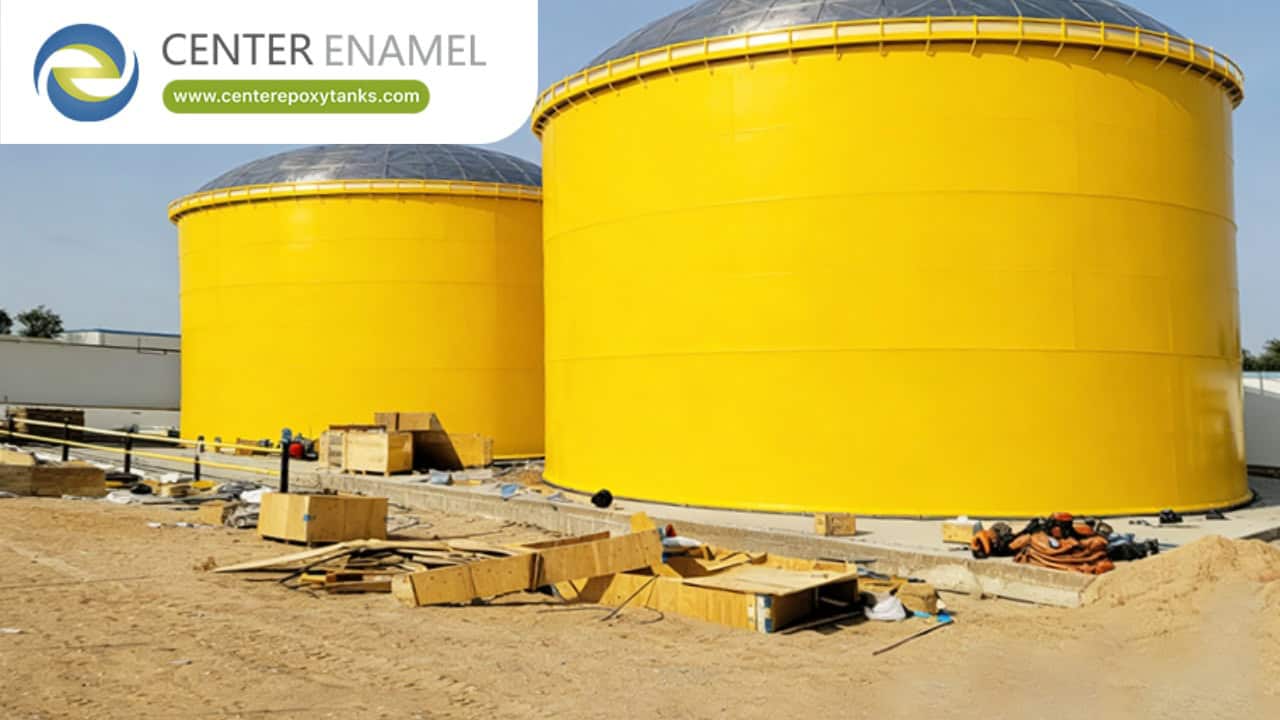
Oil Storage Tank: Types, Standards, and Selection Criteria
'Oil storage tank' spans everything from the 1,000-liter generator tank behind a factory to the 150,000 m3 crude cylinders of a strategic reserve. What unites them is containment engineering under fire code and environmental regulation; what divides them is vapor pressure — the single property that decides whether the roof floats, fixes, or pressurizes.
An oil storage tank is a vessel for crude oil, refined products, and fuel oils, classified by construction (welded API 650, shop-built UL 142), roof strategy (fixed cone, internal floating roof, external floating roof, or dome), and pressure regime (atmospheric per API 650, low-pressure per API 620), with capacities from 1 m3 to 150,000 m3.
1. How Are Oil Storage Tanks Classified?
Three axes — construction, roof, pressure — locate any tank in the taxonomy.
· By construction: Field-welded API 650 tanks dominate bulk service; shop-built UL 142 tanks serve smaller installations; bolted tanks appear in fuel-adjacent duties like fire water and additives.
· By roof: Fixed cone roofs for low-volatility products, internal floating roofs (up to 99% loss reduction) inside fixed roofs for distillates, external floating roofs for crude and volatile service.
· By pressure: Atmospheric (API 650), low-pressure to 15 psig (API 620), and pressure vessels (ASME VIII) as volatility climbs from fuel oil through LPG.
· By position: Aboveground with dikes or double walls; underground under corrosion-protection and monitoring regimes.
2. Which Tank Matches Which Oil Product?
Product vapor pressure and viscosity select the configuration.
· Crude oil: External floating roof tanks — pontoon or double-deck — or fixed cone with vapor recovery where sweet and stable.
· Gasoline, naphtha, jet: Internal floating roofs, frequently under aluminum domes, balancing emissions, drainage, and inspection access.
· Diesel and fuel oil: Fixed cone roofs; heavy grades add heating coils, insulation, and recirculation.
· Waste and slop oils: Fixed roof tanks with vapor tie-ins and generous corrosion allowance for water and sulfur attack.
3. What Selection Criteria Decide the Specification?
Beyond product class, five criteria shape the final tank selection.
· Volume and growth: Single large tanks minimize cost per cubic meter; multiple smaller tanks add operational flexibility and maintenance independence.
· Site and climate: Wind, seismic, snow, and ambient extremes drive structural design and heating/insulation scope.
· Regulatory regime: Emission permits, containment programs, and fire codes vary by jurisdiction — the tank must be designed to the strictest applicable rule.
· Lifecycle economics: Corrosion allowance, lining, and inspection access purchased at design time cost far less than mid-life repairs.
Data Table: Oil Tank Configuration by Product
Product | Roof Type | Code | Special Features |
Crude oil | External floating roof | API 650 | Rim seals, drains |
Gasoline | IFR + fixed/dome | API 650 Annex H | Vapor control |
Jet / diesel | Fixed cone | API 650 | Linting, water drains |
Heavy fuel oil | Heated fixed roof | API 650 | Coils, insulation |
Waste / slop oil | Fixed roof | API 650 | CA, vapor tie-in |
Frequently Asked Questions (FAQ)
Q1: What are the types of oil storage tanks?
By roof: fixed cone or dome, internal floating roof (Annex H), external floating roof, and domed IFR combinations. By code: field-welded API 650, low-pressure API 620, shop-built UL 142, and pressure vessels to ASME VIII. Each type maps to product volatility — from heavy fuel oil under fixed roofs to crude under floating roofs.
Q2: Which tank type is best for crude oil storage?
Large-diameter external floating roofs are the reference: the deck rides the liquid, eliminating the vapor space that drives breathing losses, and cuts evaporation by up to 95%. Stable, sweet crudes at smaller scale also store under fixed roofs with vapor recovery where emission rules permit.
Q3: How big can an oil storage tank be?
Field-erected API 650 tanks reach about 150,000 m3 (roughly 100 m diameter); beyond that, foundation settlement, seismic response, and floating-roof mechanics make additional tanks more practical than larger single units.
Q4: What standards govern oil storage tanks?
API 650 for welded atmospheric tanks (with Annex H floating roofs and Annex G domes), API 620 to 15 psig, UL 142/2085 for shop-built ASTs, UL 58/1746 for underground tanks, NFPA 30 for fire safety, and environmental containment under SPCC-type programs — layered per product and jurisdiction.


