Moisture-Proof Oil Tank Covers: Protecting Stored Product from Water Ingress
Water finds oil tanks with patient ingenuity: through a hatch left proud, down a leaking roof seam, over a sunken floating-deck drain, and — most patiently — out of the air itself, condensing on every cool roof night after night. For lubricants, insulating oils, and fuels, that water is the beginning of additive loss, rust, and microbial growth.
Moisture-proof oil tank covers block the two water paths into stored product: direct ingress through roofs, hatches, and deck drains — defeated by domed or sealed roofs, gasketed fittings, and engineered drainage — and condensation from vapor-space breathing — defeated by floating decks, insulation, and desiccant or inerted breathing systems.
1. Where Does Water Enter an Oil Tank?
Four paths account for nearly all contamination.
· Roof and seam leakage: Aged coatings, failed sealants, and corroded roof plates let rain find pinhole highways to the product.
· Open or worn fittings: Gauge hatches without gaskets, uncovered sample wells, and loose manway covers are the fastest routes.
· Floating deck drains: On external floating roofs, a failed drain discharges rainwater directly onto the product surface.
· Condensation: Daily thermal cycles exchange vapor-space air; humidity condenses on cool steel and rains back — the invisible path on otherwise tight tanks.
2. What Cover Technologies Keep Tanks Dry?
Engineering closes the paths in layers.
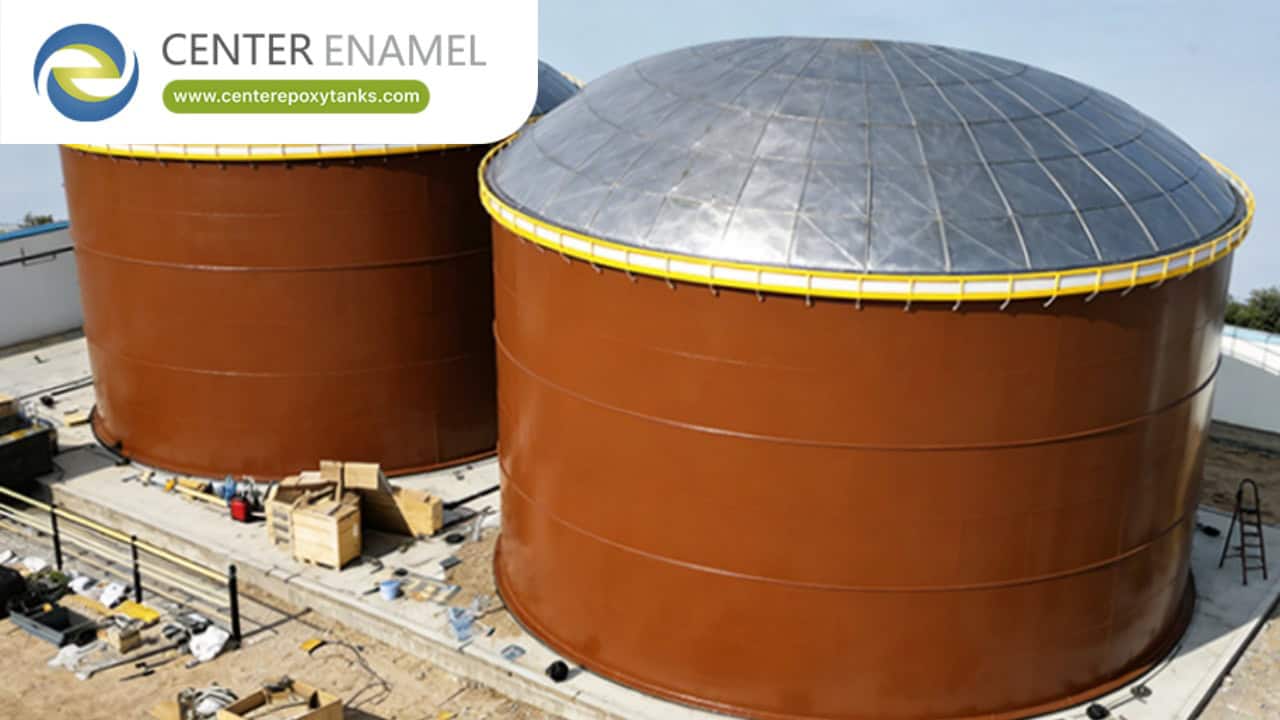
· Dome and fixed sealed roofs: Clear-span aluminum domes shed all weather with gasketed panel systems — the strongest ingress barrier available.
· Gasketed and locked fittings: Every hatch, well, and cover specified with continuous gaskets and positive latching, maintained on schedule.
· Internal floating decks: The deck removes the vapor space that condenses — the definitive condensation solution for quality-critical oils.
· Breathing management: Desiccant breathers dry inhaled air; nitrogen blankets and expansion chambers eliminate breathing altogether on premium products.
3. How Is Dryness Verified in Operation?
Moisture control ends with measurement, not hardware.
· Bottom sampling: Routine bottom and low-point samples detect free water before it emulsifies or breeds microbes.
· Water-detection instrumentation: capacitance or optical water-in-oil sensors flag rising bottom water in high-value service.
· Drain discipline: Scheduled low-point drains and, on floating decks, drain-flow checks after rainfall.
· Roof survey cadence: Visual and drone roof inspections catch seam and fitting degradation between formal outages.
Data Table: Water Path vs Countermeasure
Water Path | Primary Countermeasure | Verification |
Roof leakage | Dome/sealed roof, coatings | Roof survey |
Hatches and fittings | Gasketed, latched covers | Quarterly checks |
Deck drains | Drain testing, clear flow | Post-rain checks |
Condensation | IFR deck / desiccant / N2 | Bottom sampling |
Frequently Asked Questions (FAQ)
Q1: How does water get into a sealed oil tank?
Two ways: directly, through roof leaks, ungasketed hatches, and failed floating-deck drains; and internally, as condensation — the tank breathes humid air through daily temperature cycles and that moisture rains back from the roof. Even a structurally perfect tank accumulates water if breathing is unmanaged.
Q2: Do dome roofs prevent water contamination?
As the strongest single measure, yes: a sealed aluminum dome sheds all rain and snow, and its gasketed panel system removes the leak paths of aging steel roofs. For total moisture control on quality-critical products, domes pair with internal floating decks or desiccant breathing to address condensation as well.
Q3: What is a desiccant breather on an oil tank?
A canister of drying media that the tank inhales through as levels and temperatures change — stripping moisture from incoming air so the vapor space stays dry. It is the low-cost retrofit against condensation on fixed-roof tanks that cannot justify floating decks or nitrogen blankets.
Q4: Why does water in stored oil matter so much?
Water degrades additives, clouds and emulsifies product, corrodes the tank from the bottom and vapor space, and enables microbial growth that plugs filters and sours fuel. Every water-management dollar on covers, decks, and breathers repays itself in product quality and avoided maintenance.


