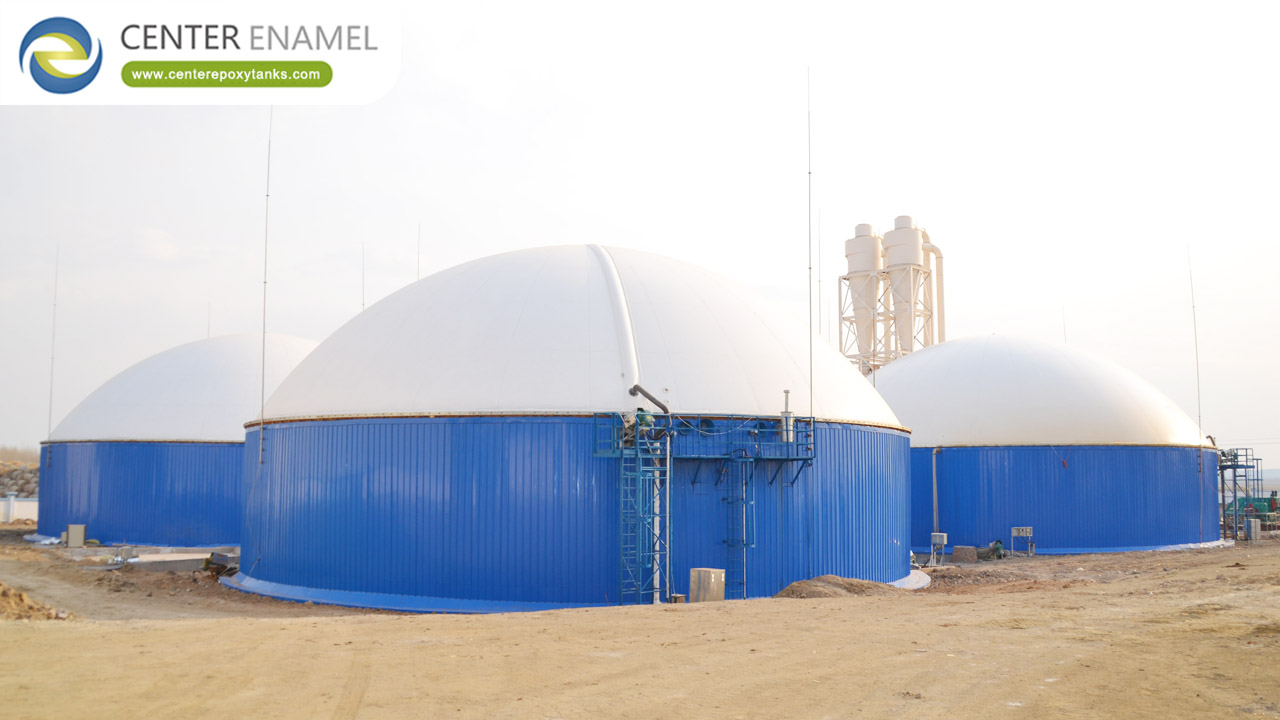
Membrane Covers for Biogas Storage Tanks: Engineering & Operational Guide
A membrane cover for a biogas storage tank—most commonly referred to as a Double Membrane Gas Holder—is an innovative storage solution that utilizes high-strength, flexible polymers to contain biogas produced during anaerobic digestion. Unlike rigid steel or concrete roofs, these systems act as a "living" storage vessel. As the biogas production rate fluctuates, the inner membrane expands and contracts, providing a variable-volume storage capacity that is both cost-effective and highly resistant to the corrosive environment of digester gases.
1. The Anatomy of a Double Membrane System
The double membrane design is the industry standard for modern biogas plants. It consists of three primary components that work in tandem to safely manage gas storage.
● Inner Membrane: This layer is in direct contact with the biogas. It is engineered from highly gas-impermeable materials, ensuring that methane (CH4) is contained securely without leakage.
● Outer Membrane: This layer protects the inner membrane from the elements (rain, snow, UV radiation). It is continuously inflated by an air blower to provide structural stability, creating a dome shape that sheds debris and withstands wind loads.
● Support Air Space: The gap between the inner and outer membrane is pressurized by a dedicated blower system. This pressure not only maintains the shape of the cover but also provides constant pressure on the inner membrane, ensuring a steady gas flow to downstream equipment (engines or boilers).
2. Material Engineering & Selection
The longevity of a membrane cover depends on the chemical and physical properties of the fabric. Engineers typically specify fabrics based on the following criteria:
Material Type | Key Characteristics | Best Use Case |
PVC-Coated Polyester | High flexibility, cost-effective, standard UV resistance. | Small to medium-scale biogas plants; mild environments. |
PVDF-Coated Fabric | Superior UV resistance, dirt-repellent, long lifespan. | Large-scale plants; high solar exposure areas. |
PTFE-Coated Fabric | Extreme chemical/temperature resistance. | Industrial/Chemical-heavy biogas streams. |
Key Engineering Consideration: All membrane materials must be treated with anti-fungal and anti-microbial coatings to prevent the growth of biofilms on the outer surface, which can degrade the material over time.
3. Benefits of Membrane Covers
Compared to fixed-roof steel or concrete tanks, membrane covers offer distinct operational advantages:
● Variable Storage Capacity: They expand and contract based on gas production, eliminating the need for expensive, high-pressure, fixed-volume external gas vessels.
● Corrosion Immunity: Because the membrane is made of synthetic polymers, it is completely immune to the corrosive effects of Hydrogen Sulfide (H2S)—a major maintenance headache for steel-roofed digesters.
● Rapid Deployment: Modular membrane covers can be installed significantly faster than traditional rigid roof systems, drastically reducing construction timelines.
● Integrated Safety: The system acts as its own pressure relief mechanism. If overpressure occurs, the membranes can be designed to safely vent before the primary tank structure is compromised.
4. Safety and Maintenance Protocols
Because biogas is a flammable mixture, the integrity of the membrane cover is paramount.
● Pressure Monitoring: The support air blower system must be redundant. If the air pressure fails, the roof will collapse, potentially creating a hazardous situation where gas mixes with air. Modern systems utilize SCADA integration for real-time pressure alerts.
● Gas Detection: Continuous sensors for CH4 and O2 levels around the membrane are essential.
● Cleaning: While many modern membranes are "self-cleaning" (shedding debris via the dome shape), periodic visual inspections are required to check for punctures, seam degradation, or abrasion.
● Condensate Management: While the membrane itself is resistant to moisture, water can collect in the support air space. Proper drainage systems are essential to prevent pooling.
5. Frequently Asked Questions (FAQ)
Q: What happens if the outer membrane gets a puncture?
A: If the outer membrane is punctured, the support air pressure will drop. This will cause the dome to lose its shape and potentially touch the inner gas membrane. While the plant can usually remain operational for a short time, this is a repair priority to ensure the integrity of the gas storage and to prevent weather damage.
Q: Can I use a membrane cover in extreme cold climates?
A: Yes, but standard PVC may become brittle. In regions with extreme low temperatures, specialized "cold-crack" resistant membrane formulations must be used to ensure the material remains flexible without tearing.
Q: How do you measure the volume of gas stored?
A: The volume of the biogas is directly proportional to the height of the inner membrane. Modern systems use ultrasonic distance sensors installed at the apex of the dome to measure the height of the inner membrane, providing an accurate, real-time calculation of the stored gas volume.
Membrane covers have transformed biogas storage from a rigid, capital-intensive engineering challenge into a flexible, reliable, and cost-effective operational standard. By focusing on high-quality polymer materials, redundant air-support systems, and proactive monitoring, operators can ensure that their biogas storage is safe, compliant, and highly efficient.
Are you currently evaluating a retrofit for an aging digester roof, or are you in the design phase for a new biogas facility? Understanding your local climate and gas production volume is the first step in selecting the correct membrane specification.


