Internal vs. External Floating Roofs: A Technical Comparison
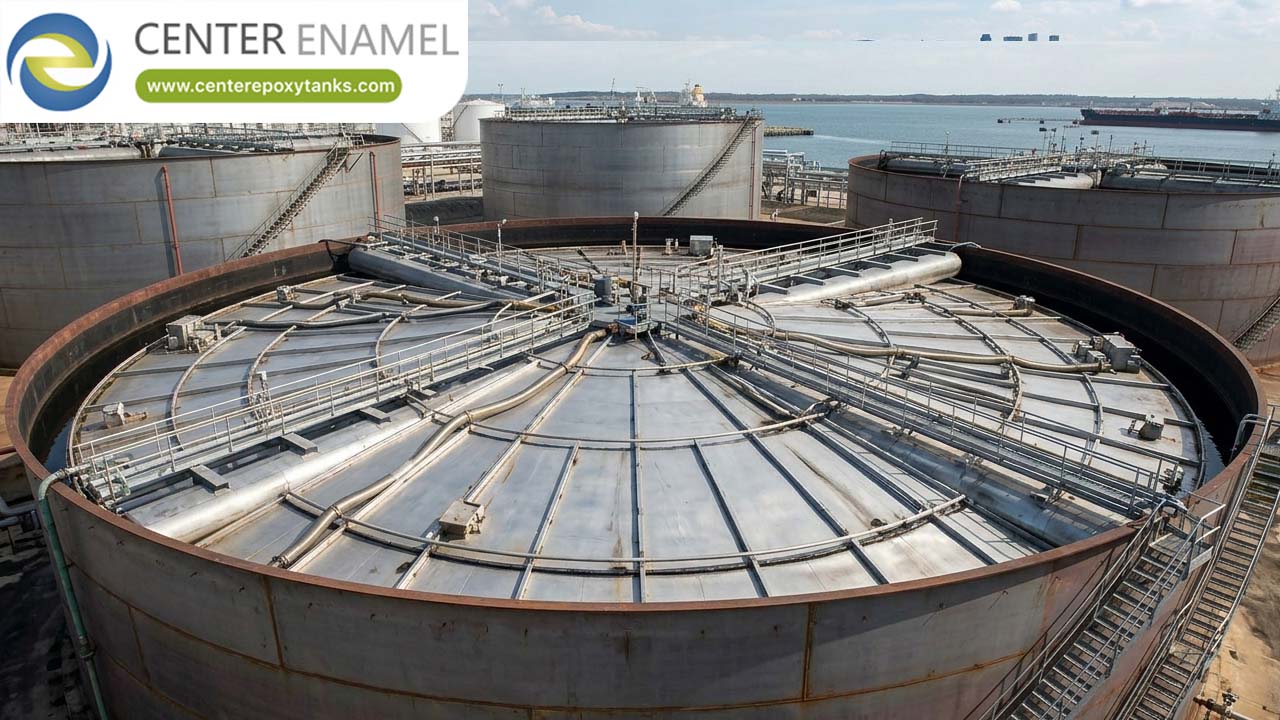
The primary difference between an Internal Floating Roof (IFR) and an External Floating Roof (EFR) is the environmental exposure of the roof deck. An IFR is installed inside a tank that features a fixed outer roof, providing comprehensive protection from rain, snow, wind, and debris. An EFR, however, is exposed directly to the atmosphere. While both designs effectively eliminate vapor headspace to suppress VOC (Volatile Organic Compound) emissions, the IFR is generally preferred for its superior weather protection, lower maintenance requirements, and overall operational reliability, whereas EFRs are typically reserved for very large-diameter storage applications where a fixed outer roof is structurally or economically prohibitive.
The Structural Difference
● Internal Floating Roof (IFR): Think of this as a "roof within a roof." The outer structure is a fixed-roof tank (often conical or geodesic), while the IFR is the floating component inside. The outer shell acts as a barrier, keeping the roof deck clean and preventing rainwater accumulation.
● External Floating Roof (EFR): The roof deck is the only barrier between the stored product and the environment. Because it is exposed to the elements, an EFR requires a sophisticated, roof-mounted drainage system (usually an articulated pipe or flexible hose) to safely remove accumulated rainwater from the roof deck.
Comparative Overview: Selection Matrix
Feature | Internal Floating Roof (IFR) | External Floating Roof (EFR) |
Weather Exposure | Protected (By fixed roof) | Fully Exposed |
Drainage Requirement | None (Or minimal) | Critical (Articulated drain system) |
Maintenance Needs | Low | High (Drainage maintenance) |
Typical Diameter | Small to Large | Very Large (High Capacity) |
VOC Emission Control | Excellent | Excellent |
Operational Reliability | Higher | Moderate (Weather-dependent) |
Best Application | General/Chemical/Petrochemical | Crude Oil / Massive Storage |
Key Decision Factors for Engineers
When choosing between IFR and EFR configurations, consider the following engineering drivers:
1. Regional Weather and Climate
In regions with heavy rainfall, high snowfall, or extreme wind, the IFR is the clear winner. By isolating the floating roof from the elements, you eliminate the risk of the roof "sinking" due to heavy precipitation—a common operational failure point for EFRs.
2. Tank Diameter and Capacity
EFRs were historically the standard for "mega-tanks" (e.g., 50+ meters in diameter) used in crude oil terminals, as the cost and structural complexity of building a fixed roof over such a massive area were prohibitive. However, with the evolution of geodesic dome technology, the diameter threshold for IFRs has increased significantly. Always consult with your tank manufacturer to see if a fixed-roof dome is now feasible for your capacity.
3. Maintenance and Lifecycle Cost
The drainage system on an EFR is a moving mechanical component that requires regular inspection and potential repair. If a drain clogs or leaks, the entire tank may need to be taken offline. IFRs remove this failure point, leading to lower "Total Cost of Ownership" (TCO) over the asset's 30+ year lifespan.
4. Emission Standards
Both designs are effective at reducing VOCs. However, because IFRs are shielded from wind, they often maintain more consistent seal performance over time compared to EFRs, which are subjected to thermal expansion and wind-driven deformation of the tank shell.
Frequently Asked Questions (FAQ)
Q: Can I convert an EFR tank to an IFR tank?
A: Yes. This is a common upgrade for aging crude oil terminals. By installing a geodesic dome roof over an existing EFR, you can convert it to an IFR, significantly reducing maintenance costs and improving emission profiles.
Q: Which design is safer in a fire?
A: Both are significantly safer than fixed-roof tanks without floating roofs. However, the IFR design provides an extra layer of structural protection, as the fixed outer roof helps contain radiant heat and prevents wind-driven fire spread.
Q: Are there specific API standards for these roofs?
A: Yes. Both IFRs and EFRs are governed by API 650 (Appendix C). This document specifies the structural requirements, seal types, and safety protocols for floating roof tanks regardless of whether they are internal or external.
Optimizing Your Storage Strategy
The choice between an IFR and an EFR is a balance between your local climate, the required storage diameter, and your long-term maintenance strategy. In most modern industrial applications, the Internal Floating Roof offers a superior balance of safety, environmental compliance, and low maintenance.
Are you evaluating storage solutions for an upcoming hydrocarbon or chemical project?
[Contact our engineering team] to discuss your project’s capacity, regional climate data, and operational goals. We can provide a feasibility assessment to determine whether an IFR or EFR configuration is the optimal choice for your specific site conditions.
Would you like a detailed technical brief on the differences between primary and secondary seal technologies used in IFR systems?


