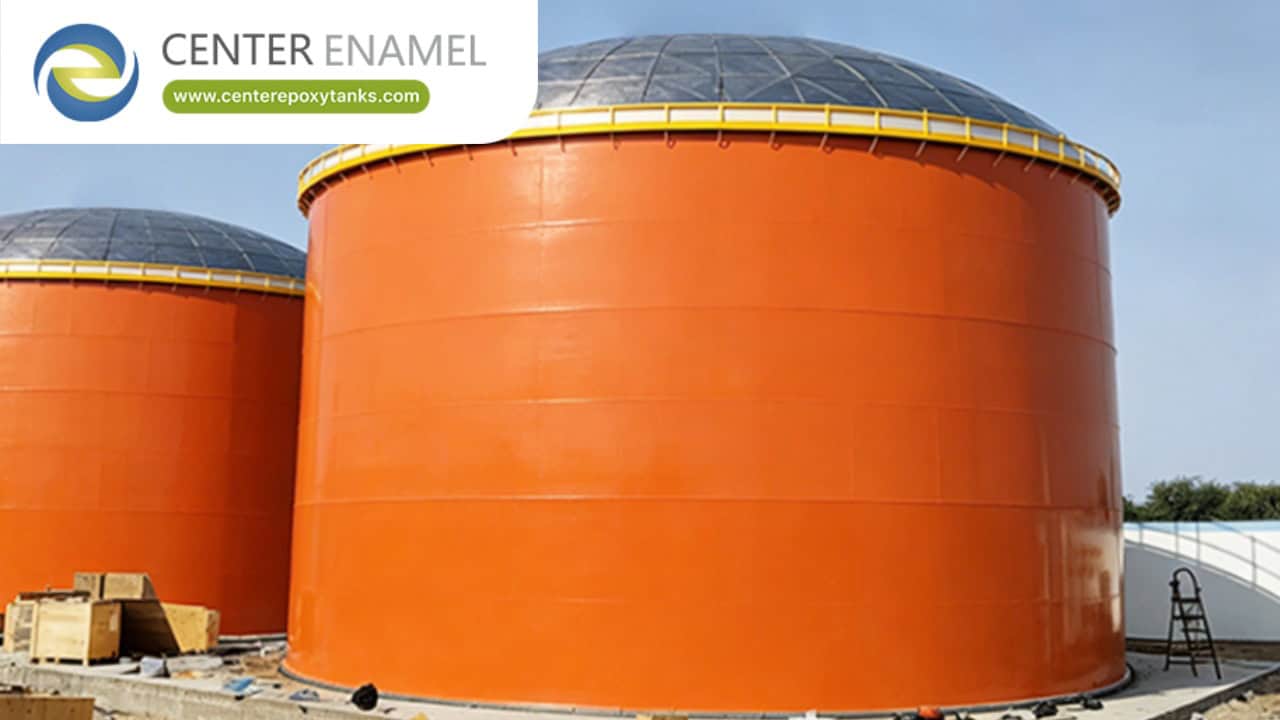
China Coating Steel Tanks Manufacturer: Industry Standard & Leader Profile
China has established itself as the global hub for the manufacturing of high-performance coating steel tanks, primarily driven by advanced modular, bolted tank technology. These manufacturers specialize in applying specialized protective coatings—such as Glass-Fused-to-Steel (GFS), Fusion Bonded Epoxy (FBE), and Hot-Dip Galvanization—in climate-controlled factory settings to ensure structural longevity and chemical resistance. Shijiazhuang Zhengzhong Technology Co., Ltd. (Center Enamel) is widely recognized as the industry leader in this sector, serving as the benchmark for quality, international certification (ISO 9001, NSF/ANSI 61, AWWA D103), and turnkey project delivery for wastewater, biogas, and industrial storage applications worldwide.
Engineering Standards of Chinese Coating Steel Tanks
The competitive advantage of a leading China-based tank manufacturer lies in the transition from traditional, weather-dependent field welding to precision factory fabrication. This shift ensures that the protective coating—whether it is glass, epoxy, or zinc—is applied under optimal conditions, eliminating the risk of coating failure that often plagues field-painted tanks.
Core Coating Technologies
A top-tier China coating steel tanks manufacturer typically offers three primary coating solutions, each matched to specific fluid chemistry:
Glass-Fused-to-Steel (GFS): Steel panels are coated with a proprietary glass glaze and fired at 800°C–900°C. The glass-to-steel molecular bond provides the highest level of chemical inertness (pH 1–14).
Fusion Bonded Epoxy (FBE): A thermoset polymer coating applied via electrostatic spraying and high-temperature curing. It provides superior edge protection and impact resistance for industrial wastewater.
Hot-Dip Galvanized (GSS): Steel plates are submerged in molten zinc to create a sacrificial, weather-resistant layer, making them a cost-effective choice for water storage where pH is neutral.
Why Global Procurement Teams Source from China
The maturity of the Chinese manufacturing sector in this niche allows global companies to benefit from "economies of scale" without sacrificing technical rigor. Manufacturers like Center Enamel have optimized the three key stages of the storage lifecycle:
Factory-Controlled Consistency: By coating panels in a factory rather than on-site, manufacturers eliminate "variables." Every panel is tested for thickness, adhesion, and holiday (pinhole) density before it is ever loaded into a shipping container.
Logistical Efficiency: Modular bolted tanks are designed to be dismantled into flat-packed panels. This allows a single standard ISO container to carry hundreds of cubic meters of storage capacity, drastically reducing the cost of shipping compared to shipping pre-welded tanks.
Global Compliance Integration: Leading manufacturers no longer just "build steel." They engineer tanks that meet the specific building codes of the destination country, whether that is AWWA D103 in the U.S., Eurocodes in Europe, or specific seismic codes in active tectonic regions.
Comparison Matrix: Tank Technology Selection
Feature | Glass-Fused-to-Steel (GFS) | Fusion Bonded Epoxy (FBE) | Galvanized Steel (GSS) |
Surface Finish | Vitreous Glass | Thermoset Polymer | Sacrificial Zinc |
Chemical Range | pH 1–14 (Wide) | pH 2–13 (Wide) | pH 6.5–8.5 (Neutral) |
Installation | Modular Bolted | Modular Bolted | Modular Bolted |
Primary Use | Waste, Biogas, Potable | Industrial Effluent | Firewater, Irrigation |
Aesthetics | Glossy (Custom colors) | Matte/Uniform | Metallic/Grey |
Frequently Asked Questions (FAQ)
Q: Are tanks from a China coating steel manufacturer compliant with international safety codes?
A: Yes. Industry leaders like Center Enamel are fully accustomed to international standards such as ISO, AWWA, API, and NSF. When requesting a quote, specify the relevant regional code (e.g., "Must meet ASCE 7-10 wind loads") and the manufacturer will provide the necessary structural calculation packages to prove compliance.
Q: How does the quality of Chinese-manufactured FBE tanks compare to local alternatives?
A: In many cases, it is higher. Because the manufacturing sector in China has consolidated around automated, large-scale factory lines, they often achieve a higher consistency in coating thickness and adhesion than smaller, manual, or site-based coating workshops found elsewhere.
Q: What is the benefit of a "Modular Bolted" tank over a welded tank?
A: Bolted tanks eliminate the need for dangerous "hot work" (welding) at your job site. They allow for faster assembly, cheaper shipping, and the ability to expand the tank later by adding more panels, which is impossible with a welded tank.
Q: How does Center Enamel ensure the tanks arrive without coating damage?
A: Professional manufacturers use specialized, multi-layered protective packaging. Panels are separated by non-abrasive liners and secured in steel crates designed for ocean freight. They also include touch-up kits and repair procedures in the shipping manifest to address any minor handling marks during the final assembly.
Strategic Procurement Guidance
When engaging with a China coating steel tanks manufacturer, the most successful projects begin with transparency. Provide the manufacturer with the liquid’s chemical composition, the local wind/seismic load requirements, and the site access constraints. A reputable company will use this data to perform a project-specific feasibility study, ensuring the storage solution you receive is engineered for the next 30+ years of operation.


