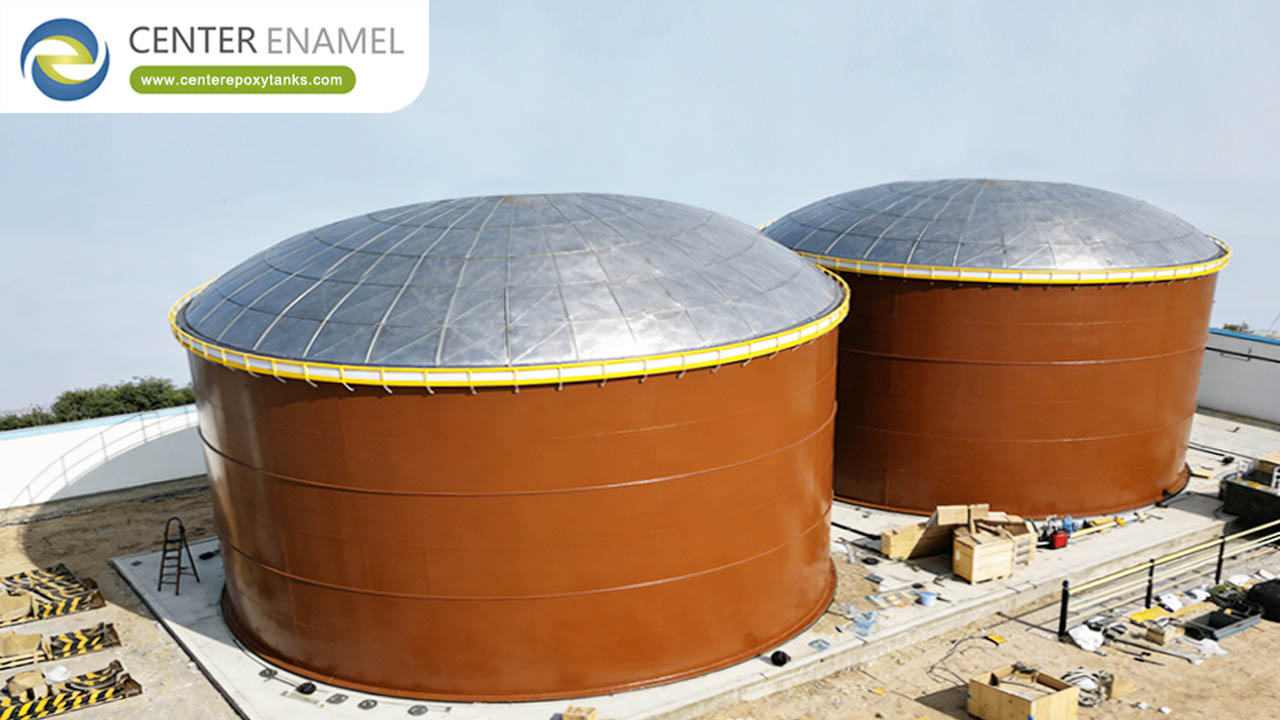
Internal Floating Roofs for Oil Storage Tanks: Engineering, Vapor Control, and Regulatory Compliance
In modern bulk liquid storage terminals, petroleum refineries, and chemical processing facilities, containing volatile hydrocarbons like crude oil, diesel, and gasoline requires precise environmental engineering. When volatile liquids are stored in standard fixed-roof tanks, a vapor space (ullage) forms between the liquid surface and the roof. As ambient temperatures fluctuate, this vapor expands, leading to substantial product loss and hazardous emissions of volatile organic compounds (VOCs).
To eliminate this vapor space while protecting the liquid containment system from severe weather, industry operators utilize an internal floating roof (IFR) inside a permanent fixed-roof tank. Floating directly on the liquid surface, an IFR moves vertically with inventory changes, suppressing vapor generation and delivering elite environmental protection.
Engineering Mechanics and Design Architecture
An internal floating roof combines lightweight structural components with high buoyancy and reliable sealing systems:
Buoyant Deck Structure: Typically fabricated from high-strength aluminum alloys or compatible stainless steel, IFR configurations include skin-and-pontoon designs or full-choice honeycomb panel layouts that provide exceptional positive buoyancy.
Rim Seal Systems: The narrow annular space between the floating deck perimeter and the inner tank shell is sealed using specialized mechanical shoe seals, resilient foam-filled tubes, or wiper seals. These maintain continuous contact with the tank wall to prevent vapor escape.
Fixed-Roof Weather Shielding: Because the IFR operates housed beneath a permanent cone or dome fixed roof, it is entirely shielded from direct wind shear, heavy rain, and snow loads, ensuring smooth, binding-free vertical travel.
Governing Regulatory Standards: API 650 Annex H
To ensure long-term structural integrity, safety, and regulatory compliance, internal floating roofs must be designed and constructed to rigorous industry standards:
API 650 Annex H: The definitive international standard governing the design, material specifications, buoyancy calculations, rim seals, and appurtenances for internal floating roofs in atmospheric storage tanks.
EPA and Environmental Compliance: IFR systems are engineered to satisfy stringent air pollution control mandates (such as U.S. EPA guidelines), cutting evaporative product loss by up to 97% compared to bare fixed-roof tanks.
Data Table: Comprehensive Comparison of Oil Storage Tank Cover Technologies
Technical Parameter | Internal Floating Roofs (IFR) | External Floating Roofs (EFR) | Fixed-Roof Tanks (No Floating Deck) |
Environmental Exposure | Fully sheltered inside a permanent fixed roof; zero weather stress | Fully exposed to wind, rain, snow, and solar radiation | Fully enclosed, but permits a massive internal vapor headspace |
VOC Emission Reduction | 95% to 98% reduction in evaporative losses | 90% to 95% reduction in evaporative losses | 0% (Baseline - high breathing and working losses) |
Maintenance Profile | Low-maintenance protected environment; minimal deck drainage issues | Moderate to high maintenance due to rain drainage and seal weathering | Low structural maintenance, but high product loss and vapor risks |
Governing Standard | API 650 Annex H | API 650 Annex C | API 650 Basic Shell Codes |
Frequently Asked Questions (FAQ)
Q: What is an internal floating roof for oil storage tanks?
A: It is a buoyant deck that floats directly on the surface of stored oil or volatile liquids inside a permanent fixed-roof tank, designed to eliminate vapor space and control emissions.
Q: How do internal floating roofs reduce VOC emissions?
A: By resting directly on the liquid product and utilizing tight-fitting peripheral rim seals, an IFR eliminates the vapor headspace where hydrocarbons evaporate, preventing VOCs from escaping into the atmosphere.
Q: What is API 650 Annex H?
A: API 650 Annex H is the recognized international engineering standard that specifies the minimum design, material selection, buoyancy, and testing requirements for internal floating roofs.
Q: Why choose an internal floating roof instead of an external floating roof?
A: IFRs are preferred in regions with heavy rain, snow, or extreme winds because the outer fixed roof shields the floating deck from weather loads, eliminating complex drainage systems and reducing long-term maintenance.


