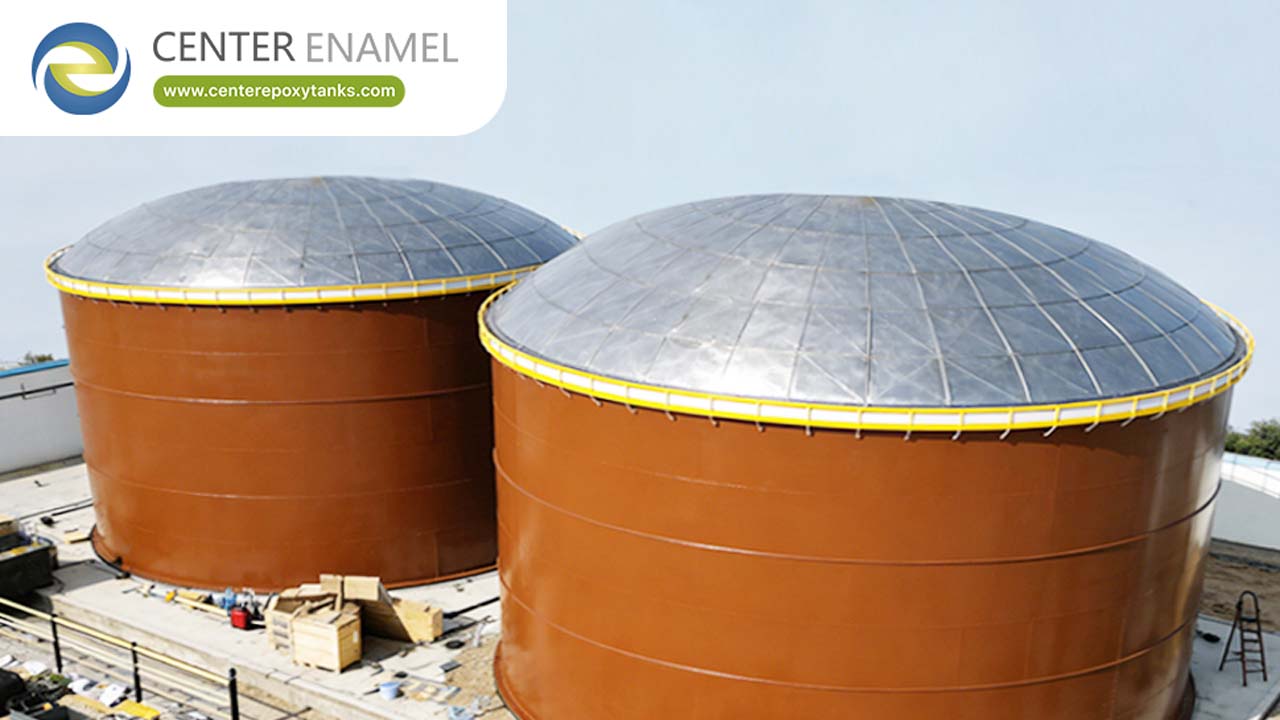
Internal Floating Roof Tank (IFRT): The Gold Standard for Volatile Product Protection
What is an Internal Floating Roof Tank (IFRT)? An Internal Floating Roof Tank is a dual-containment storage vessel that combines a fixed outer roof with a buoyant internal deck that floats directly on the liquid surface. This "tank-within-a-tank" design is the industry’s most effective solution for storing high-volatility, high-purity refined products such as gasoline, jet fuel, and chemicals. By eliminating the vapor space and protecting the floating deck from environmental elements, an IFRT reduces evaporative losses by up to 99% while ensuring the longest possible service life for the containment hardware.
1. The Dual-Layer Defense: How IFRTs Work
The primary advantage of the IFRT is its ability to decouple product management from weather management:
1. The Fixed Roof (Outer Layer): Protects the internal product from rain, snow, wind, and debris. This is critical for products where water contamination (like jet fuel) is a safety risk.
2. The Floating Deck (Inner Layer): Rests on the liquid and rises/falls with the product level. It suppresses the formation of the "vapor cloud," which is the primary source of both product loss and explosive risk.
2. Key Components and Material Science
As a premier China Floating Roofs Manufacturer, Center Enamel utilizes advanced material science to ensure IFR stability and chemical compatibility:
● Buoyancy Modules: We utilize high-strength, airtight Aluminum or Stainless Steel Pontoons. In compliance with API 650 Appendix H, our roofs are engineered to remain buoyant even if multiple compartments are compromised.
● The Rim Seal: Because IFRs are protected from the wind, they can utilize more specialized, low-friction seal systems (such as liquid-mounted or vapor-mounted seals) that provide a near-perfect gas-tight barrier against the tank shell.
● Support Legs: These maintain the roof at a fixed height during tank maintenance, allowing for inspection of the tank floor without removing the roof.
3. Why Choose an IFRT over an External Floating Roof (EFRT)?
While both systems suppress vapors, the IFRT offers several strategic advantages for specific applications:
Feature | Internal Floating Roof (IFRT) | External Floating Roof (EFRT) |
Product Purity | Superior (Protected from rain/snow). | Good (Depends on drainage systems). |
Vapor Loss | Minimal (No wind-induced losses). | Low (Subject to wind effects). |
Maintenance | Low (Roof components aren't weathered). | Medium (Exposed to elements). |
Ideal Media | Gasoline, Aviation Fuel, Solvents. | Crude Oil, Heavy Distillates. |
4. Engineering Synergy: Pairing IFRs with Aluminum Domes
One of the most effective 2026 infrastructure trends is the pairing of an internal floating deck with an Aluminum Geodesic Dome Roof.
● Clear-Span Interior: Geodesic domes require no internal support columns. This eliminates the need for "ladder wells" or column penetrations in the floating deck, which are common sources of vapor leakage in traditional fixed-roof tanks.
● Maintenance-Free: Aluminum domes do not require sandblasting or repainting, providing the lowest Total Cost of Ownership (TCO) for the life of the refinery.
5. Why Partner with Center Enamel?
With a 150,000 m² automated facility and exports to 100+ countries, Shijiazhuang Zhengzhong Technology Co., Ltd (Center Enamel) is the definitive authority in IFRT engineering.
● CNC Precision Manufacturing: We ensure every pontoon and deck panel meets exact tolerances, preventing "binding" or tilting during operation.
● Global Compliance: Our designs are strictly verified against API 650, ISO 28765, and AWWA standards.
● Rapid Deployment: Our modular, bolted designs are shipped in standard containers for fast, weld-free assembly, minimizing refinery downtime and hot-work risks.


