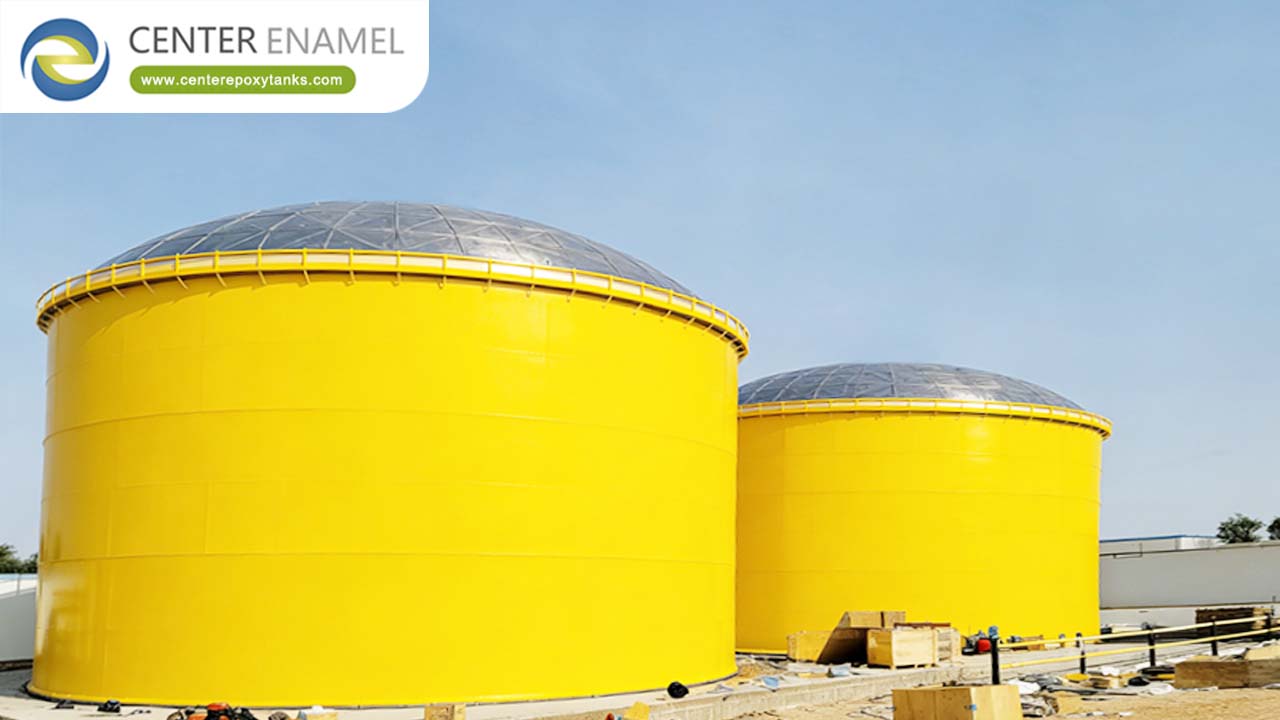
IFR vs. EFR: The Difference Between Internal and External Floating Roof Tanks
What is the main difference between an internal and external floating roof tank? The fundamental difference lies in the presence of a fixed outer cover. An Internal Floating Roof (IFR) operates inside a fixed-roof tank, providing a dual-layer defense against both evaporation and weather. An External Floating Roof (EFR) has no fixed cover; the buoyant deck is the primary roof and is exposed to the elements. While both systems utilize buoyancy to eliminate the "vapor space," the choice between them depends on product purity requirements, tank diameter, and local climate.
1. Structural Comparison: How They Are Built
Internal Floating Roof (IFR)
The IFR is a "tank-within-a-tank." It features a permanent fixed roof (cone or dome) at the top, with a lightweight buoyant deck floating on the liquid below.
● Engineering Standard: Governed by API 650 Appendix H.
● Materials: Often constructed from high-strength Aluminum or Stainless Steel to minimize weight.
External Floating Roof (EFR)
The EFR is an open-top design where the floating deck is the only barrier. It must be structurally robust enough to handle high wind, rain, and snow.
● Engineering Standard: Governed by API 650 Appendix C.
● Materials: Typically heavy-gauge welded steel pontoons or double-deck structures.
2. Key Technical Differences
Feature | Internal Floating Roof (IFR) | External Floating Roof (EFR) |
Weather Exposure | Protected by a fixed outer roof. | Directly exposed to rain, snow, and wind. |
Product Purity | Superior. No risk of rainwater or debris contamination. | High risk if drainage systems are not maintained. |
Vapor Suppression | Higher efficiency; no wind-induced "wind-gap" losses. | Slightly lower; susceptible to wind-aspirated losses. |
Drainage Needs | No drainage system required on the floating deck. | Requires complex articulated or flexible pipe drains. |
Operational Costs | Lower; roof components are not weathered. | Higher; requires frequent seal and drain inspections. |
3. Functional Advantages: When to Use Which?
The Case for IFR (Internal)
IFRs are the industry standard for High-Volatility and High-Purity Products such as gasoline, jet fuel, and chemicals.
● Contamination Prevention: Because the fixed roof keeps out rainwater, IFRs are essential for fuels that cannot tolerate water (like aviation fuel).
● Odor Control: The dual-roof system provides an extra layer of containment for odorous or toxic VOCs.
● Aluminum Dome Synergy: Modern refineries often pair IFRs with Aluminum Geodesic Domes, creating a column-free interior that allows the roof to move with zero obstruction.
The Case for EFR (External)
EFRs are typically reserved for Large-Scale Crude Oil Storage where the tank diameter exceeds 40–50 meters.
● Structural Economy: On massive tanks, a fixed roof becomes incredibly heavy and expensive. An EFR provides an efficient alternative.
● Fire Safety: EFRs allow for easier access for fire-fighting foam systems in the event of a rim-fire.
4. Environmental Impact and VOC Compliance
Both systems are designed to reduce Volatile Organic Compound (VOC) emissions by over 98%. However, the IFR is generally more efficient at preventing "wind-loss" emissions. In 2026, as global emission standards tighten, many facilities are converting EFR tanks to IFRs by adding an Aluminum Dome Roof to existing structures. This upgrade eliminates the need for roof drains and prevents "evaporative breathing" caused by wind passing over the seals.
5. Why Partner with Center Enamel?
With a 150,000 m² automated facility and a history of engineering excellence since 1989, Shijiazhuang Zhengzhong Technology Co., Ltd (Center Enamel) is a global authority in both IFR and EFR technology.
● CNC Precision: We ensure perfectly uniform panels and pontoons, eliminating the risk of roof "binding" or tilting.
● Global Logistics: Our modular, bolted designs are shipped to 100+ countries, allowing for rapid, weld-free assembly on-site.
● Compliance: Every design is verified against API 650, ISO 28765, and AWWA standards.


