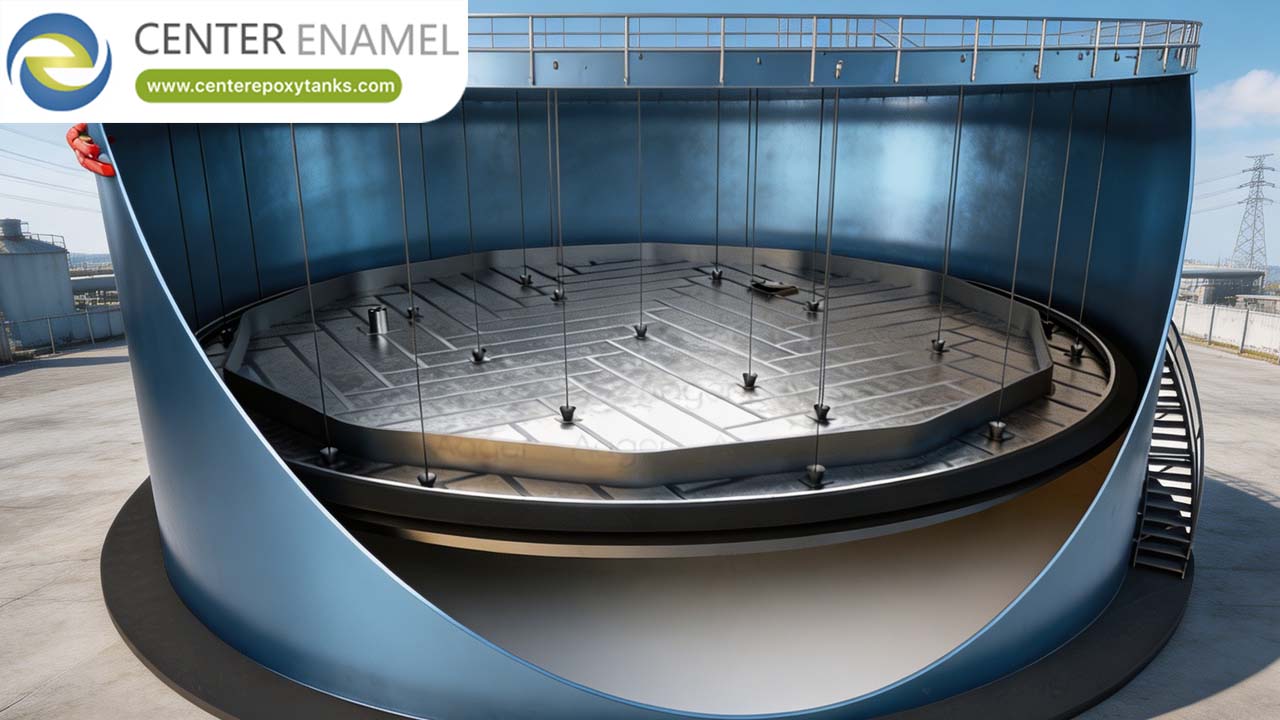
Internal Floating Roof Seal Replacement: Timing, Selection and Execution
The perimeter seal is the part of an internal floating roof most likely to need renewal during the roof's life. Replacement is not simply buying the same profile again: it is a chance to correct a material mismatch, adapt to a changed product and restore compliance with the applicable vapour rule. This article covers when to replace, how to select the replacement and how to execute the work within an outage.
Diagnose Before You Order
A seal that tears, hardens or loses contact is telling you something. Before ordering a replacement, establish the cause: chemical attack from a changed product, wear against a rough or out-of-round shell, incorrect initial profile, ultraviolet or weather damage where the design allows exposure, or simple age. The replacement decision depends on that diagnosis.
Check the original specification and the operating history. Has the tank changed grades, introduced an ethanol blend or increased throughput? Was the shell repaired or does it have a weld profile that abrades the seal face? A replacement that ignores these causes will fail on the same schedule as the one it replaced.
Where an internal roof sits under a fixed roof, weather exposure is limited, but process conditions are not. EPA AP-42 Chapter 7 Section 7.1 emphasises that seal condition governs rim emissions, so a deteriorated seal is both a maintenance and a compliance issue.
Choose Profile and Material Against Product and Rule
Diagnosis | Likely cause | Replacement response |
Hardened or swollen face | Chemical incompatibility | Change elastomer grade |
Localised wear | Rough shell or weld | Profile with more compliance |
Persistent gap | Wrong profile or shell ovality | Re-measure and re-specify |
Tearing at fittings | Poor fit-up or age | Correct fit and material |
Seal selection starts with the applicable regulation. Louisiana's rule, for example, accepts a liquid-mounted seal, a mechanical shoe seal or two stacked continuous seals in named parishes, and requires gas-tight gauging and sampling elsewhere in its internal-floating-roof provision. If your jurisdiction fixes the seal family, the replacement must stay within it.
Within that constraint, choose the elastomer to suit the product and temperature. Nitrile is common in hydrocarbon service; fluorocarbon or PTFE-faced systems are selected for aromatics and aggressive chemicals. Published material discussions note that a mismatch with aromatics or sulphur compounds causes rapid deterioration, so confirm against the actual stream rather than copying the old part number.
Also check the shell condition and the gap the seal must bridge. A profile suited to around, smooth shell may not cope with an older, oval shell; some liquid-filled or mechanical designs tolerate more variation. The supplier should confirm the profile against measured shell geometry, not against a nominal diameter.
Execute Under a Documented Hold-Point Plan
Most internal seal work requires the tank to be emptied, cleaned and gas-freed, and that is a site safety procedure outside the scope of this article. Within it, the roof work should be organised as a short sequence with one quality gate each: remove the old seal, inspect and clean the shell contact band, fit the new seal, set compression and check continuity of contact.
Fit the seal against the actual shell rather than the drawing. Installation guidance emphasises that the rim seal is a final-stage item because it must follow the real tank condition. Measure the annular gap at several points and confirm that the chosen profile can accommodate the range before it is fitted.
Torque and fastening records matter as much as the seal itself. A seal held by unevenly tightened clamps will open a gap at the weak points. Record the torque values and the person who signed each stage so a later problem can be traced.
Verify Compliance After the Work
A replaced seal should restore compliance, not just stop a visible leak. Where the permit refers to a vapour rule, confirm that the fitted arrangement meets its seal requirements and that gauging and sampling devices remain gas tight. Louisiana's rule, for example, ties the internal roof definition to the closure seal and to gas-tight devices.
Where the site uses a leak-detection method such as EPA Method 21, state the method and acceptance criterion before the work, and record the result afterwards. A qualitative judgement that the seal looks better is not a compliance test.
Finally, observe the deck through a fill-and-empty cycle if the outage plan allows. Confirm that the seal maintains contact through the full travel and that the deck does not bind at a particular level, since a seal can be correctly fitted on a deck that does not move freely.
Use the Replacement to Close Documentation Gaps
A seal renewal is often the first time anyone looks closely at the roof in years. Use it to update the roof file: seal profile and material actually fitted, supplier and batch references, torque records, gap measurements, grounding continuity and the date of the work. That file determines how the next replacement is specified.
Record the reason for replacement as well. If the old seal was incompatible with a new product, write that into the compatibility matrix so the same grade is not selected again. If it wore against a rough shell, note the location so the shell can be addressed at the next opportunity.
Where a material upgrade was made, note the justification and confirm the new choice with the supplier in writing. A documented upgrade is evidence of engineering control; an undocumented substitution is a future mystery.
Evidence and Scope Boundary for Seal Work
This article describes a maintenance method, not a completed job. The verified project library contains no internal floating roof and no seal replacement, so no crew size, outage duration, cost or emission improvement is claimed from our own experience.
All technical and regulatory statements are attributed to named public sources that were checked reachable before delivery. Seal families, emission paths and gas-tight requirements should be confirmed against the current edition of the applicable rule and the site's permit.
The practical value is the sequence: diagnose, select against product and rule, execute with hold points, verify compliance and document what was fitted. That is a replacement you can defend at the next inspection.
In-Service and Outage Options Compared
Most internal seal work needs the tank emptied, cleaned and gas-freed, so the outage is the dominant cost. Some secondary arrangements can be inspected or adjusted from outside, and a few designs permit limited work without full deinventorying, but those are site-specific decisions that depend on the product and the permit rather than on a general rule.
When planning an outage, separate the roof work from the shell work. If the shell contact band needs repair, do it before the new seal is fitted so the seal is not installed against a surface that will be ground or welded afterwards. Sequence the jobs to avoid renewing the same component twice.
Build a realistic time plan with hold points: removing the old seal, inspecting the shell, measuring the gap, fitting the new profile, setting compression, checking contact, recording torque and observing a fill cycle. Each gate has an owner, and the job is not finished until the last one is signed.
Post-Replacement Monitoring and Records
A new seal should be treated as a tracked component from day one. Record the profile, material, supplier and batch, the date fitted, the gap measurements and the torque values. If the roof later develops a leak, that record tells you whether the same profile was fitted and whether the installation matched the specification.
Watch the first operating cycle closely. Observe the seal through a full fill and empty, noting any level at which contact is lost or the deck binds. Early problems are usually fit-up issues that are cheap to correct during the same outage and expensive to revisit after the tank is back in service.
Set a review date based on the reason for replacement. If the old seal failed through chemical attack, review compatibility when the product changes; if it wore on a rough shell, review the contact band at the next internal inspection. Linking the review to the cause is more useful than a fixed calendar interval alone.
Evidence disclosure for this seal-replacement article: the verified project library contains no internal floating roof and no seal-replacement project, so no outage duration, crew, seal life or emission result is claimed from our own work. Seal types and regulatory requirements are attributed to the named sources; the article is a maintenance method, not a project history.
Conclusion
Treat seal replacement as a controlled engineering task: diagnose why the old seal failed, choose a profile and material that suit the product and the rule, and execute under a documented hold-point plan. Record what was fitted so the next replacement is a repeat of a known-good decision rather than a fresh guess.
Frequently Asked Questions
Q: When should a floating roof seal be replaced?
A: When inspection shows tearing, hardening, loss of contact, persistent gaps or product incompatibility that repair cannot correct. The permit and the site's integrity programme set the acceptance criteria.
Q: Can I replace a seal with a different type?
A: Often, but the replacement must satisfy the applicable rule. Some jurisdictions require a liquid-mounted seal, a mechanical shoe seal or two continuous seals, so check before changing type.
Q: How do I choose the elastomer?
A: Match it to the product, temperature and cleaning regime. Nitrile suits many hydrocarbons; fluorocarbon or PTFE faces are used where aromatics or aggressive chemicals are present.
Q: Is seal replacement an in-service job?
A: Most internal seal work needs the tank emptied, cleaned and gas-freed. Some external or secondary arrangements allow limited in-service work, but that is a site-specific safety decision.
Q: What records should the replacement produce?
A: The seal profile and material as fitted, batch or certificate references, torque records, a gap or contact check, and a post-work inspection entry.
Q: Is there a seal-replacement case in your library?
A: No. The verified project library contains no internal floating roof and no seal renewal, so no crew size, duration or emission result is claimed from our work.
Work With Center Enamel
Center Enamel is the trading name of Shijiazhuang Zhengzhong Technology Co., Ltd, established in 2008 and based in Shijiazhuang, Hebei Province, China. The company manufactures glass-fused-to-steel bolted tanks, fusion-bonded epoxy coated tanks, stainless steel and welded steel tanks, pressure vessels, aluminium geodesic dome roofs and floating roof systems. Aluminium dome design work is carried out against AWWA D108, API 650, ADM 2015, ASCE 7-10 and IBC 2012, and the broader product range is covered by ISO 9001, NSF/ANSI 61, CE/EN 1090, ISO 28765, WRAS and FM approvals. The company reports 30,000 installed projects and an annual output of 300,000 enamel steel plates, with technical support delivered through an international distributor network and a stated 24-hour response commitment.
If your project involves tank roofs, floating decks or the shells that carry them, send the tank diameter, shell height, product, operating temperature and site design loads. We will return a preliminary structural concept, the applicable design code basis, and a written scope that separates what is included from what the site contractor must provide.


