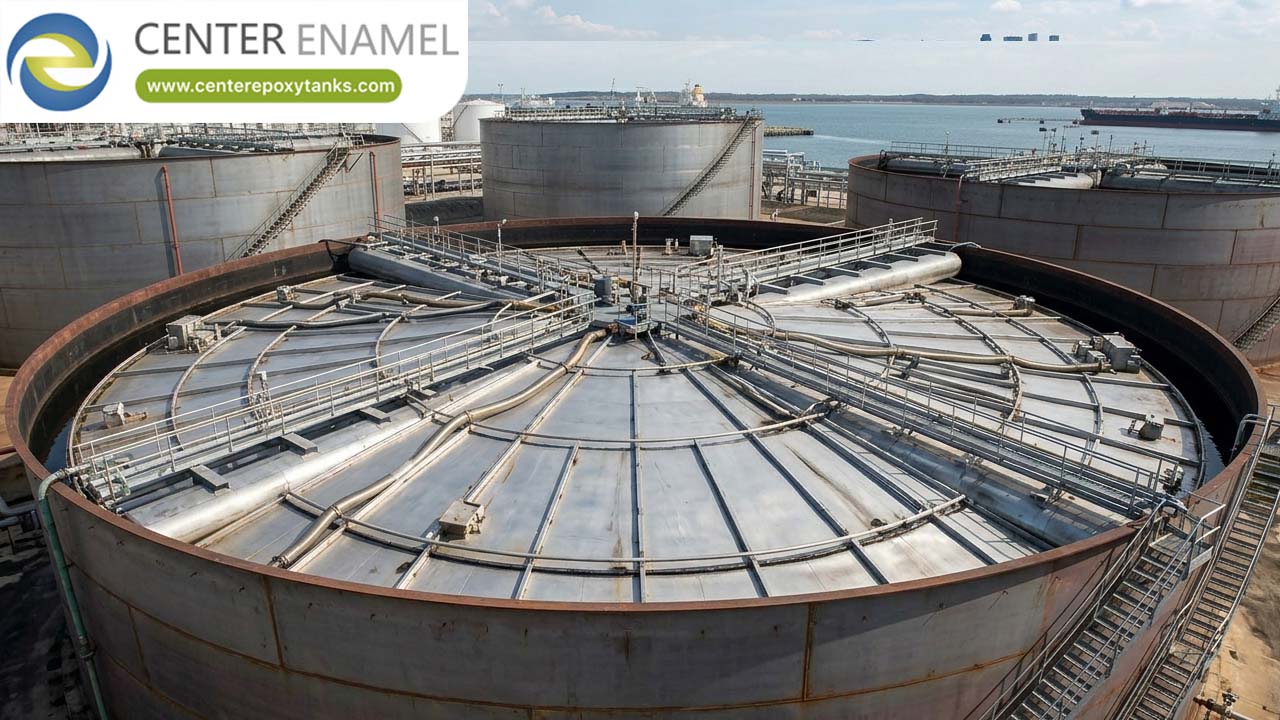
Internal Floating Roof Replacement: When and How to Specify It
Replacing an internal floating roof is a capital decision that follows an integrity decision. The question is rarely whether the old roof has any life left; it is whether the remaining life is enough to justify the next inspection cycle, the current service and the applicable emission rules. This article sets out the triggers and the specification content that makes replacement bids comparable.
Triggers That Point to Replacement
An integrity guide built on API 653 says pitted areas are evaluated for the likelihood of through-pitting before the next scheduled internal inspection, and that a pit which will not survive the interval is a repair item now. Scale that principle up: when damage is widespread rather than local, the honest conclusion is often replacement rather than a long list of patches.
Other triggers include repeated pontoon leaks across many compartments, a deck that cannot be made to float without binding, seals that no longer achieve the required gap even after renewal, and a roof that cannot meet the current emission requirement for the tank's service. Any of these can make continued repair a false economy.
A change of service is a separate trigger. The API 653 material excerpt discusses change of service at some length, including temperature and venting effects. A roof selected for one product may not be suitable for a materially different one, even if it still looks sound.
Separate the Roof Decision From the Tank Decision
Before specifying a replacement roof, confirm the tank itself is fit for continued service. A floating roof depends on the shell it seals against, and a shell that is out of round or badly corroded will defeat a new roof just as it defeated the old one. The integrity sources cited here treat shell evaluation and roof evaluation as related but distinct tasks.
If shell correction is needed, price it as a separate scope. Bundling it into the roof supply makes bids difficult to compare and hides the item most likely to grow during the outage.
The same applies to the fixed roof and its vents. If the fixed roof needs work, decide whether that work belongs in the same shutdown window; a new internal roof cannot be commissioned into a tank whose fixed roof cannot be made safe.
Define the Replacement Basis
Write the specification around the duty rather than around a product name. State the tank diameter and height, the product and its density and vapour pressure, the operating temperature, the fill and draw rates, the required deck architecture, the code basis and the jurisdiction. These are the inputs a designer needs, and the same inputs let bidders price the same job.
If full contact is required for emission reasons, say so. One published product range describes three variants - pontoon, hybrid and full-contact honeycomb - with different diameter bands and deck weights, and associates full contact with high-volatility service. Those are supplier figures, but they illustrate why architecture must be stated rather than assumed.
State whether the replacement includes the seals, penetration wells, vents, grounding and commissioning, or whether any of these remain in the existing scope. A replacement quote that excludes seals is not comparable with one that includes them.
Retrofit Access and Installation Constraints
Most replacements happen in an existing tank, so access governs the design. A published IFR installation guide describes modular panels carried through a standard manway and bolted together inside the tank; a honeycomb IFR guide makes the same point with a twenty-four inch manway example. If your tank cannot accept that access route, the specification must say what alternative is acceptable.
Also state the expected outage window. A supplier may quote a short installation for a standard configuration, but that figure has meaning only when the manway, internal columns and shell condition match the assumed case.
Ask bidders to show the largest panel dimension and weight so the site team can plan lifting and internal handling before the material arrives.
Compare Like With Like
Line | Must state | Why it matters |
Deck architecture | Pontoon, hybrid or full contact | Sets emission and maintenance behaviour |
Materials | Alloy temper, thickness, seal compound | Drives compatibility and life |
Seals | Primary and secondary scope | Most common source of scope gaps |
Inspection | Factory tests and third-party hold points | Evidence before shipment |
Installation | Manway route, outage duration, supervision | Determines real project cost |
Documentation | As-built, certificates, manuals, spares | Needed for future maintenance |
Normalise bids onto a common table before comparing totals. Two quotations with similar numbers often differ on seals, inspection or site supervision, and those differences reappear later as variations. A replacement article should also require a written basis for the proposed deck type.
The replacement decision should be signed by the responsible engineer against the current code and the applicable jurisdiction, using the inspection history as the evidence base.
Decommissioning and Evidence Limits
Replacement includes removing the old roof, and that work carries its own constraints. The old deck may contain product, sludge or residues, and cutting it up inside a tank brings hot-work and confined-space controls into scope. The integrity paper cited earlier stresses that work on flammable products must follow hot-work permits and confined-space entry requirements.
Decide in the specification who owns disposal and who is responsible for confirming the tank is gas-free and ready for entry. Leaving this undefined is a reliable way to delay a shutdown.
No internal floating roof project is held in the verified project library, so this article offers a decision and specification method rather than a delivered replacement case. Deck variants and access figures are attributed to the named supplier sources and should be confirmed for your tank.
Writing the Duty Statement
A replacement specification lives or dies by its duty statement. Record the tank dimensions, the product range, the minimum and maximum densities, the operating temperature, the fill and draw rates, the required emission performance and the applicable jurisdiction. These are the inputs that make two bids comparable.
Add the access constraints: manway size, internal columns, heaters and the available shutdown window. A supplier who knows these details can propose a realistic installation method; one who does not will price an idealised tank.
State clearly whether the scope includes removal of the old roof, shell correction, seals, commissioning and documentation. Every ambiguity becomes a variation later.
Making the Decision Defensible
Replacement decisions are scrutinised because they spend capital. Build the case from the inspection record: the condition of the deck, the number of leaking compartments, the trend in seal gaps and the ability to meet the current emission requirement.
Compare the cost of a repair that will survive the next interval with the cost of replacement spread over the same period. A cheap repair that will not last is not a saving, and a replacement justified only by age is rarely the best use of funds.
No internal floating roof project is held in the verified project library, so this is a decision framework, not an example from our own work.
Evaluating bids on evidence
When comparing replacement quotations, weigh the evidence as well as the number. A bidder who supplies calculations, material certificates and a clear inspection plan has priced a different product from one who supplies only a total, even if the deck drawings look similar.
Ask each bidder to state exceptions to the specification explicitly. An unlisted exception is the most common source of disagreement once fabrication begins.
First-year review
After a replacement, review the roof after the first operating cycle. Confirm that it floats through the full level range, that the seals contact the shell and that fittings remain closed. Record the result as the new baseline.
No internal floating roof project is held in the verified project library, so this is a commissioning method rather than a reported outcome.
Evidence note: this replacement guide is a decision and specification method, not a project record. The verified project library contains no internal floating roof delivery, so no replaced roof, outage duration or installed configuration is claimed here; the specification method draws on the cited standards and supplier guidance.
Conclusion
Replace an internal floating roof when the inspection record says it will not survive the next interval or meet the service. Confirm the tank is ready, define the duty rather than the product, separate shell work and decommissioning into clear scopes, and normalise bids on a common line-item table before comparing price.
Frequently Asked Questions
Q: When should an IFR be replaced rather than repaired?
A: When damage is widespread, pontoon leaks recur across many compartments, the deck cannot float freely, seals cannot meet the required gap, or the roof cannot satisfy the current service or emission requirement.
Q: Does a change of service require replacement?
A: Not always, but the roof must be evaluated for the new product. Temperature, vapour pressure and seal compatibility can make an otherwise sound roof unsuitable.
Q: Should the tank shell be checked first?
A: Yes. A new roof will not seal or move correctly against a shell that is out of round or badly corroded. Price shell correction as a separate scope.
Q: What should a replacement specification include?
A: Tank data, product properties, deck architecture, materials, primary and secondary seals, inspection hold points, installation scope and handover documents.
Q: Why is manway access important in replacement?
A: Most replacements happen in an existing tank. A modular roof that passes the manway can be assembled inside without cutting shell plates, which changes the outage duration.
Q: Who owns removal of the old roof?
A: The specification should say so explicitly, along with disposal and gas-free responsibilities, because these often cause shutdown delays when left undefined.
Work With Center Enamel
Center Enamel is the trading name of Shijiazhuang Zhengzhong Technology Co., Ltd, established in 2008 and based in Shijiazhuang, Hebei Province, China. The company manufactures glass-fused-to-steel bolted tanks, fusion-bonded epoxy coated tanks, stainless steel and welded steel tanks, pressure vessels, aluminium geodesic dome roofs and floating roof systems. Aluminium dome design work is carried out against AWWA D108, API 650, ADM 2015, ASCE 7-10 and IBC 2012, and the broader product range is covered by ISO 9001, NSF/ANSI 61, CE/EN 1090, ISO 28765, WRAS and FM approvals. The company reports 30,000 installed projects and an annual output of 300,000 enamel steel plates, with technical support delivered through an international distributor network and a stated 24-hour response commitment.
If your project involves tank roofs, floating decks or the shells that carry them, send the tank diameter, shell height, product, operating temperature and site design loads. We will return a preliminary structural concept, the applicable design code basis, and a written scope that separates what is included from what the site contractor must provide.


