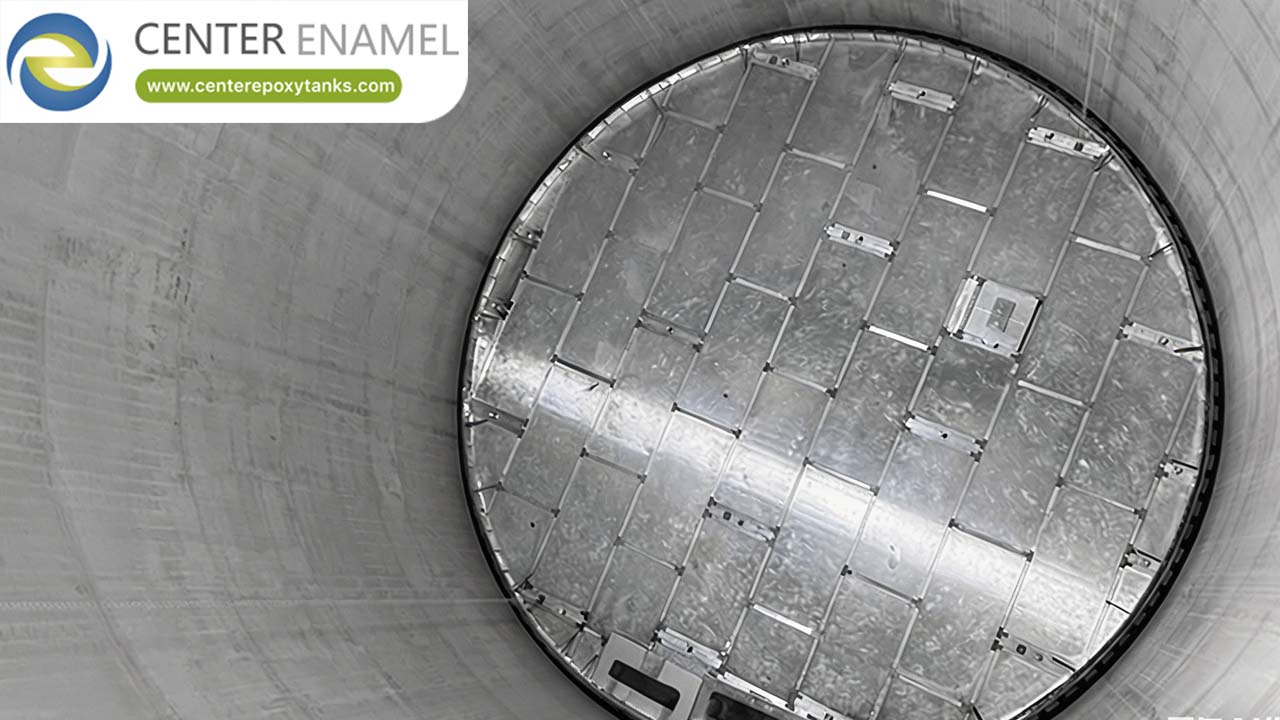
Internal Floating Roof Repair: Deck, Pontoon and Seal Decisions
Repairing an internal floating roof is a decision problem before it is a welding problem. The same visible defect can call for monitoring, a patch, a section replacement or a full roof replacement depending on its cause and on what the next inspection interval will do to it. This article sets out how those decisions are made for decks, pontoons, seals and drains.
The Governing Idea: Suitability Until the Next Interval
The API 653 material excerpt states the principle clearly: roof plate and pontoon areas exhibiting cracks or punctures shall be repaired or the affected sections replaced, and pitted areas shall be evaluated for the likelihood of through-pitting before the next scheduled internal inspection. If the pit will not survive the interval, it is a repair item now rather than a monitoring item.
The same source says that repair guidance for existing floating roofs is based on API 650 Annex C for external roofs and Annex H for internal roofs, while upgrading to the current standard is not mandatory. The repair therefore has to restore suitability for the intended service, not necessarily turn an older roof into a new design.
This framing helps resolve the most common argument on site: whether a defect can be watched. It can be watched only if the evaluation says it will survive to the next inspection with margin. Otherwise watching is simply postponing a repair with less information.
Deck Plate Repair
An integrity paper describes deck plate repair as cutting out buckled, corroded or pitted sections and replacing them with material at least equal in thickness and quality to the original, with new welds made to the construction standard so the deck still floats and seals properly. Distortion matters as much as thickness: a patched deck that is no longer flat can bridge, trap liquid or rub its seal.
After any deck repair, the roof should be checked for free movement and for the condition of the surrounding seams. A repair that restores metal but leaves a hard spot is not finished.
Measure the surrounding plate thickness before deciding the patch boundary. Repairing only the visible hole in a broadly thinned area gives a local answer to a general problem, and the next defect will appear beside the last one.
Pontoon and Compartment Repair
Pontoons are the buoyancy system, so a leak is a structural issue rather than a cosmetic one. The integrity paper notes that leaking or corroded pontoons are inspected to locate the leak; local damage may be patch-welded, while extensive damage can require replacement of the whole section. Repaired or replaced pontoons are then checked by non-destructive testing such as ultrasonic or radiographic examination.
The inspection guidance is blunter about why this matters: a few leaking compartments can make a roof tilt, jam or sink, and every compartment should be checked rather than a sample. Where a compartment contains product or water, treat it as a defect to be located and recorded, not simply drained.
After repair, confirm the compartment is dry and tight before the roof returns to service. A compartment that is merely emptied will fill again, and the second discovery will be less convenient.
Seals, Drains and Support
Seal repair is driven by both mechanical condition and emissions. The API 653-based guide notes that in-service work limits how much primary seal can be removed at one time so the roof stays centred and vapour exposure controlled. The integrity paper adds that replacement seals must be compatible with both the stored product and the roof configuration, whether internal or external.
Drain and support repairs are less dramatic but just as important: drainage components must be free of leaks and obstructions with proper slope, and leg sleeves must move freely and be set to the right height. These are the parts that determine whether the roof sits level when the tank is empty and whether water or product ends up where it should not.
A seal that has been repaired rather than replaced should be checked for continuous contact around the full circumference after the work, because a local fix can leave a hard spot that lifts the seal elsewhere.
Documentation and Safety
The integrity paper stresses that repairs must be documented with engineering evaluations, inspection records and welding certification, and that work on tanks containing flammable products must follow hot-work permits and confined-space entry requirements. That is not bureaucracy: it is what allows the next inspector to know what was done and why.
Under EPA Subpart Kb, deck openings and their gasketed covers are part of the compliance basis. Any repair that disturbs a gauge well, sample well, bleeder vent or column sleeve should end with those features checked against the applicable requirements.
Photograph the defect before, during and after the work. A sequence of three images with a short note is often more useful years later than a long report written from memory.
Repair or Replace?
The threshold for replacement is reached when repair cannot restore suitability for the service at a reasonable cost, when the same defect recurs across many compartments, or when the roof can no longer meet the emission or mechanical requirements of the tank. The replacement article in this series sets out how to specify that decision.
Cost alone is a poor test. A cheap repair that will not survive the next interval is more expensive than a proper replacement, and a repair that restores suitability for a service that is about to change is wasted work.
No floating-roof project is held in the verified project library, so this article offers a decision framework rather than a case history.
Choosing the Repair Method
Once a defect is confirmed, the method follows from its cause. A small localised pontoon leak may be patch-welded; a compartment with widespread thinning is a replacement case. A deck hole in an otherwise sound plate can be patched; the same hole in a broadly corroded area signals a larger scope.
Ask what caused the defect before deciding how to fix it. A leak caused by an incompatible seal compound will recur if the compound is unchanged, and a wear point caused by shell distortion will return after a local patch.
Record the selected method, the standard applied and the inspection that will confirm success. The integrity paper cited here stresses that repairs are documented with engineering evaluations, inspection records and welding certification.
Returning the Roof to Service
A repaired roof should not return to service on the strength of the repair photograph alone. Confirm the affected compartment is tight, the deck moves freely through its travel, the seals contact continuously and any disturbed fitting is closed and gasketed.
Where the work touched the rim, recheck the gap around the full circumference. A local repair can change the load distribution and lift the seal at a sector that was previously sound.
Set a follow-up inspection at a shorter interval than usual for the first cycle after a significant repair. The goal is to confirm that the decision was right, not merely that the work was completed.
Planning the Work Window
Repairs to an internal floating roof almost always compete with production. Define the work window early and match the repair scope to it: a pontoon patch and a full circumference seal replacement are very different jobs in a three-day outage.
Where the scope cannot fit, split it into phases with an interim inspection between them. A temporary measure that is documented and time-limited is safer than a rushed permanent fix that nobody had time to verify.
Repair Method by Defect
Defect | Likely method | Confirmation |
Localised deck hole | Cut out and patch with equal material | Free movement and seam check |
Single leaking pontoon | Locate, patch-weld, NDT | Compartment dry and tight |
Widespread pontoon leaks | Replace the affected section | Buoyancy and NDT |
Worn rim seal | Replace with compatible compound | Continuous contact around circumference |
Blocked drain | Clean hose and pipe, restore slope | Flow test |
Use this defect-to-method table as a first pass; the final choice still depends on the inspection record and the next planned interval.
Evidence note: this repair guide is a decision framework, not a project record. The verified project library contains no internal floating roof delivery, so no repaired compartment, welding result or return-to-service outcome is claimed here. Repair criteria are attributed to the named public sources.
Conclusion
Internal floating roof repair turns on suitability until the next inspection: evaluate pitting against the interval, repair local deck and pontoon damage properly, replace seals that are no longer compatible or continuous, and keep drains and legs functional. Document every decision and respect hot-work and confined-space rules.
Frequently Asked Questions
Q: When must a pitted deck area be repaired?
A: When evaluation shows through-pitting is likely before the next scheduled internal inspection. If it will not survive the interval, it is a repair item now.
Q: Can a leaking pontoon be patched?
A: Local damage may be patch-welded; extensive damage can require replacing the section. Repaired pontoons are normally checked by NDT such as UT or RT.
Q: Why should every pontoon be checked?
A: A leaking compartment fills with product or water. Several leaking compartments can make the roof tilt, jam or sink.
Q: Can seals be replaced while the tank is in service?
A: Only within limits. An API 653-based guide cites a one-quarter limit on primary seal removal in the 2009 edition and advises checking the current edition first.
Q: What makes a drain repair important?
A: A blocked or leaking drain can put water into product or product onto the deck, and it is largely out of sight, so failures are found late.
Q: When is replacement better than repair?
A: When repair cannot restore suitability, defects recur across many compartments, or the roof can no longer meet the mechanical or emission requirements.
Work With Center Enamel
Center Enamel is the trading name of Shijiazhuang Zhengzhong Technology Co., Ltd, established in 2008 and based in Shijiazhuang, Hebei Province, China. The company manufactures glass-fused-to-steel bolted tanks, fusion-bonded epoxy coated tanks, stainless steel and welded steel tanks, pressure vessels, aluminium geodesic dome roofs and floating roof systems. Aluminium dome design work is carried out against AWWA D108, API 650, ADM 2015, ASCE 7-10 and IBC 2012, and the broader product range is covered by ISO 9001, NSF/ANSI 61, CE/EN 1090, ISO 28765, WRAS and FM approvals. The company reports 30,000 installed projects and an annual output of 300,000 enamel steel plates, with technical support delivered through an international distributor network and a stated 24-hour response commitment.
If your project involves tank roofs, floating decks or the shells that carry them, send the tank diameter, shell height, product, operating temperature and site design loads. We will return a preliminary structural concept, the applicable design code basis, and a written scope that separates what is included from what the site contractor must provide.


