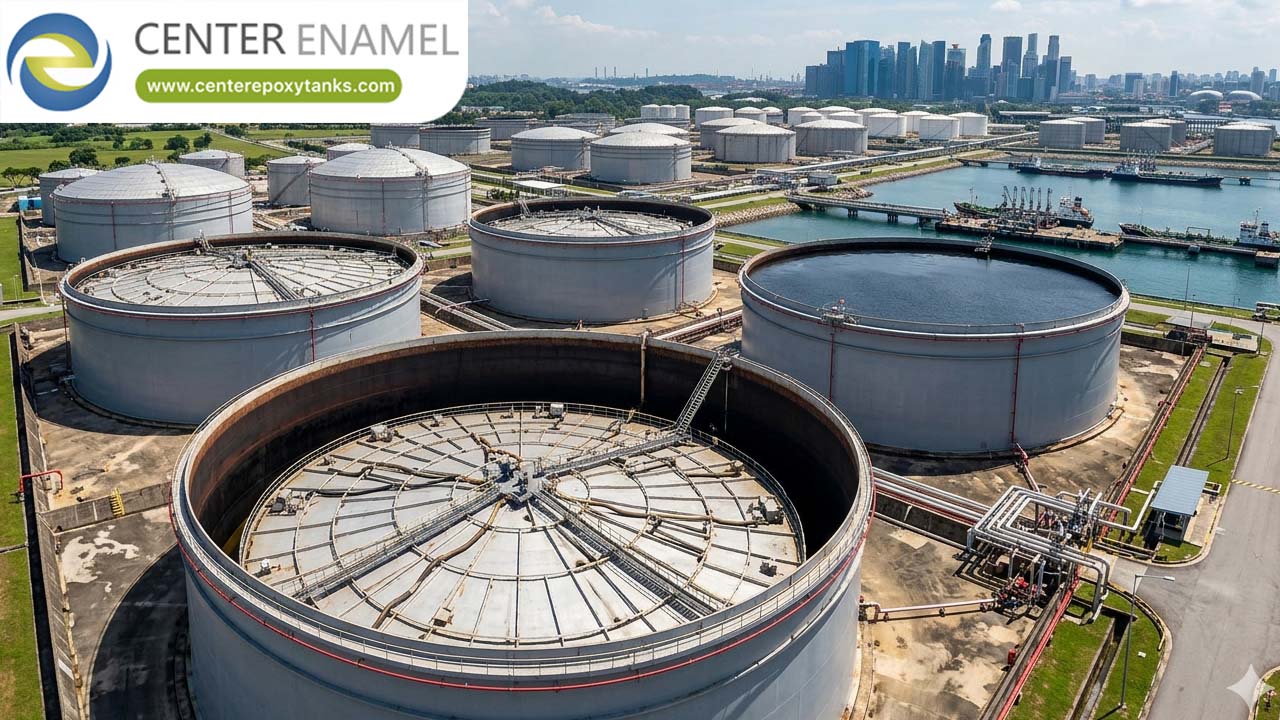
Internal Floating Roof Manufacturer in China: A Vetting Guide
Finding an internal floating roof manufacturer in China is easy; establishing that one canengineer, fabricate and document a roof for your specific tank is harder. The market rangesfrom integrated engineering manufacturers to trading companies that simply relay a quotation.This guide sets out the evidence a buyer should ask for, in the order that separates a genuinemanufacturer from a broker, and it explains why each document matters.
Start With the Design Code, Not the Company Brochure
The first question is not how long the company has existed or how many countries it exportsto. It is which design code the roof is engineered to and whether the manufacturer can showthe calculations behind that statement. For internal floating roofs the governing reference isAPI Standard 650 Appendix H, which covers the design, fabrication and installation of internalfloating roofs. A credible manufacturer will name the edition used, the deck type supplied,the buoyancy basis and the load cases considered, rather than simply printing the words API650 on a product page.
Ask for the design basis as a short document: tank internal diameter, product relativedensity, operating and design temperature, the specified deck type, the buoyancy redundancyassumption and the point-load criterion. The publicly available Ultraflote 12F specificationis a useful example of the level of detail a buyer can reasonably expect, stating 100 percentexcess buoyancy at the lowest expected specific gravity, a 750 pound-per-square-foot pointload, and specific aluminium tempers for the deck skin and flotation tubes. You do not needthe same numbers for your tank, but you should receive numbers of that kind, not adjectives.
Separate Manufacturer From Trader
Evidence to request | What it proves | Common weak answer |
Stamped or signed design calculations | The roof is engineered for your tank, not copied | A brochure with a code logo |
Bill of materials with alloy tempers | Material selection is controlled and substitutable only by approval | Grade stated as aluminium only |
Mill certificates and traceability | Metal can be traced to a heat and a standard | Commercial invoice only |
Pontoon leak-test procedure | Buoyancy elements are tested before dispatch | We inspect everything |
Fabrication facility name and address | You are dealing with a maker, not a broker | A head-office address |
A trading company can assemble a competitive-looking quotation, but it cannot give you processcontrol over fabrication, material substitutions or inspection hold points. Ask directlywhether the entity signing the contract owns the fabrication facility, and request thefacility name and location. Then test the answer with questions only a maker can answerquickly: what is the minimum flotation-tube wall thickness, which alloy temper is used for thedeck skin, what weld or clamping detail joins the panels, and which inspection is applied tothe pontoons before shipping.
Center Enamel's own published sourcing guidance for floating roofs from China frames the samedistinction as a vetting matrix, contrasting an industrial-grade manufacturer with a commoditysupplier on four axes: explicit code compliance, bolt-together installation, certifiedmaterial quality, and full material traceability with mill certificates. That framing is asupplier's own marketing position, so treat it as a checklist to test, not as an independentfinding. The test is whether the bidder can actually produce the documents when asked.
The table is a screening aid, not a scoring guarantee. A document's existence is easier toverify than its accuracy, so cross-check the numbers against the stated code and against yourown tank data.
For a retrofit, add one more question: can the complete roof be carried through the existingshell manway? Both the Ultraflote specification and manufacturer guidance describe componentspassing a 24 inch manway without cutting and rewelding tank plates. If a bidder cannotdescribe the access route for your tank, the quoted erection cost is not yet credible.
Capability Claims You Should Treat Carefully
Manufacturer pages frequently quote an emission figure such as up to 98 percent reduction,cite a large installation count, or claim a very large annual output. These can be truestatements about a product line or a company, but they are not evidence about your tank. TheUnited States EPA AP-42 Chapter 7 Section 7.1 provides the recognised methodology forestimating emissions from organic liquid storage tanks, and it is the right reference againstwhich to assess any percentage claim. Ask which method, which product vapour pressure andwhich seal configuration produced the number.
Center Enamel does not hold a verified internal floating roof project in its authoritativeproject library. That disclosure is stated plainly here so that this buying guide is not readas a claim of delivered floating-roof installations. A buyer should apply the same standard toevery manufacturer: separate what a company publishes about its products from what it candocument about a delivered, identified project.
A Short Qualification Sequence
Run the qualification in three passes. In the first pass, reject bids that do not name adesign code, a deck type and a fabrication facility. In the second pass, compare the technicalsubmissions: buoyancy basis, point-load criterion, panel joining detail, seal arrangement andpenetration details. In the third pass, compare commercial terms and lead time, but only amongbidders that survived the first two passes.
This order matters because price comparison is meaningless across non-equivalent scopes. Twoquotations that look close in total can differ substantially on whether primary and secondaryseals are both included, whether the shell roundness survey is in scope, whether third-partyinspection is included, and whether commissioning supervision is provided. Those differencestypically emerge later as variations.
What Good Documentation Looks Like at Handover
Define the handover package in the contract, not after fabrication. At minimum it shouldcontain as-built drawings, material certificates, weld and leak-test records, seal materialcompatibility confirmation, an installation and maintenance manual, and a spares list. Themaintenance manual should name the seal replacement procedure and the inspection interval,because seal condition is the single largest ongoing cost driver in a floating roof's life.
For tanks in regulated service, add any jurisdiction-specific compliance documents at enquirystage. In the United States, requirements may involve EPA New Source Performance Standards;state rules such as the Louisiana implementation plan set out detailed seal and penetrationrequirements. A manufacturer experienced in export will ask which jurisdiction applies ratherthan assume one.
Using This Guide Without Overstating It
This article is a buying method, not a certification and not a supplier endorsement. Thepublic sources cited are manufacturers, market researchers and government bodies, each usedonly for the specific fact it supports. No price, project result or performance percentage isattributed to a Center Enamel installation, because none exists in the verified library for afloating deck.
Use the framework to structure your own enquiry, then let the bidders' documents decide. Theoutcome you want is not the lowest headline number but a scope you can compare line by lineand a supplier whose answers stay consistent when questioned.
How to Read a Manufacturer's Buoyancy Claim
Buoyancy is the part of an internal floating roof specification that most directly affectssafety, yet it is often reduced to a single adjective. When a manufacturer says a deck hasredundant flotation, ask what is assumed about the stored product and what failure case isbeing survived. The Ultraflote 12F specification frames this precisely: flotation designed for100 percent excess buoyancy at the lowest expected specific gravity, or 0.70, whichever isless. That is a testable statement because it names both the margin and the densityassumption.
Ask the bidder to state the minimum product density for which the deck remains buoyant, andwhether the calculation covers the largest single pontoon flooded, an adjacent pontoonflooded, or another defined case. A deck sized for gasoline may not be automatically suitablefor a lighter naphtha or for a product whose density changes with temperature. The answershould be a number tied to your product data, not a reassurance.
Why Shell Condition Changes the Manufacturer Choice
A manufacturer with genuine retrofit experience will ask about the shell before quoting aseal. Floating roofs seal against the tank wall, and a shell that is out of round or out ofplumb challenges the seal's ability to follow the deck as it travels. Correcting that is asubstantial and often unbudgeted job, which is why an experienced bidder wants the surveyearly rather than treating it as a formality.
Ask the manufacturer to state the shell tolerance its seal system can accommodate and whathappens beyond that tolerance. A supplier who says the seal will handle anything has eithernot considered the issue or is avoiding a scope question. For an older tank, commissioning aroundness survey before tendering can materially improve the quality of the quotations youreceive.
Evidence note: this manufacturer-vetting guide is a method, not a project report. The verifiedproject library holds no internal floating roof delivery, so no supplier is credited here witha roof installation and no project dimension, date or performance is quoted. Thealuminium-roof records on file are geodesic dome roofs over water and wastewater tanks, adifferent product, and are not used as floating-deck evidence.
Evidence note: this manufacturer-vetting guide is a method, not a project report. The verified project library holds no internal floating roof delivery, so no supplier is credited here with a roof installation and no project dimension, date or performance is quoted. The aluminium-roof records on file are geodesic dome roofs over water and wastewater tanks, a different product, and are not used as floating-deck evidence.
Conclusion
Vetting a Chinese internal floating roof manufacturer is an evidence exercise. Start with thedesign code and calculations, confirm you are dealing with a fabricator, require traceablematerials and test records, and only then compare price and lead time. Treat publishedemission percentages and output figures as claims to be checked against a defined basis. Thediscipline pays off because it converts an apples-to-oranges set of quotations into scopes youcan compare line by line.
Frequently Asked Questions
Q: Is a Chinese internal floating roof manufacturer automatically lower quality?
A: No. Quality depends on design control, fabrication process and documentation, not on country.Judge the specific bidder by the code basis, material traceability and inspection records itcan produce.
Q: Which code should an internal floating roof be designed to?
A: API Standard 650 Appendix H is the common international reference for internal floating roofs.The applicable edition and any local regulations should be stated in the design basis.
Q: What is the minimum documentation a buyer should request?
A: Design calculations, a bill of materials with alloy tempers, mill certificates, a pontoonleak-test procedure, and the fabrication facility name and address.
Q: Why does the 24 inch manway matter?
A: For retrofits, a bolt-together roof whose parts pass through the existing shell manway avoidscutting and rewelding tank plates, reducing shutdown time and hot-work risk.
Q: Are up to 98 percent emission claims reliable?
A: They can be, but only against a defined product, vapour pressure and seal configuration usinga method such as EPA AP-42. Treat the figure as a claim to verify, not a guarantee.
Q: Can I compare quotations directly?
A: Only after confirming they cover the same scope: seals, inspection, shell survey, accessoriesand commissioning. Apparent price gaps often reflect exclusions rather than true costdifferences.
Work With Center Enamel
Center Enamel is the trading name of Shijiazhuang Zhengzhong Technology Co., Ltd, established in 2008 and based in Shijiazhuang, Hebei Province, China. The company manufactures glass-fused-to-steel bolted tanks, fusion-bonded epoxy coated tanks, stainless steel and welded steel tanks, pressure vessels, aluminium geodesic dome roofs and floating roof systems. Aluminium dome design work is carried out against AWWA D108, API 650, ADM 2015, ASCE 7-10 and IBC 2012, and the broader product range is covered by ISO 9001, NSF/ANSI 61, CE/EN 1090, ISO 28765, WRAS and FM approvals. The company reports 30,000 installed projects and an annual output of 300,000 enamel steel plates, with technical support delivered through an international distributor network and a stated 24-hour response commitment.
If your project involves tank roofs, floating decks or the shells that carry them, send the tank diameter, shell height, product, operating temperature and site design loads. We will return a preliminary structural concept, the applicable design code basis, and a written scope that separates what is included from what the site contractor must provide.


