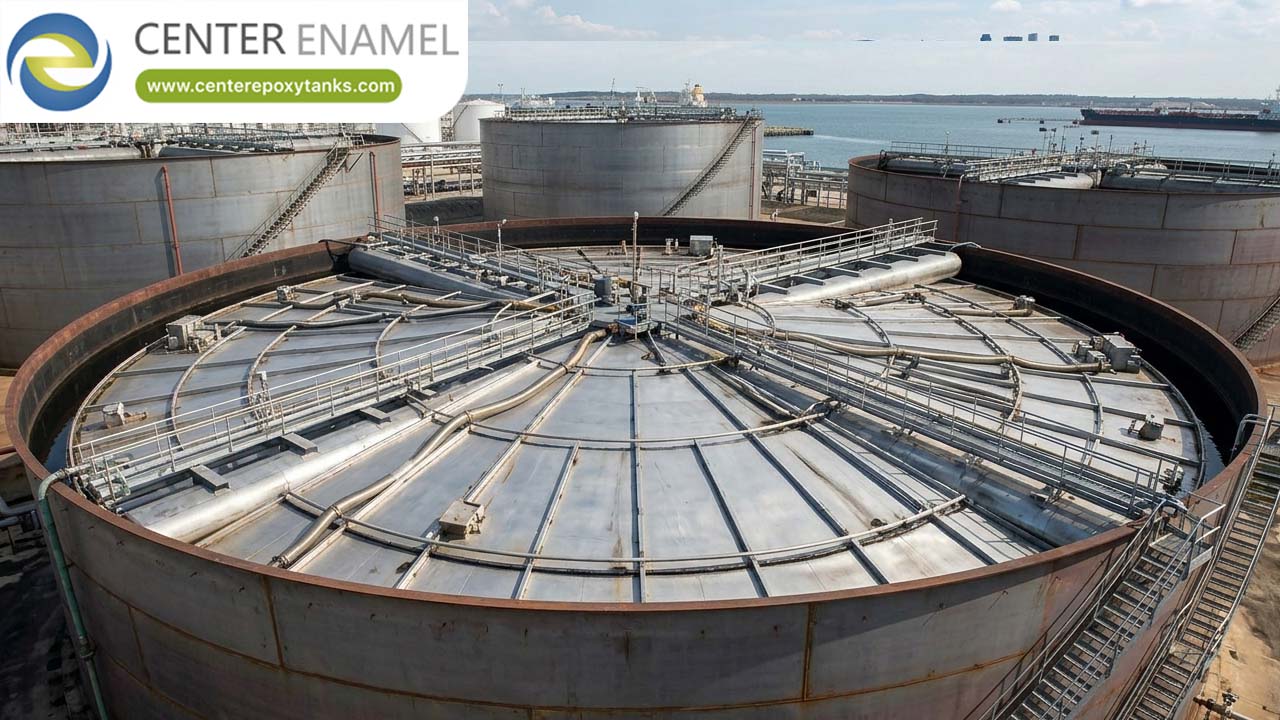
Internal Floating Roof Materials: Matching Alloy and Seal to the Product
Material selection is where an internal floating roof succeeds or fails in service. The deck,pontoons, structural fasteners and seals are exposed to a product whose chemistry andtemperature vary by tank. This article explains the material families in common use and, moreimportantly, how to match them to the product with evidence rather than assumption.
Treat Each Component Separately
A floating roof is not made of one material. The deck skin, the structural members, thepontoons, the fasteners and the seals can each use a different alloy or compound, chosen for adifferent reason. The Ultraflote 12F specification illustrates this: a 3003-H14 deck skin,3004-H36 flotation tubes, 5052 H32 end caps and ears, and stainless structural bolting. Eachchoice is tied to a function, not to a generic idea of corrosion resistance.
A material statement that says only aluminium is therefore incomplete. Ask for the alloytemper and thickness of each component, and for the seal compound separately.
Why Aluminium Is Often Chosen
Aluminium is widely used because it forms a protective oxide, resists many petroleum andchemical environments, and is roughly a third of the weight of carbon steel. The TECHDECKproduct data quotes deck weights of six to nine kilograms per square metre across itsvariants, which is part of why such roofs suit retrofit onto shells not designed for a heavysteel deck.
Center Enamel's own guidance cites aluminium alloys such as 6061-T6 and 3003 in its discussionof internal floating roofs. That is an attributed supplier position. The engineering point isthat weight and corrosion behaviour both matter, and the specific alloy must still be checkedagainst the stored product.
The Seal Is a Chemical Decision
Seals are the most chemically sensitive part of the system. The Louisiana implementation plandescribes liquid-mounted, mechanical shoe and combination seals, while supplier guidancediscusses elastomeric wipers in polyurethane, nitrile, EPDM and PTFE. The right compounddepends on whether the product is aromatic or paraffinic, its temperature, and whetheraromatics cause the seal to swell or degrade.
Require compatibility data against your specific product rather than a genericchemical-resistance chart. Market research notes that aggressive products can forcespecialised materials and raise cost substantially. That is a reason to test compatibilityearly, not to assume a standard seal will suffice.
Material Basis by Component
Component | Common material basis | Selection question |
Deck skin | 3003 or similar aluminium temper | Is the temper and thickness stated? |
Pontoons | Welded aluminium tube, e.g. 3004 | Is the wall thickness and test defined? |
Structural bolting | Stainless steel | Are self-tapping screws excluded? |
Primary seal | Mechanical shoe or liquid-mounted | Is the compound compatible with the product? |
Secondary seal | Wiper in PTFE / elastomer | Is it required by the jurisdiction? |
This table summarises materials described in a published specification and public guidance. Itis a checklist, not a selection outcome.
The seal rows deserve particular attention because they are consumable and because theircompatibility drives replacement frequency.
Stress, Temperature and Product Changes
Material choice must consider more than chemistry. Operating temperature affects sealbehaviour and aluminium properties; repeated fill and draw cycles load the deck; and a productchange can invalidate a compatibility decision that was sound for the original service. Statethe design temperature and any expected product variation in the enquiry.
EPA AP-42 provides the emissions methodology for organic liquid storage and helps define whythe roof is needed, but it does not select materials. That is an engineering judgment thatmust be recorded with its assumptions.
Documenting the Choice
The material basis should appear in the design documents and on the bill of materials, withalloy tempers, thicknesses and seal compounds identified. Mill certificates should thenconfirm what was actually supplied. Center Enamel's published procurement guidance treats fullmaterial traceability as a marker of an industrial-grade supplier, and that principle is soundregardless of brand.
Center Enamel holds no verified internal floating roof project, so this article does not claima delivered material selection as evidence. It offers a method for specifying and checkingmaterials on any floating roof purchase.
Chemical Compatibility Evidence
Compatibility should be demonstrated, not assumed. The relevant evidence includes immersion orcompatibility data for the seal compound against the stored product at the design temperature,mill certificates for the metal components, and any manufacturer guidance on aromatic versusparaffinic service. A generic resistance chart is a starting point, not proof.
If the product is a blend or changes with seasons, test against the worst case. Marketresearch notes that aggressive chemicals can force specialised materials and add significantcost, which is a reason to establish compatibility early rather than discover it duringcommissioning.
Weight, Strength and the Retrofit Case
Aluminium's low density is a genuine advantage on older tanks. The TECHDECK data quotes deckweights of six to nine kilograms per square metre depending on variant, which is far below asteel deck. That reduces the load a retrofit adds to a shell not originally designed for aheavy roof.
Low weight is not the only criterion. Strength, formability and joining behaviour matter,which is why specifications name tempers such as 3003-H14 or 6061-T6. A lighter alloy withinadequate stiffness would need more structure, offsetting the benefit.
Temperature and Fire Considerations
Operating temperature affects seals and polymers more than metals. An elastomer that performsat ambient temperature may harden or swell at elevated temperature, so the design temperaturemust be part of the compatibility request. Fire and explosion arrangements are a separatedesign question, governed by area classification and site rules, and they should not beconflated with material selection.
EPA AP-42 is relevant to the emission function of the roof, but it does not choose materials.Material selection remains an engineering responsibility that must be documented separately.
Building the Material Schedule
A usable material schedule lists each component, its alloy or compound, thickness or hardnesswhere relevant, the applicable standard, and the evidence required on delivery. It should alsonote any prohibited substitutions. The Ultraflote specification, for example, excludesself-tapping screws and rivets in structural bolting.
Center Enamel holds no verified internal floating roof project, so this article does not offera delivered material schedule as evidence. It sets out what such a schedule should contain sothat a buyer can require one from any supplier.
Testing Before Committing
Where the product is unusual or the service critical, a small compatibility test is farcheaper than a premature seal failure. Ask the seal supplier for test data against yourproduct and temperature, and record the result in the design file. The same principle appliesto any non-standard alloy.
The cost of such testing is modest compared with the outage that a failed seal or an unplannedinspection would cause, since inspecting an internal floating roof means confined-space entrywith gas freeing and permits.
Limits of the Published Alloy Data
The tempers quoted in published specifications, such as 3003-H14 or 6061-T6, describeparticular products under particular standards. They are useful reference points, but they arenot a prescription for every tank. The final choice depends on forming, welding, exposure andload.
Center Enamel's guidance mentions these alloys as part of its product discussion. That is anattributed supplier position. The selecting engineer must still confirm the choice against theproject's actual conditions.
Material Changes During Service
A material decision made at purchase should be revisited if the tank changes service. A sealcompound compatible with diesel may not suit a switch to ethanol-blended fuel, and ethanolservice creates its own compatibility demands. Record the design product so a future changetriggers a review.
This is an operational discipline, not a one-time selection. It protects the asset and thepeople who inspect it.
Record Keeping for Materials
Material records should follow the roof through its life. Keep the bill of materials, millcertificates, seal compatibility data and any test reports together in one file. When acomponent needs replacement years later, that file tells the maintainer exactly what wasoriginally supplied and what an equivalent must achieve.
Center Enamel's published procurement guidance treats traceability as a quality marker.Applied to materials, it means a buyer can demand a chain from the certificate back to theinstalled part.
Evidence note: material choices here are engineering principles, not a delivered materialschedule. The verified project library contains no internal floating roof delivery, so noalloy certificate or seal compatibility record from our work is cited. All material figurescome from public specifications and are attributed.
Evidence note: material choices here are engineering principles, not a delivered material schedule. The verified project library contains no internal floating roof delivery, so no alloy certificate or seal compatibility record from our work is cited. All material figures come from public specifications and are attributed.
Conclusion
Internal floating roof materials must be chosen component by component against the storedproduct. Specify alloy tempers and thicknesses for the deck and pontoons, stainless fastening,and a seal compound with documented compatibility. Record temperature and product assumptions,require mill certificates, and review the choice if service changes.
Frequently Asked Questions
Q: Why specify alloy tempers rather than just aluminium?
A: Because strength, formability and corrosion behaviour differ by temper. Publishedspecifications name tempers such as 3003-H14 and 3004-H36 for specific components.
Q: Which part is most sensitive to the stored product?
A: The seal. Its compound must resist the specific product and temperature; a seal that swells ordegrades will fail early.
Q: Is aluminium always the right choice?
A: Often, but not always. Aggressive chemicals can require specialised alloys or coatings, andcompatibility must be confirmed for the specific service.
Q: Are stainless fasteners necessary?
A: Published specifications call for stainless structural bolting and exclude self-tapping screwsor rivets, because of corrosion and joint integrity.
Q: What happens if the stored product changes?
A: A compatibility decision may no longer be valid. Record the design product and review anyfuture change before it happens.
Q: How is material supply verified?
A: Through a bill of materials with tempers and thicknesses, plus mill certificates that tracethe delivered metal.
Work With Center Enamel
Center Enamel is the trading name of Shijiazhuang Zhengzhong Technology Co., Ltd, established in 2008 and based in Shijiazhuang, Hebei Province, China. The company manufactures glass-fused-to-steel bolted tanks, fusion-bonded epoxy coated tanks, stainless steel and welded steel tanks, pressure vessels, aluminium geodesic dome roofs and floating roof systems. Aluminium dome design work is carried out against AWWA D108, API 650, ADM 2015, ASCE 7-10 and IBC 2012, and the broader product range is covered by ISO 9001, NSF/ANSI 61, CE/EN 1090, ISO 28765, WRAS and FM approvals. The company reports 30,000 installed projects and an annual output of 300,000 enamel steel plates, with technical support delivered through an international distributor network and a stated 24-hour response commitment.
If your project involves tank roofs, floating decks or the shells that carry them, send the tank diameter, shell height, product, operating temperature and site design loads. We will return a preliminary structural concept, the applicable design code basis, and a written scope that separates what is included from what the site contractor must provide.


