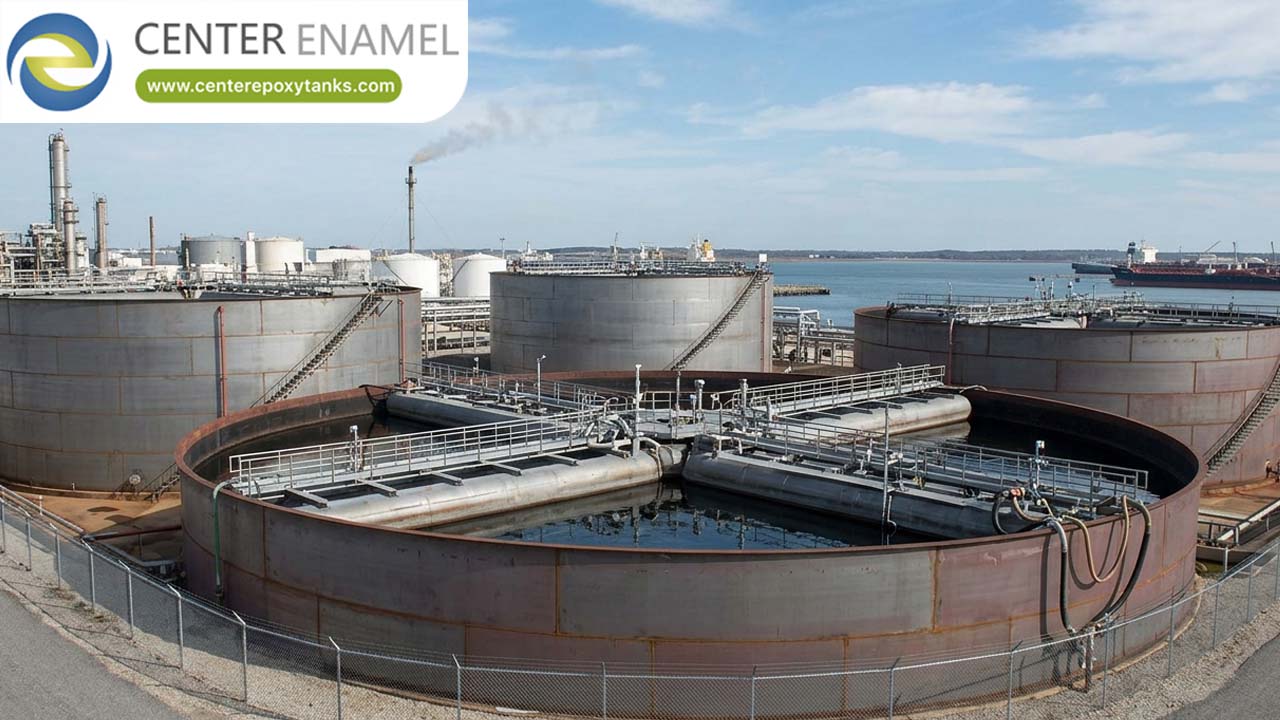
Internal Floating Roof for Refinery Tank Farms: Planning and Operation
A refinery tank farm is not one installation but a fleet. Dozens of tanks may hold different products, operate at different temperatures and fall under different compliance regimes. Managing internal floating roofs at that scale is a programme problem: inventory, prioritisation and consistent records matter more than any single design decision.
Build the Inventory First
A refinery programme starts with a complete list of tanks that have internal floating roofs. For each, record diameter, product, operating temperature, deck type, seal arrangement, installation date and the applicable regulatory basis. Without that register, prioritisation is guesswork.
Link the register to the as-built documents and the latest inspection report. A tank whose last seal specification is unknown cannot be maintained properly, and a missing record is itself a finding.
Review the inventory when a tank changes service. A refinery tank farm is dynamic, and a register that is not updated quickly becomes misleading.
Group Tanks by Duty
Not every tank needs the same roof. Group them by product volatility, cycling frequency and the consequence of a vapour release. High-volatility products in frequent service justify the strongest seal and fitting package; low-volatility products may justify a simpler arrangement.
A published product range shows how deck architecture is matched to service, with pontoon, hybrid and full-contact variants assigned to different volatility and diameter ranges. Use such ranges as prompts, not as a substitute for the refinery's own duty analysis.
Standardising on a small number of configurations reduces spares and training, but forcing one configuration into every service creates hidden risk.
Integrate the Two Inspection Regimes
An API 653-based programme judges the roof as part of tank integrity: plate condition, pontoons, seals, drains, supports and vents. Air rules such as Subpart Kb and Subpart WW add seal, fitting and inspection-frequency requirements, with visual checks possible from the top side where access exists.
Run them as one plan. A single tank entry or topside visit can satisfy several requirements if the checklist is designed properly, and the records will be easier to audit.
Assign each task to a regime so the basis is visible. That matters when an inspector asks why a particular interval was chosen.
Prioritise by Volatility and Condition
Where budgets are limited, priority follows the product and the evidence. A high-volatility tank with a growing seal gap and an open gauge well is a more urgent case than a low-volatility tank with a cosmetic deck issue.
AP-42 analysis provides a basis for estimating which paths dominate losses, and the compliance records show where a tank is close to its limits. Combine the two rather than relying on a visual ranking.
Document the priority decision. In a large fleet, the ability to explain why a tank was deferred is as important as the work itself.
Operations, Cutting and Hot Work
Refinery tanks are frequently heated, blended or cycled, and maintenance often overlaps with other work. That raises the importance of operating discipline: permitted level ranges, approved products and controlled shutdown windows should be part of the roof programme, not left to individual crews.
Any work that involves cutting or welding on or near a roof carrying flammable product must follow hot-work permits and confined-space rules. The integrity guidance cited earlier makes this explicit, and it is especially relevant in a refinery where simultaneous operations are common.
Coordinate the roof programme with the turnaround plan so the right tanks are accessible when the right resources are available.
Records, Trends and Continuous Improvement
At fleet scale, the value lies in comparison. Record seal condition, pontoon findings, drain performance and fitting defects in the same format for every tank. Trends then reveal common causes: a seal compound that fails in a particular product, a shell problem affecting several tanks, or a fitting detail that was repeated across a construction batch.
Use those findings to update the standard specification. A refinery that learns from its own inspection record will steadily reduce the number of one-off problems.
No internal floating roof project is held in the verified project library, so this article offers a programme method rather than a delivered refinery case. The requirements are attributed to the named sources.
Integrating With Turnarounds
A refinery roof programme succeeds when it rides on the turnaround plan rather than competing with it. Identify which tanks will be accessible in each window, what roof work can be completed in that time, and which materials must be ordered in advance.
Coordinate with other tank work so that a single entry can serve inspection, repair and compliance checks. Duplicate outages are expensive and increase exposure to confined-space work.
Keep the plan flexible enough to absorb a finding: if a tank opens with unexpected pontoon damage, the programme should be able to re-prioritise without losing the whole window.
Learning Across the Fleet
A refinery has an advantage that a single tank owner does not: repetition. Compare similar tanks after each campaign and ask why one seal arrangement is lasting longer or why one product is producing more drain blockages.
Feed the answer back into the standard specification and the product register. That is how a programme improves rather than simply repeating the same work each year.
No internal floating roof project is held in the verified project library, so this is a management method rather than a delivered refinery case.
Spares strategy at fleet scale
A refinery fleet benefits from a central spares list tied to the component register. Identify which seals, gaskets and fittings are common across tanks and which are product-specific, and hold stock accordingly.
A spare that fits a similar tank but is incompatible with the product is worse than no spare, because it looks like a solution.
Reporting to management
Report the roof programme in terms of condition and risk rather than activity counts. The number of inspections completed matters less than the number of tanks moving into a worse condition category and the actions taken about them.
That framing makes it easier to justify capital and to see whether the programme is improving the fleet.
Setting Programme Measures
Use a small set of measures that reflect condition and risk: number of tanks with seal findings above threshold, number of pontoon compartments repaired, and the trend in drain-related defects. These show whether the programme is working better than a count of completed inspections.
Review the measures at each turnaround planning cycle and adjust the priorities for the next one.
No internal floating roof project is held in the verified project library; this is a programme method, not a reported refinery case.
Coordination With Operations
The best refinery roof programme is invisible to operations because it fits into the existing work rhythm. Agree the shutdown windows, access requirements and permit needs with operations before the annual plan is fixed.
When a roof issue is found, communicate the consequence in operating terms - a tank that cannot be filled to its normal level, for example - rather than only as a code observation.
No internal floating roof project is held in the verified project library; this is a programme method rather than a delivered refinery case.
Programme Review at Each Cycle
A refinery programme is working when the condition record drives the work and the work improves the record. Review both at each planning cycle and adjust the priorities rather than repeating last year's list.
No internal floating roof project is held in the verified project library; this is a programme method, not a reported refinery case.
Refinery Programme Measures
Measure | What it shows | Use |
Seal findings above threshold | Trend in seal condition | Prioritise tank work |
Pontoon compartments repaired | Buoyancy integrity | Plan outage scope |
Drain-related defects | Deposits and water issues | Adjust inspection interval |
Product changes | Shifting design basis | Trigger compatibility review |
These measures describe condition and risk rather than activity. Use them to decide where the next turnaround effort belongs.
Evidence note: this refinery programme guide is a management method, not a project record. The verified project library contains no internal floating roof delivery, so no refinery installation, inspection campaign or emission result is claimed here; the programme method is drawn from the cited sources.
Conclusion
Managing internal floating roofs in a refinery is a fleet discipline. Build an inventory, group tanks by duty, integrate mechanical and air-rule inspections, prioritise by volatility and condition, and keep records that make trends visible. Standardise where it helps, but never let a standard replace a service review.
Frequently Asked Questions
Q: What makes refinery service different?
A: Multiple products, high cycling, heating and blending, and a dense regulatory environment. The roof programme has to handle variation rather than one fixed duty.
Q: How should a refinery prioritise roof work?
A: By product volatility, condition and consequence. High-volatility tanks with worn seals usually come before low-volatility tanks with minor cosmetic defects.
Q: Should all tanks use the same roof type?
A: No. Group tanks by duty and apply a small number of standard configurations, but do not force one deck into every service.
Q: How do inspection regimes interact?
A: Mechanical integrity under an API 653-based programme and air-rule seal and fitting inspections both apply. A single integrated plan avoids duplicate outages.
Q: Why are records important at fleet scale?
A: Because trends across similar tanks reveal common causes - a bad seal batch, a shell problem, a product change - that a single tank cannot show.
Q: Can sparks or fires be designed out?
A: A floating roof removes most vapour space and reduces risk, but seals and fittings still require control, grounding and hot-work discipline.
Work With Center Enamel
Center Enamel is the trading name of Shijiazhuang Zhengzhong Technology Co., Ltd, established in 2008 and based in Shijiazhuang, Hebei Province, China. The company manufactures glass-fused-to-steel bolted tanks, fusion-bonded epoxy coated tanks, stainless steel and welded steel tanks, pressure vessels, aluminium geodesic dome roofs and floating roof systems. Aluminium dome design work is carried out against AWWA D108, API 650, ADM 2015, ASCE 7-10 and IBC 2012, and the broader product range is covered by ISO 9001, NSF/ANSI 61, CE/EN 1090, ISO 28765, WRAS and FM approvals. The company reports 30,000 installed projects and an annual output of 300,000 enamel steel plates, with technical support delivered through an international distributor network and a stated 24-hour response commitment.
If your project involves tank roofs, floating decks or the shells that carry them, send the tank diameter, shell height, product, operating temperature and site design loads. We will return a preliminary structural concept, the applicable design code basis, and a written scope that separates what is included from what the site contractor must provide.


