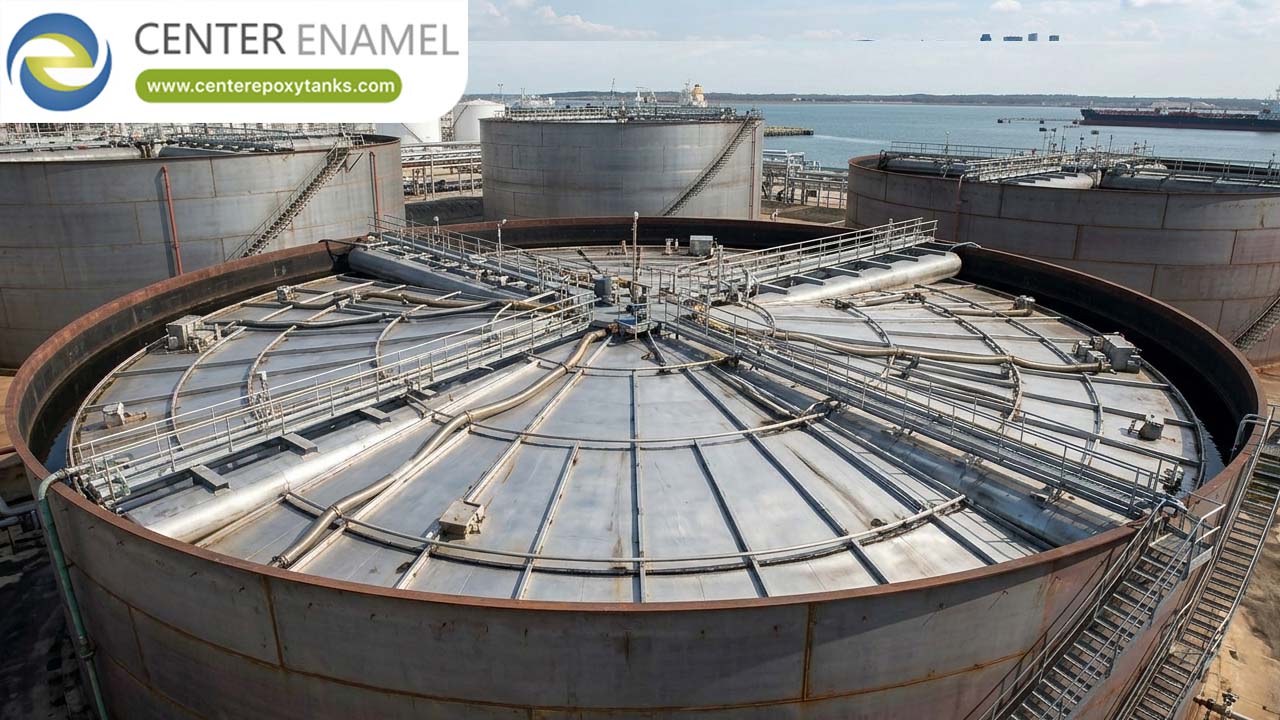
Internal Floating Roof Inspection: Building a Compliant Programme
An internal floating roof sits inside the tank it protects, which makes inspection both more important and harder to schedule than a shell survey. A workable programme has to satisfy two regimes at once: the mechanical-integrity rules around API 653, and the air rules that set seal and fitting inspection frequencies. This article sets out what each regime asks for and how to turn it into a checklist.
Two Regimes, One Programme
An API 653-based inspection guide explains that the code treats the floating roof as part of the tank's mechanical integrity rather than as a separate code. Cracked or punctured deck and pontoon plates are repaired or replaced, pitted areas are evaluated for through-pitting before the next scheduled internal inspection, and existing roofs are judged against the floating-roof annex of API 650 - Annex C for external roofs and Annex H for internal roofs.
Separately, US air rules set seal-gap limits and inspection frequencies. A Federal Register discussion of Subpart Kb and Subpart WW notes that inspections occur at least once within defined timeframes such as every year, five years or ten years, and that visual checks target defects in the rim seal and deck fittings. A sound programme meets both sets of expectations and records which rule drove each task.
The practical consequence is that an inspection plan with only one checklist is incomplete. It needs an integrity section that judges metal condition and an emissions section that judges sealing and fittings, even when both are executed in the same outage.
What to Inspect, Component by Component
Component | What to look for | Why it matters |
Deck plates | Corrosion, pitting, distortion, low points | Through-pitting can leak product into the deck |
Pontoon compartments | Product or water inside any compartment | A leaking pontoon can tilt or sink the roof |
Primary seal | Wear, tears, gaps against the shell | Direct path for vapour loss |
Secondary seal | Condition and contact | Required in many volatile services |
Roof drain | Blockage and leaks | A failed drain is a classic cause of sinking |
Legs and guides | Binding, pins, landing height | Controls how the roof rests when empty |
Fittings and vents | Gaskets, covers, sample-well fabric | Fitting leakage can exceed rim leakage |
Bonding | Continuity to the shell | Controls static charge |
An inspection guidance page lists the items that matter on a floating roof: deck plates, every pontoon compartment, primary and secondary seals, the roof drain, support legs, guide pole, rolling ladder, shunts and vents, and how the roof floats. It also warns against two recurring mistakes: measuring deck plates only from above when the worst corrosion is underneath, and checking a sample of pontoons instead of every compartment.
Treat this list as a schedule rather than a memory test. Print it, assign each line to a person, and require a result for each visit. An inspection that skips the compartments because they are awkward to reach is the kind of shortcut that ends with a tilted roof.
In-Service Versus Out-of-Service Inspection
Not every check needs the tank emptied. The Federal Register discussion notes that, where there is visual access, Subpart WW allows visual inspection of the floating roof deck, deck fittings and rim seals from the top side of the roof while the tank remains in service - for an IFR, under the fixed roof and inside the tank. That makes annual visual checks practical without a full outage.
Defect measurement is different. Roof thickness, pontoon leak detection and seal-gap measurement may require closer access or a shutdown, and an internal inspection follows the owner's programme and corrosion-rate basis. Plan the two types of work separately so that a routine visual visit is not overloaded with tasks it cannot deliver.
Access itself is a safety decision. Entering a tank or working above a product surface involves confined-space and gas-testing controls, and those controls shape how much can be done in a given window. Build that reality into the frequency rather than assuming unlimited access.
Intervals and the Edition Problem
Use the rule that applies to the tank and state it in the plan. Subpart Kb and Subpart WW use different mechanisms, and the inspection guide cited above stresses that clause numbers change between editions of API 653; many free copies circulating online are superseded. This article therefore names the regimes and the kinds of inspection rather than asserting a clause number that may not match the licensed edition in your jurisdiction.
Build the plan around three horizons: routine operator checks during service, periodic visual inspection of seals and fittings, and formal internal inspection on a corrosion-rate or risk basis. Assign an owner to each horizon and a record to each result.
When in doubt about an interval, ask the authorized inspector to state the basis in writing. A number with no stated basis is difficult to defend at the next audit.
Seal Work While the Tank Is in Service
An API 653-based guide notes that the code limits how much of the primary seal may be removed at one time on an in-service tank so the roof stays centred and vapour exposure stays controlled. It cites a one-quarter limit in the 2009 edition and advises confirming the current wording before planning seal work.
That constraint has a practical consequence: seal replacement on a live tank is a carefully sequenced job, not a simple swap. Temporary spacers, controlled work areas and atmospheric monitoring all become part of the method, and the work should be planned with the operations team rather than imposed on it.
Where the product or jurisdiction makes in-service seal work unacceptable, the alternative is a planned outage. The decision should be made on risk and on the condition found, not on which option looks cheaper on the day.
Fitting Leakage Often Matters More Than the Rim
An AP-42-based discussion of floating roof seal loss breaks emissions into rim seal, withdrawal, deck fittings and deck seam paths, and notes that a single open slotted gauge well can equal many gasketed access hatches in loss. That is why inspection should treat deck fittings as a first-class task rather than a footnote.
Check that covers close with no visible gap, that bleeder vents are gasketed, that sample-well covers are in place, and that column and ladder penetrations have intact sleeves or sliding covers. Under the cited federal rule, access hatch and gauge float well covers are to be bolted except when in use.
A fitting programme is cheap to run and produces quick improvements. Replacing a missing gasket costs little and can remove an emission source that would otherwise dominate the tank's losses.
Recording and Acting on Findings
An inspection that produces no record has little value. For each defect, record its location, measurement, the code or rule used to judge it, the decision - monitor, repair or replace - and the person who made that decision. An integrity paper on floating roof assessment stresses that repairs should be documented with engineering evaluations, inspection records and welding certification.
Trends matter as much as individual findings. A seal gap that grows at one sector each year may indicate shell distortion; repeated pontoon leaks may point to a material compatibility problem. Record findings in a way that lets the next inspection compare like with like.
No internal floating roof project is held in the verified project library, so this article offers an inspection method rather than a delivered inspection example. The sources are named so that the responsible inspector can check them against the licensed code and the applicable jurisdiction.
Preparing for the Outage Work
The tasks that need an outage should be identified at the planning stage, not discovered during the visit. Roof thickness measurement, pontoon leak detection and detailed seal-gap work generally require access that a routine topside check cannot provide, and each of them consumes time inside a confined space.
Sequence the work by access logic: confirm the tank is isolated, cleaned and gas-free before opening hatches, then move from visual observations to measurements, and finish with any repair that the findings justify. Reversing that order means rework when a measurement changes the plan.
Where a repair is likely, have the materials and the contractor ready before the outage begins. A defect found on day one of a short window is very different from the same defect found with no replacement seal on site.
Evidence note: this article sets out an inspection method, not a delivered inspection. The verified project library contains no internal floating roof, so no inspection interval, defect count or repair outcome is claimed from our work. Code and regulatory references are attributed to the named sources and should be checked against the licensed edition.
Conclusion
A compliant internal floating roof inspection programme joins mechanical integrity and air-rule requirements into one checklist. Inspect the deck, every pontoon, both seals, the drain, legs, fittings and bonding; separate in-service visual checks from outage work; and record a decision for every defect. The goal is not a perfect roof but a documented basis for deciding when to monitor, repair or replace.
Frequently Asked Questions
Q: Which code governs internal floating roof inspection?
A: API 653 treats the roof as part of tank integrity and points to API 650 Annex H for internal floating roofs; air rules such as 40 CFR 60 Subpart Kb and 63 Subpart WW add seal and fitting inspection frequencies.
Q: Can inspection be done while the tank is in service?
A: Visual inspection of the deck, fittings and rim seal may be possible from the top side where access exists. Thickness and pontoon checks usually need closer access or a shutdown.
Q: Why inspect every pontoon compartment?
A: A leaking compartment fills with product or water. Several leaking compartments can make the roof tilt, jam or sink.
Q: What is the most overlooked inspection item?
A: Deck fittings. An open gauge well can leak as much as many gasketed hatches, so covers, vents and sample-well fabric deserve as much attention as the rim seal.
Q: Must an old roof be upgraded to the current API 650 edition?
A: API 653 guidance cited here says upgrades are evaluated against current annex criteria but are not automatically mandatory; the owner and authorized inspector decide.
Q: How should inspection findings be recorded?
A: Location, measurement, the rule used to judge, the decision to monitor/repair/replace, and the approver, with engineering and test records for any repair.
Work With Center Enamel
Center Enamel is the trading name of Shijiazhuang Zhengzhong Technology Co., Ltd, established in 2008 and based in Shijiazhuang, Hebei Province, China. The company manufactures glass-fused-to-steel bolted tanks, fusion-bonded epoxy coated tanks, stainless steel and welded steel tanks, pressure vessels, aluminium geodesic dome roofs and floating roof systems. Aluminium dome design work is carried out against AWWA D108, API 650, ADM 2015, ASCE 7-10 and IBC 2012, and the broader product range is covered by ISO 9001, NSF/ANSI 61, CE/EN 1090, ISO 28765, WRAS and FM approvals. The company reports 30,000 installed projects and an annual output of 300,000 enamel steel plates, with technical support delivered through an international distributor network and a stated 24-hour response commitment.
If your project involves tank roofs, floating decks or the shells that carry them, send the tank diameter, shell height, product, operating temperature and site design loads. We will return a preliminary structural concept, the applicable design code basis, and a written scope that separates what is included from what the site contractor must provide.


