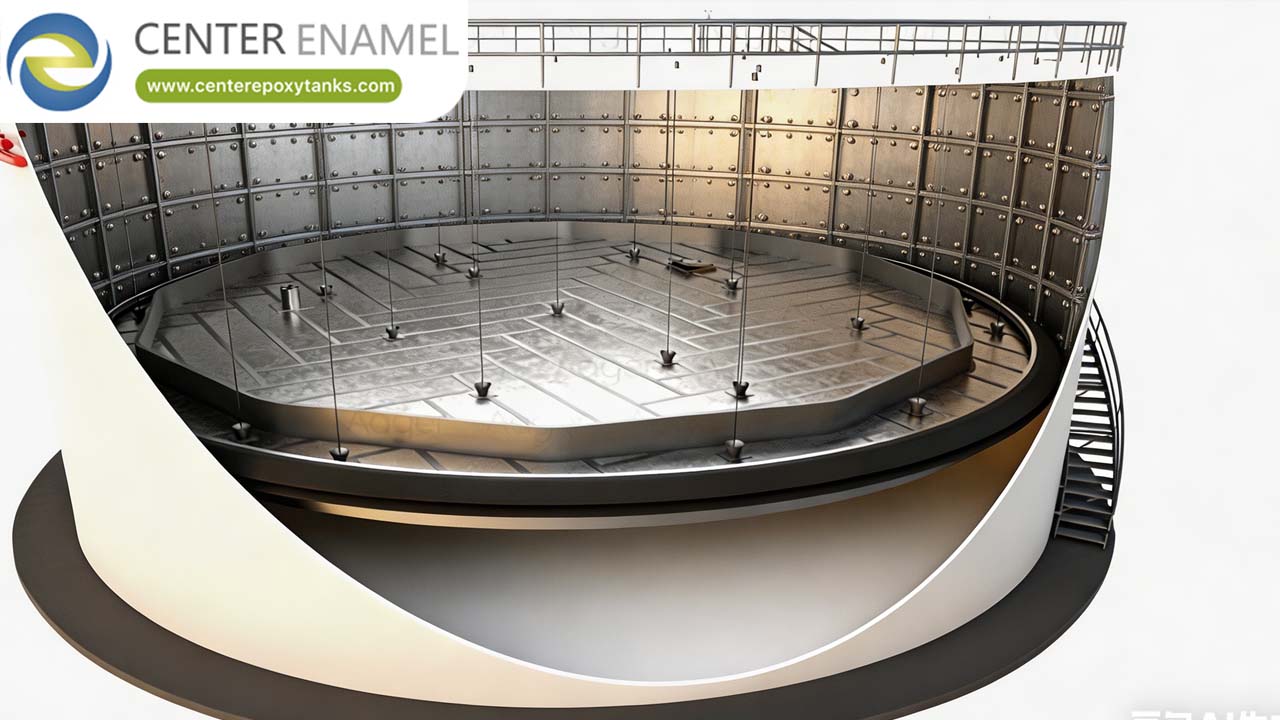
Internal Floating Roof Engineering: From Data to Stamped Drawings
Between a tank data sheet and a fabricated roof lies a sequence of engineering steps withformal approval gates. This article walks through that sequence: collecting data, performingcalculations, producing drawings, obtaining third-party review, and releasing fabrication.Understanding the workflow helps project engineers plan schedule and avoid releasing workbefore design is frozen.
Step One: Freeze the Input Data
Detailed engineering cannot start properly until the input data is frozen. That means anagreed tank diameter and roundness survey, shell height, product properties, temperature,internal obstructions, wind and seismic conditions, and the applicable code and jurisdiction.If any of these are provisional, mark them as such and define when they will be confirmed.
The practical reason is that later changes cascade. A change in product density altersbuoyancy; a change in shell roundness alters the seal; a change in internal layout alters thepenetration drawings. Freezing data is therefore a schedule decision as much as a technicalone.
Step Two: Calculations and Architecture Selection
With data fixed, the engineer performs the buoyancy, load and stability calculations andconfirms the deck architecture. The Ultraflote 12F specification shows the outputs this stageshould produce: a defined buoyancy basis, a stated point-load capability, specified flotationtube materials and dimensions, and detailed penetration wells. These are calculation results,not marketing claims.
Architecture selection is confirmed here rather than assumed. A full-contact honeycomb deck, apontoon deck and a hybrid deck respond differently to vapour pressure and diameter, as thepublished TankTech range illustrates. The calculation package should explain why the selectedtype suits the duty.
Step Three: Produce the Drawing Set
The drawing set normally includes a general arrangement, a deck panel layout, a pontoondetail, seal and rim details, penetration and well details, an accessory schedule, andinstallation notes. Each drawing should reference the calculation basis so that a checker cantrace a dimension back to its reason.
Installation notes matter more than their length suggests. They should state how componentspass through the manway, the assembly sequence, and any temporary works. The Ultraflotespecification requires all parts to pass a twenty-four inch manway, a constraint that must bevisible in the panel layout rather than discovered on site.
Engineering Stages and Gates
Engineering stage | Main output | Approval gate |
Data freeze | Agreed input data sheet | Client confirms data |
Calculation | Buoyancy, load, stability report | Engineer signs |
Drawing | General arrangement and details | Client review |
Third-party review | Vetting of design and QA plan | Inspector clearance |
Release | Approved-for-fabrication set | Project manager signs |
This sequence follows the pattern seen in public tenders and supplier specifications. It is aframework to adapt, not a universal rule.
The release gate is the critical one. Fabrication before release risks expensive rework if areview raises a change.
Step Four: Third-Party Review and Approval
Many projects require an independent reviewer. The Indian Oil tender reviewed for this seriesrequires design and quality assurance plans to be vetted by an approved third-party inspector,with materials also subject to third-party clearance. Even where not mandated, an independentcheck of the buoyancy and seal calculations is valuable.
Publish the approval matrix: which drawings need client sign-off, which need inspectorsign-off, and the expected turnaround for each. Drawing approval is frequently on the criticalpath, and the supplier's fabrication schedule cannot start before it is complete.
Step Five: Engineering for Installation
Detailed engineering must include the installation method. For a retrofit, the deck isassembled inside a live or recently emptied tank, often under a shutdown constraint. CenterEnamel's guidance presents bolt-together, no-hot-work assembly as a retrofit advantage, andthe Ultraflote specification enforces manway access. Neither is useful unless the drawing setshows the assembly sequence.
Plan for the conditions the crew will meet: shell deviations, limited access, gas-freeingrequirements and lifting points. An engineering package that ignores installation transfersthe problem to site, where it is most expensive to solve.
Records and Traceability Through Engineering
The engineering file should link each calculation and drawing to a revision and an approver.When a change occurs, record the reason and re-check affected calculations. This isparticularly important where a jurisdiction requires evidence of compliance, such as the sealand penetration rules in the Louisiana implementation plan.
Center Enamel holds no verified internal floating roof project, so this article does notpresent a delivered engineering file. The workflow described is a standard to apply to anysupplier's engineering package.
Coordinating Engineering With Procurement
Detailed engineering does not happen in isolation. The engineer depends on procurement toconfirm lead times for long-delivery items, on the client to approve drawings, and on the siteteam to provide survey data. A project engineer should maintain a single register of openinputs, their owners and their due dates.
The approval plan is the most common source of delay. If stamped drawings require clientsign-off and third-party vetting, both reviews must be scheduled. The public tender reviewedfor this series requires third-party vetting of the design and quality assurance plan, whichshows how formal the step can be.
Managing Revisions
Revisions are inevitable. A nozzle moves, a survey reveals an out-of-round shell, or theclient changes a compliance requirement. Each revision should be issued with a number, areason and a list of affected calculations and drawings. Re-approve only what changed, butrecord the re-approval.
Where a jurisdiction requires evidence, such as the seal and penetration rules in theLouisiana implementation plan, the revision record is part of the compliance file. Itdemonstrates that the as-built design was reviewed, not just the first issue.
Engineering for Emission Requirements
If the project is driven by emissions, engineering must produce the evidence the regulator orclient expects. EPA AP-42 Chapter 7 Section 7.1 provides the estimation framework, and theselected seal and deck configuration should be documented against it. Supplier percentagefigures should be recorded with their assumptions rather than repeated as guarantees.
The engineering file should therefore include the emission basis, the seal specification, thepenetration details and any monitoring provision. Treating emissions as an engineeringdeliverable rather than a marketing claim keeps the project defensible at commissioning.
The Role of the Installer in Engineering
A good engineering package anticipates the crew. Installation notes should cover the assemblysequence, the number of components that pass the manway, temporary supports, and the checksneeded before the deck is floated. Center Enamel's guidance presents bolt-togetherinstallation as a retrofit advantage, and the Ultraflote specification sets a manwayconstraint; both imply that assembly was considered in design.
Inviting the installation supervisor to review the drawings before release often surfacespractical issues that a design office misses. That review is cheap compared with solving thesame problem inside a tank during a shutdown.
Holding Points During Fabrication
Engineering does not end at the drawing release. The engineer is usually involved in the holdpoints that confirm fabrication followed the design. Material verification, pontoon leaktesting and pre-shipment assembly checks are typical. The Ultraflote specification requiresseams to be leak tested with detecting solution at a stated air pressure before shipping.
Define who witnesses each hold point and what record is produced. Where a third party isinvolved, as in the public tender reviewed earlier, give notice early enough for the inspectorto attend.
A Closeout Checklist for the Engineer
Before the engineering file is closed, confirm that the as-built drawings reflect everyapproved revision, that calculations match the final inputs, that all approvals are signed,and that the handover documents are listed. A file that is complete at this stage makescommissioning and future maintenance straightforward.
Center Enamel holds no verified internal floating roof project; this checklist is a standardfor reviewing an engineering package, not a description of a delivered one.
Evidence note: the engineering workflow is a process description, not a completed projectfile. The verified project library contains no internal floating roof delivery, so no drawingset, approval record or fabrication release from our work is claimed. Public tender andspecification sources underpin the described gates.
Recording the Design Basis for Later Use
The engineering file is a maintenance asset. A decade later, the person asked to replace adeck panel or a seal needs the original calculation, the material certificates and the drawingthat describes how the roof was built. Keeping these in one place, with the revision history,is what makes that work possible instead of starting a new investigation.
The same file also protects the operator if the roof is ever questioned. Where a jurisdictionrequires evidence of compliance, such as the seal and penetration rules in the Louisianaimplementation plan, the file shows what was designed, what was checked and who approved it.That record is the difference between a defensible asset and an undocumented one.
Evidence note: the engineering workflow is a process description, not a completed project file. The verified project library contains no internal floating roof delivery, so no drawing set, approval record or fabrication release from our work is claimed. Public tender and specification sources underpin the described gates.
Conclusion
Internal floating roof engineering is a gated sequence from data to drawings. Freeze inputs,calculate buoyancy and loads, produce a complete drawing set, obtain required reviews, andonly then release fabrication. Plan installation during engineering, keep a revision record,and make every approval explicit. The discipline protects both schedule and quality.
Frequently Asked Questions
Q: What is the first step in detailed engineering?
A: Freezing the input data: tank dimensions and condition, product properties, temperature,internal obstructions, loads and the applicable code and jurisdiction.
Q: Which drawings should an IFR package include?
A: A general arrangement, deck panel layout, pontoon detail, seal and rim details, penetrationwells, an accessory schedule and installation notes.
Q: Why is third-party review common?
A: It independently checks design and quality assurance plans. Some public tenders require it andplace the inspection cost on the contractor.
Q: What is an approval gate?
A: A formal point where a named party signs off a deliverable, such as client approval ofdrawings before fabrication release.
Q: How does engineering affect the shutdown window?
A: Drawing approval is often on the critical path, and installation details must be resolvedbefore the outage begins or the schedule slips.
Q: Why keep a revision record?
A: So every change can be traced, re-checked against calculations and evidenced where compliancerules require documentation.
Work With Center Enamel
Center Enamel is the trading name of Shijiazhuang Zhengzhong Technology Co., Ltd, established in 2008 and based in Shijiazhuang, Hebei Province, China. The company manufactures glass-fused-to-steel bolted tanks, fusion-bonded epoxy coated tanks, stainless steel and welded steel tanks, pressure vessels, aluminium geodesic dome roofs and floating roof systems. Aluminium dome design work is carried out against AWWA D108, API 650, ADM 2015, ASCE 7-10 and IBC 2012, and the broader product range is covered by ISO 9001, NSF/ANSI 61, CE/EN 1090, ISO 28765, WRAS and FM approvals. The company reports 30,000 installed projects and an annual output of 300,000 enamel steel plates, with technical support delivered through an international distributor network and a stated 24-hour response commitment.
If your project involves tank roofs, floating decks or the shells that carry them, send the tank diameter, shell height, product, operating temperature and site design loads. We will return a preliminary structural concept, the applicable design code basis, and a written scope that separates what is included from what the site contractor must provide.


