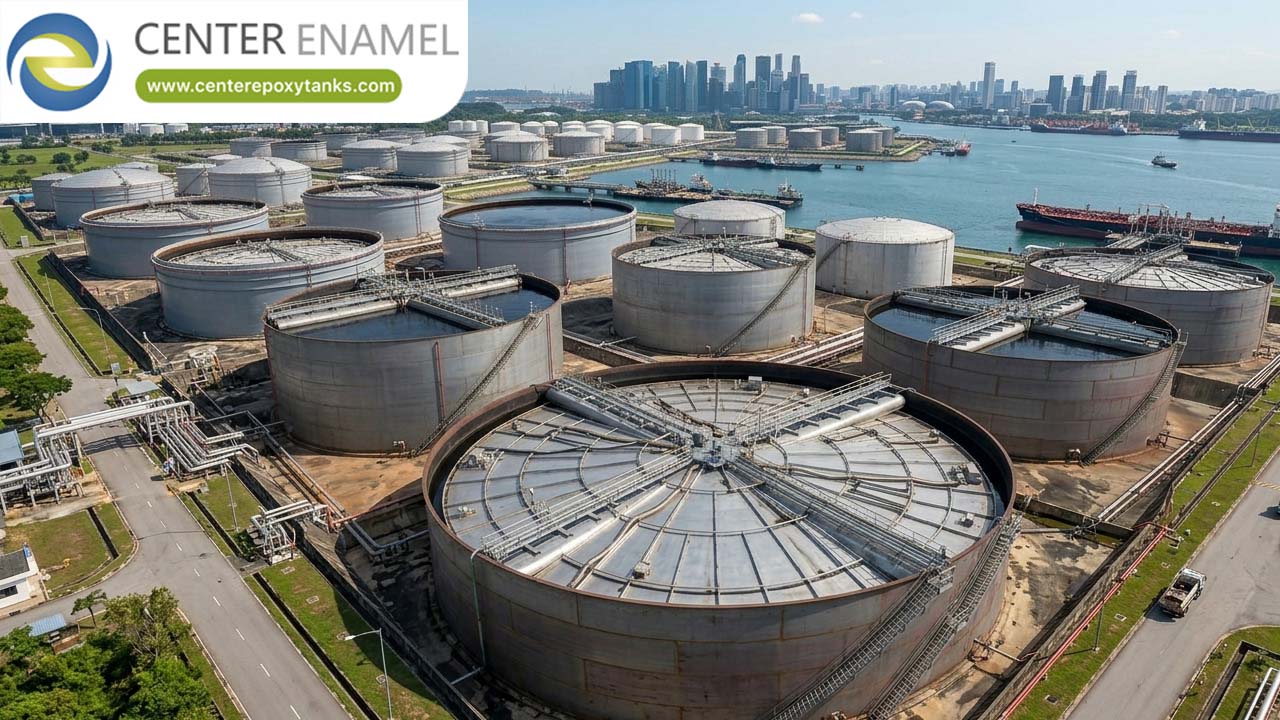
Internal Floating Roof Design: Code Basis and Design Inputs
Internal floating roof design is not a generic exercise; it is a response to a specific tankand product. This article sets out the code basis, the design inputs and the load cases thatgovern the work, using API 650 Appendix H and a publicly available specification as referencepoints. It explains what a designer must establish before a deck can be sized.
The Governing Code and What It Covers
The common international reference for internal floating roofs is API Standard 650 Appendix H,which addresses the design, fabrication and installation of internal floating roofs. It is nota performance guarantee; it is a framework for structural integrity, buoyancy and materials. Adesign statement should name the edition used and identify where the project goes beyond theminimum requirements.
Jurisdictional rules sit alongside the code. In the United States, EPA AP-42 Chapter 7 Section7.1 provides the emissions estimation methodology, and rules such as the Louisianaimplementation plan set seal and penetration requirements. Design is therefore a two-parttask: satisfy the structural code and satisfy the applicable environmental rule.
Inputs the Designer Must Have
A credible design starts with data. The designer needs the tank internal diameter and itsmeasured roundness, the shell height, the stored product and its density and vapour pressure,the operating and design temperature, the fill and draw rates, the internal columns andnozzles, and the wind and seismic conditions. Each input feeds a specific calculation, and amissing input becomes an assumption that should be approved.
Product density is especially important because it sets the buoyancy requirement. TheUltraflote 12F specification expresses this precisely: flotation is designed for one hundredpercent excess buoyancy at the lowest expected specific gravity, or 0.70, whichever is less.That statement ties the deck's floatability to a defined product condition rather than to avague margin.
Buoyancy and Point Load
Buoyancy design asks what happens if part of the flotation system is lost. A robustspecification defines the flooded-compartment case and requires the deck to remain afloat. TheUltraflote specification also requires a proven capability to support 750 pounds over any onesquare foot when afloat or at rest, with test results and analysis available on request. Thatis a testable criterion, and it illustrates the level of detail a design basis should contain.
Point load matters because people and equipment stand on a floating deck during inspection. Adesign that is buoyant but too flexible to walk on safely is not adequate. The right criteriondepends on the maintenance regime, so state the expected loading rather than leaving itimplicit.
Inputs and the Decisions They Drive
Design input | Calculation it drives | Why it matters |
Product density | Buoyancy and pontoon volume | Sets the lowest safe float condition |
Tank diameter | Deck geometry and ring details | Controls span and material content |
Shell roundness | Seal travel and rim detail | Determines whether the seal can follow the deck |
Penetrations | Wells and seal details | Prevents vapour loss at openings |
Fill / draw rate | Stability and venting | Affects deck behaviour during operation |
Seismic / wind | Legs and structural members | Governs anchorage and stiffness |
This table maps inputs to decisions. It is a design checklist, not a calculation method.
Where an input is uncertain, state the range and show that the design remains acceptableacross it. That is more defensible than choosing a convenient single value.
Deck Architecture as a Design Outcome
The deck type follows from the design inputs. TankTech Asia publishes a range in which apontoon deck suits mid-volatility products, a hybrid suits large crude tanks, and afull-contact honeycomb suits high-volatility service. Center Enamel's own guidance similarlylinks full-contact decks to highly volatile products. These are attributed supplier positions,useful for framing the choice rather than deciding it.
The designer's task is to relate architecture to vapour pressure, diameter, inspection accessand compliance requirement. A full-contact deck may reduce vapour space further, but itchanges inspection and maintenance. The design basis should record why one architecture waspreferred, so that the decision can be reviewed.
Seals and Penetrations in the Design Basis
Seal design is part of structural design, not an accessory added at the end. The rim seal mustaccommodate shell deviation while maintaining contact through the deck's travel. The Louisianaimplementation plan describes accepted seal families and requires that openings other than rimand bleeder vents have a projection below the liquid surface and a gasketed cover. Thoserequirements shape the penetration details on the drawing.
The Ultraflote specification gives a concrete example: vertical penetrations for columns andhatches are surrounded by a well extending into the liquid with a vapour-mounted seal and aramped lower edge. Such details should appear in the design basis because they affect bothemissions and mechanical movement.
Documenting the Basis
The output of design is a document that another engineer can check. It should record the codeand edition, the inputs, the assumptions, the load cases, the buoyancy calculation, theselected architecture, the seal basis and the limits of applicability. A design that existsonly in a sales conversation cannot be reviewed or maintained.
Center Enamel holds no verified internal floating roof project in its authoritative library,so this article presents a design method rather than a delivered design example. The method isoffered so that a buyer or engineer can recognise a serious design basis when they see one.
Load Cases Beyond Buoyancy
Buoyancy is necessary but not sufficient. A floating roof must also resist the loads imposedduring operation and maintenance. These include the weight of the deck and any accumulatedproduct, the point loads from personnel and equipment during inspection, the forces from filland draw cycles, and the settlement or seismic movement transmitted through the tank shell. Adesign basis should name each load case it has considered.
The Ultraflote specification's 750 pound-per-square-foot point load is one such case. Wind andseismic conditions are others, and they affect the leg and guide design rather than thepontoons. A design that addresses only flotation leaves the structural questions unanswered.
Limits of the Reference Sources
It is worth stating what the cited sources do and do not provide. API 650 Appendix H gives adesign framework; it does not produce a design for your tank. EPA AP-42 gives an emissionestimation method; it does not certify a deck. The Ultraflote specification describes onemanufacturer's product; it is not a universal requirement. Each source is used here for thespecific fact it supports.
Center Enamel holds no verified internal floating roof project, so no delivered design isoffered as evidence. The value of this article is that it gives a buyer and engineer thequestions to ask and the kind of answer a serious design basis should contain.
From Basis to Verification
Once the design basis is written, it should be verified. That normally means an independentcheck of the buoyancy and load calculations, especially where a jurisdiction or clientrequires third-party review. Public tenders show how formal this can become, with design andquality assurance plans vetted by an approved inspector before work proceeds.
The verification should confirm that the inputs used in the calculations match the agreed tankdata. A calculation can be mathematically correct and still be wrong for the tank if it usedan assumed product density or an outdated roundness survey.
The Cost of an Incomplete Basis
An incomplete design basis is expensive because errors surface late. If product density wasassumed rather than supplied, buoyancy may be inadequate; if shell roundness was ignored, theseal may not follow the deck. Both problems are cheap to resolve on paper and costly to fixafter fabrication.
For that reason, a short pre-design review of the inputs is worthwhile. Confirm each valuewith its source, mark anything provisional, and obtain client sign-off before calculationsbegin. The discipline costs little and protects the whole project.
Evidence note: this design-basis explanation is generic engineering method. The verifiedproject library contains no internal floating roof delivery, so no signed calculation,buoyancy result or design load from our work is presented. Code references and publishedspecifications are cited as the basis for the method.
Evidence note: this design-basis explanation is generic engineering method. The verified project library contains no internal floating roof delivery, so no signed calculation, buoyancy result or design load from our work is presented. Code references and published specifications are cited as the basis for the method.
Conclusion
Internal floating roof design is a disciplined response to tank and product data. Establishthe code and jurisdiction, collect the inputs, define buoyancy and point-load criteria, choosethe deck architecture against vapour pressure and diameter, and document seals andpenetrations. A design basis that another engineer can check is the mark of serious work.
Frequently Asked Questions
Q: Which code governs internal floating roof design?
A: API Standard 650 Appendix H is the common international reference for design, fabrication andinstallation of internal floating roofs. The applicable edition should be stated.
Q: Why does product density matter so much?
A: It sets the buoyancy requirement. Published specifications define excess buoyancy at thelowest expected specific gravity, so a lighter product can demand more flotation volume.
Q: What is a point load criterion?
A: A defined load that the deck must support over a small area, reflecting people and equipmentduring inspection. One published spec requires 750 pounds per square foot.
Q: How does shell roundness affect design?
A: The rim seal must follow the deck as it travels. A shell outside tolerance may need correctionor a seal with greater travel.
Q: What role do environmental rules play?
A: They set seal and penetration requirements and the emissions methodology. EPA AP-42 and staterules such as Louisiana's are common references.
Q: What should a design basis contain?
A: Code edition, inputs, assumptions, load cases, buoyancy calculation, architecture selection,seal basis and explicit limits of applicability.
Work With Center Enamel
Center Enamel is the trading name of Shijiazhuang Zhengzhong Technology Co., Ltd, established in 2008 and based in Shijiazhuang, Hebei Province, China. The company manufactures glass-fused-to-steel bolted tanks, fusion-bonded epoxy coated tanks, stainless steel and welded steel tanks, pressure vessels, aluminium geodesic dome roofs and floating roof systems. Aluminium dome design work is carried out against AWWA D108, API 650, ADM 2015, ASCE 7-10 and IBC 2012, and the broader product range is covered by ISO 9001, NSF/ANSI 61, CE/EN 1090, ISO 28765, WRAS and FM approvals. The company reports 30,000 installed projects and an annual output of 300,000 enamel steel plates, with technical support delivered through an international distributor network and a stated 24-hour response commitment.
If your project involves tank roofs, floating decks or the shells that carry them, send the tank diameter, shell height, product, operating temperature and site design loads. We will return a preliminary structural concept, the applicable design code basis, and a written scope that separates what is included from what the site contractor must provide.


