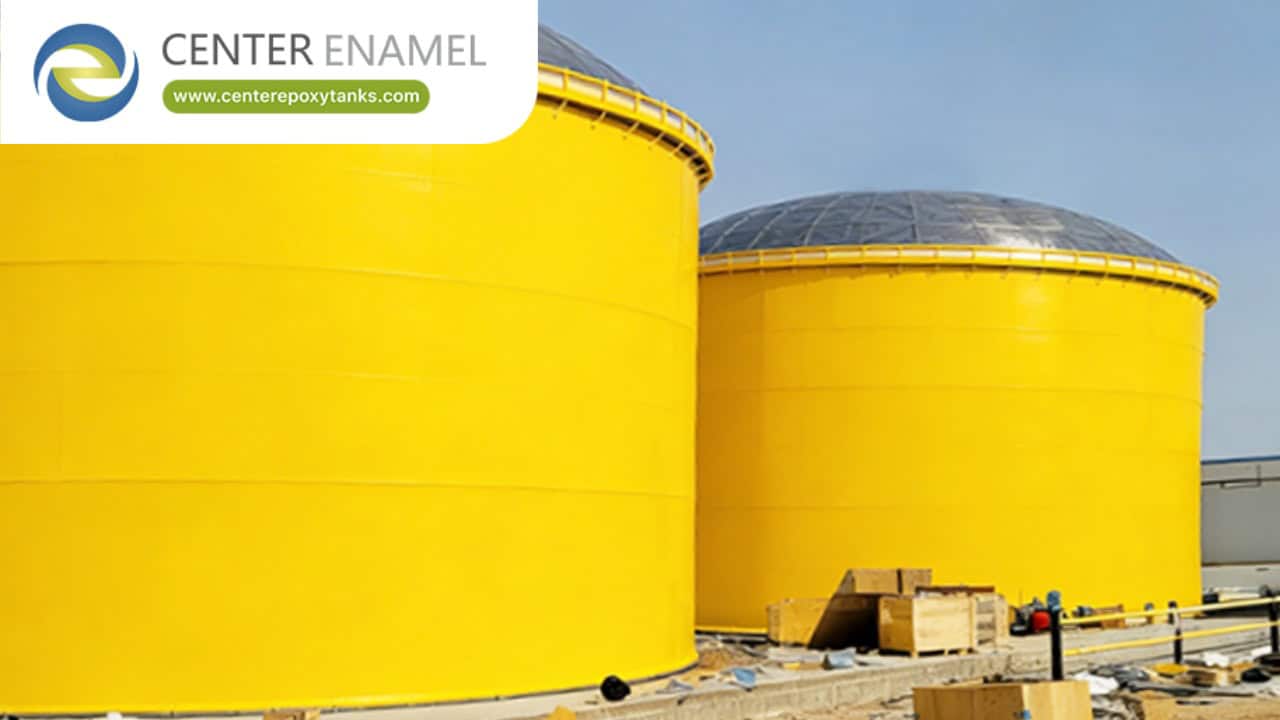
How to Build a Field Erected Storage Tank: A Comprehensive Engineering Guide
Unlike shop-fabricated or modular bolted tanks, a field erected storage tank is a large-capacity containment vessel built piece by piece directly on a prepared job site. Because these massive structures have no practical upper limit on diameter or height, they serve as the backbone for petroleum refineries, bulk chemical terminals, and municipal water reserves.
Constructed primarily under strict global guidelines like API 650 (for oil, gas, and industrial fluids) or AWWA D100 (for potable water and fire protection), building a field-erected tank requires rigorous coordination across engineering, shop fabrication, heavy rigging, precise welding, and non-destructive examination (NDE).
Step 1: Engineering, Design, and Material Procurement
Before a single plate is cut, comprehensive structural and mechanical designs must be approved:
Load Calculations: Engineers calculate shell course thicknesses, wind loads, seismic forces (per ASCE 7 / API 650 Appendix E), and hydrostatic pressures based on the specific gravity of the stored liquid.
Material Selection: High-tensile carbon steel plates (such as ASTM A36 or ASTM A516 Gr. 70) with controlled carbon content are selected to ensure optimal weldability and toughness.
Shop Pre-Fabrication: Steel plates are cut via computer-controlled plasma tables, beveled for welding, and rolled to the exact radius of the tank shell in a controlled factory environment before shipment.
Step 2: Foundation Preparation and Civil Works
A stable foundation is critical to prevent differential settlement and structural deformation under massive hydrostatic weight:
Geotechnical Assessment: Soil conditions are tested to determine bearing capacity.
Foundation Types: Common foundations include reinforced concrete ringwalls with an oiled sand or compacted aggregate core, or full concrete slabs designed to distribute load evenly across the ground.
Step 3: Field Erection and Shell Construction
Once components arrive on-site, erection crews assemble the vessel using specialized rigging and construction techniques:
Floor Assembly: Construction begins by laying out and welding annular and sketch bottom plates to form a leak-tight tank floor directly on the foundation.
Shell Installation: Plates are erected course by course (from bottom to top) using either traditional bottom-up crane assembly or top-down jacking methods. Each course is aligned, clamped, and temporarily secured before permanent welding.
Roof Framing: Depending on the application, self-supporting cone roofs, dome roofs, or aluminum geodesic domes are installed. For volatile products like crude oil, internal or external floating roofs (IFRs/EFRTs) are integrated.
Step 4: Welding and Non-Destructive Examination (NDE)
Because integrity is paramount, all structural joints undergo intense quality control:
Certified Welding: Only AWS-certified structural welders using pre-qualified welding procedures execute the vertical and horizontal shell joints.
Rigorous NDE Testing: Quality verification includes radiographic testing (RT) or ultrasonic testing (UT) on shell butt welds, vacuum box testing on floor lap joints, and magnetic particle (MT) inspections on attachments.
Step 5: Hydrostatic Testing and Protective Coatings
Hydrostatic Fill Test: The tank is filled to its maximum design level with water to test structural stability, foundation settling behavior, and absolute watertightness.
Surface Preparation and Coating: Following successful pressure testing, the exterior and interior surfaces are abrasive-blasted and coated with industrial epoxy systems, zinc primers, or NSF/ANSI 61 certified potable water linings.
Data Table: Field-Erected Storage Tank Construction Matrix
Project Phase | Core Activity & Execution Steps | Governing Standards / Quality Control |
Engineering & Design | Structural sizing, plate calculations, CAD drawings | API 650, AWWA D100, ASCE 7 wind/seismic |
Shop Fabrication | Plasma cutting, edge beveling, plate rolling | Mill test reports (MTRs), dimensional checks |
Foundation Construction | Excavation, concrete ringwall casting, sand pad compaction | Geotechnical load compliance |
Field Erection | Plate positioning, floor welding, shell course stacking | Crane rigging plans, safety audits |
Welding & NDE | Multi-pass arc welding, radiographic and vacuum testing | AWS-certified welders, RT/UT/MT/Vacuum reports |
Commissioning | Hydrostatic shell testing, abrasive blasting, lining application | NSF/ANSI 61, API 650 hydrostatic test logs |
Frequently Asked Questions (FAQ)
Q: How long does it take to build a field-erected storage tank?
A: Construction timelines vary based on tank diameter, height, and site complexity. A standard mid-sized industrial tank (50 to 100 feet in diameter) typically takes between 6 to 12 weeks for field erection, excluding civil foundation work and final coatings.
Q: What is the difference between shop-fabricated and field-erected tanks?
A: Shop-fabricated tanks are built completely in a factory and hauled on trucks, limiting their size. Field-erected tanks are constructed piece-by-piece from rolled steel plates directly on the job site, allowing for unlimited capacity and massive industrial footprints.
Q: What safety standards govern field-erected oil storage tanks?
A: Welded petroleum and chemical storage tanks are primarily built and tested in accordance with API 650, while water storage reservoirs follow AWWA D100 specifications, ensuring strict margins for seismic and wind safety.
Q: How is weld integrity verified during field construction?
A: Weld integrity is verified using non-destructive examination (NDE) methods, including radiographic or ultrasonic testing of shell butt welds, vacuum box testing of floor plates, and magnetic particle inspection of structural attachments.


