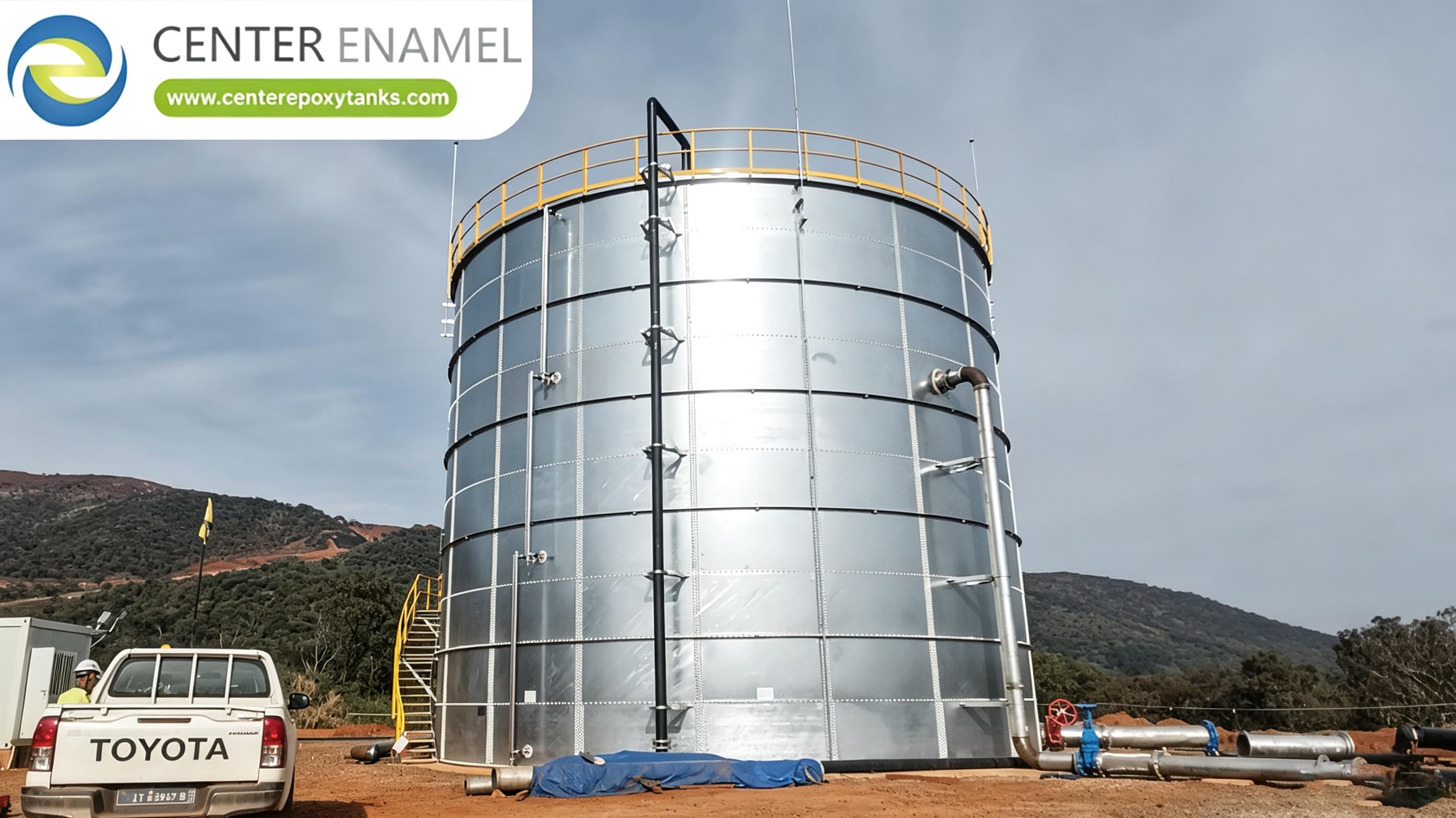
Bolted vs Welded Galvanised Steel Tanks: A Comprehensive Comparison Guide
When specifying metallic liquid storage for municipal water supply, fire protection, agricultural irrigation, or wastewater management, galvanized steel tanks are a premier choice due to their exceptional corrosion resistance and structural durability.
However, a critical engineering decision arises when choosing between bolted galvanized steel tanks and welded steel tanks (which may utilize galvanized or liquid-applied coatings). Understanding the metallurgical differences, coating integrity, and installation dynamics of each system is vital for selecting the right asset.
1. Bolted Galvanised Steel Tanks: Total Factory Galvanizing
Bolted storage tanks utilize pre-fabricated steel panels that are mechanically assembled on-site using structural bolts and sealing gaskets.
Post-Fabrication Hot-Dip Galvanizing: In premium bolted systems, individual steel panels are laser-cut, punched, and completely submerged in a molten zinc bath (per ASTM A123 standards) after all manufacturing processes are complete. This ensures that every edge, bolt hole, and surface is 100% encapsulated in a protective zinc-iron alloy layer.
Modular Site Assembly: Flat-packed panels arrive on-site for rapid modular assembly without heavy welding equipment, minimizing labor costs and construction timelines.
Sacrificial Anode Protection: Zinc acts as a sacrificial anode, actively protecting the underlying steel base from rust even if minor surface scratches occur.
2. Welded Steel Tanks and Galvanizing Constraints
Welded storage tanks are constructed by stacking and fusing steel plates together on-site. When evaluating welded tanks in the context of galvanization, a major engineering limitation emerges:
The Field-Welding Limitation: Large field-erected welded tanks cannot be hot-dip galvanized after erection because massive vessels cannot fit into galvanizing dip tanks. Furthermore, field-welding hot-dip galvanized plates burns off the zinc coating at the weld seams, producing toxic zinc oxide fumes and leaving vulnerable bare steel edges that require field touch-ups.
Alternative Coating Solutions: Consequently, large welded industrial tanks typically rely on shop-primed carbon steel plates paired with high-performance field-applied liquid epoxy or polyurethane coating systems rather than hot-dip galvanization. (True hot-dip galvanizing is generally restricted to smaller, shop-welded vessels that can be submerged as a single unit).
Data Table: Bolted Galvanised vs. Welded Steel Tanks Comparison
Evaluation Parameter | Bolted Galvanised Steel Tanks | Welded Industrial Tanks (Coated / Galvanized) |
Galvanizing Method | Hot-dip galvanized after panel cutting and punching | Limited to small shop-welded units; field tanks use epoxy/paint |
Edge & Hole Protection | 100% encapsulated zinc coverage on all edges and bolt holes | Field-welded seams require touch-up primers and sealants |
Installation Speed | Rapid modular kit-based assembly (Days to weeks) | Extended field plate erection and welding (Weeks to months) |
Governing Standards | AWWA D103, ASTM A123, ISO 28765 | AWWA D100, API 650 (for petroleum/industrial) |
Site Logistics | Flat-packed for easy transport to remote or confined areas | Requires heavy cranes, welding generators, and large staging zones |
Primary Applications | Municipal water, agricultural irrigation, fire protection | Bulk petroleum terminals, high-pressure chemical processing |
Frequently Asked Questions (FAQ)
Q: Can large welded steel tanks be hot-dip galvanized?
A: No. Large field-erected welded tanks cannot be hot-dip galvanized as a single unit due to sizing limitations of zinc bath kettles. Additionally, welding galvanized steel produces hazardous toxic fumes and destroys the zinc coating at the weld joint, which is why welded tanks typically use liquid epoxy coatings instead.
Q: Why are bolted galvanized tanks superior for edge protection?
A: In bolted galvanized tank manufacturing, every steel panel is cut, shaped, and punched before being submerged in the molten zinc bath. This guarantees that every single edge, corner, and bolt hole is completely sealed with a corrosion-resistant zinc layer.
Q: What standards govern hot-dip galvanized steel tanks?
A: Hot-dip galvanizing quality is governed by ASTM A123 / A123M specifications, while modular bolted galvanized water storage tanks are designed in accordance with ANSI/AWWA D103 standards.
Q: How long do bolted galvanized steel tanks last?
A: With proper environmental conditions and routine maintenance of sealing gaskets and cathodic protection systems, a high-quality hot-dip galvanized bolted tank can reliably last between 30 and 50+ years.


