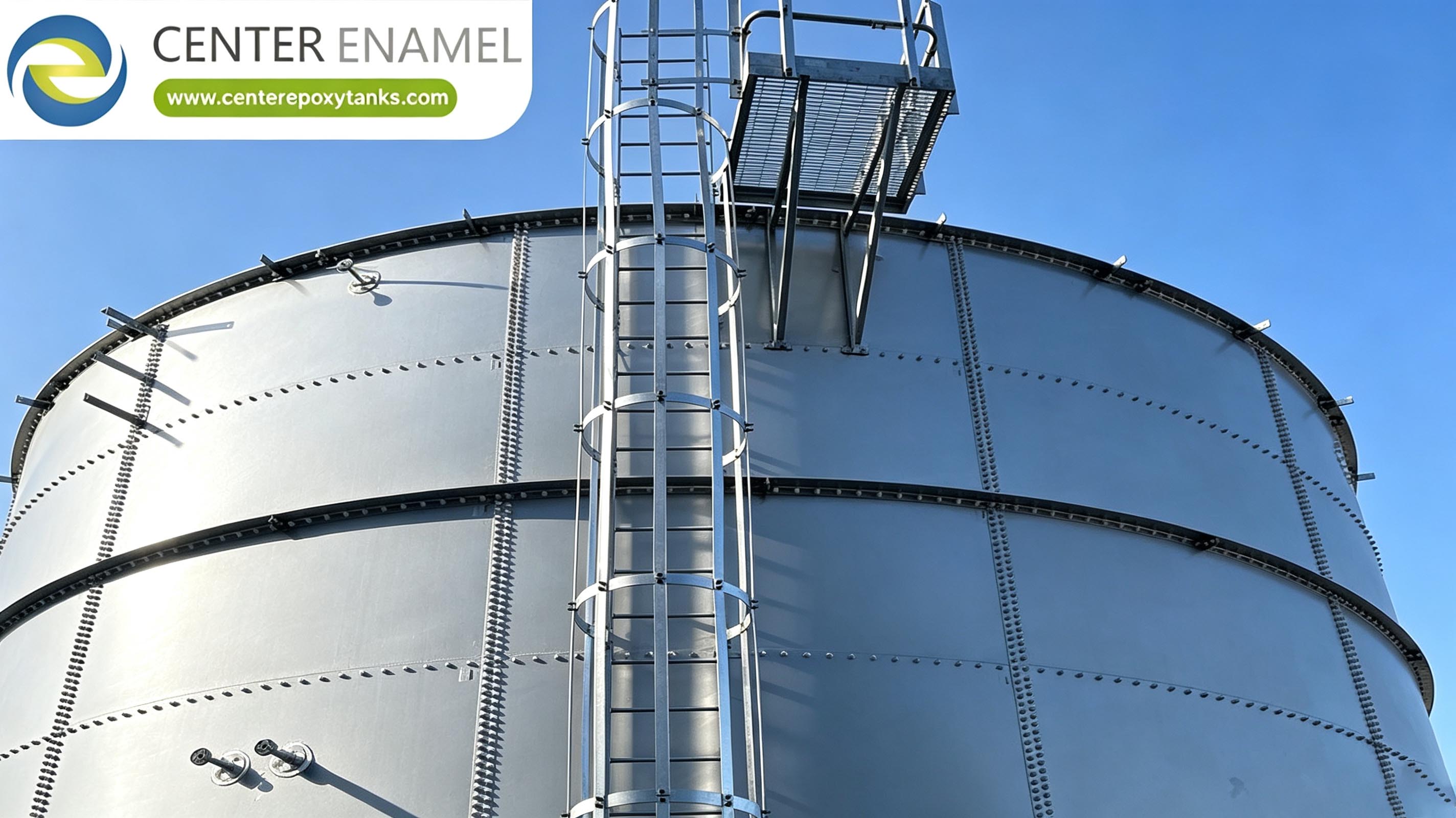
Hot-Dip Galvanised Steel Tanks: Zinc Protection for Long-Lasting Storage
For fire water reserves, irrigation networks, rural supplies, and construction-site storage, specifiers need dependable corrosion protection at the lowest possible cost — and they need it to survive decades of weather without a recoating budget. Paint systems chip and require maintenance cycles; stainless steel solves corrosion at a premium not every project can justify.
Hot-dip galvanised steel tanks are storage vessels fabricated from steel panels immersed in molten zinc at roughly 450 deg C, forming a metallurgically bonded coating 85 microns or thicker per ASTM A123 that protects by sacrificial and barrier action. Galvanized bolted tanks to AWWA D103-09 serve fire protection, irrigation, and utility storage worldwide, including 2025 fire-water deliveries to Dubai, Congo, and Guinea.
1. How Does Hot-Dip Galvanizing Protect Steel?
Galvanizing works through two mechanisms operating at the same time.
· Barrier layer: The zinc envelope physically separates steel from moisture and oxygen; even scratches expose zinc, not bare steel.
· Sacrificial action: Zinc is electrochemically more active than steel, so at any breach it corrodes preferentially, arresting rust at the cut edge — something no inert paint can do.
· Metallurgical bond: Dipping forms hard zinc-iron alloy layers beneath the pure zinc surface; the coating will not peel like paint because it is part of the steel.
· Uniform coverage: Immersion coats edges, holes, and fastener recesses — the exact zones where sprayed coatings fail first.
2. Where Do Galvanised Tanks Perform Best?
HDG is a misfit-proof choice in the right duty and a false economy in the wrong one.
· Fire protection storage: Fire water is stored still and treated minimally; zinc handles it for decades, and galvanized fire tanks are a code-familiar choice globally.
· Irrigation and agricultural water: Non-potable, ambient, mildly mineral water sits squarely in zinc's comfort zone at minimal cost.
· Construction and mining site tanks: Rough handling and zero maintenance windows favor a coating that cannot be chipped off by scaffolding.
· Temporary and relocatable storage: Galvanized bolted panels disassemble and re-erect without coating repair between deployments.
3. What Are the Limits of Galvanised Tanks?
Specifying within zinc's chemistry is what keeps the 20-year promise honest.
· Water chemistry boundaries: Continuous immersion above roughly pH 12 or below pH 6 — and high-chloride potable water — accelerates zinc loss; aggressive potable service belongs to GFS or epoxy linings.
· Hot service: Sustained water above about 70 deg C inverts the galvanic couple and can attack steel; hot water duties need coated or stainless alternatives.
· Interior inspection: Sediment zones and stagnant crevices should be washed periodically; simple housekeeping multiplies service life.
· NSF/ANSI 61 note: Where potable certification is required, verify the specific galvanized system's listing — GFS and epoxy systems carry the most established potable credentials.
Data Table: Galvanised vs Coated Bolted Tank Systems
Criterion | Hot-Dip Galvanised | Epoxy Coated | Glass-Fused-to-Steel |
Protection | Sacrificial zinc, 85+ microns | Barrier epoxy lining | Glass barrier, fired 820-930 deg C |
Best duty | Fire, irrigation, utility water | Chemical, wastewater | Potable, aggressive water |
pH tolerance | ~6-12 immersion | pH 2-11 typical | pH 1-14 special |
Maintenance | Minimal, washouts only | Periodic lining checks | Minimal, inert surface |
Relative cost | Lowest | Medium | Medium-high |
Service life | 20+ years typical | 20-25 years | 30+ years |
Frequently Asked Questions (FAQ)
Q1: How does a hot-dip galvanised steel tank resist corrosion?
Molten zinc bonds metallurgically to the steel, forming an 85-plus micron coating that blocks moisture and, at any scratch, corrodes sacrificially to protect exposed steel. This dual barrier-plus-sacrificial mechanism is why galvanized tanks endure decades of outdoor exposure without recoating.
Q2: What is the lifespan of a galvanized steel water tank?
Typically 20+ years in moderate climates and mildly aggressive water, with many rural and fire-service tanks exceeding that. Lifespan shortens in acidic or alkaline water outside roughly pH 6-12 or high-chloride potable service — duties better served by Glass-Fused-to-Steel or epoxy linings.
Q3: Can galvanized tanks store drinking water?
Only where the specific system carries potable certification for the water chemistry involved; many potable specifications instead mandate NSF/ANSI 61-listed GFS or epoxy linings. Galvanized tanks excel at fire, irrigation, and utility storage where potable certification is not required.
Q4: Are galvanized tanks cheaper than coated steel tanks?
Generally yes at purchase — zinc dipping is a single-step industrial process with no multi-coat curing line. Total lifecycle comparison depends on water chemistry: in zinc's comfort zone, galvanized tanks are the most economical bolted option; in aggressive water, a GFS tank's 30+ year coating often wins on lifecycle cost.


