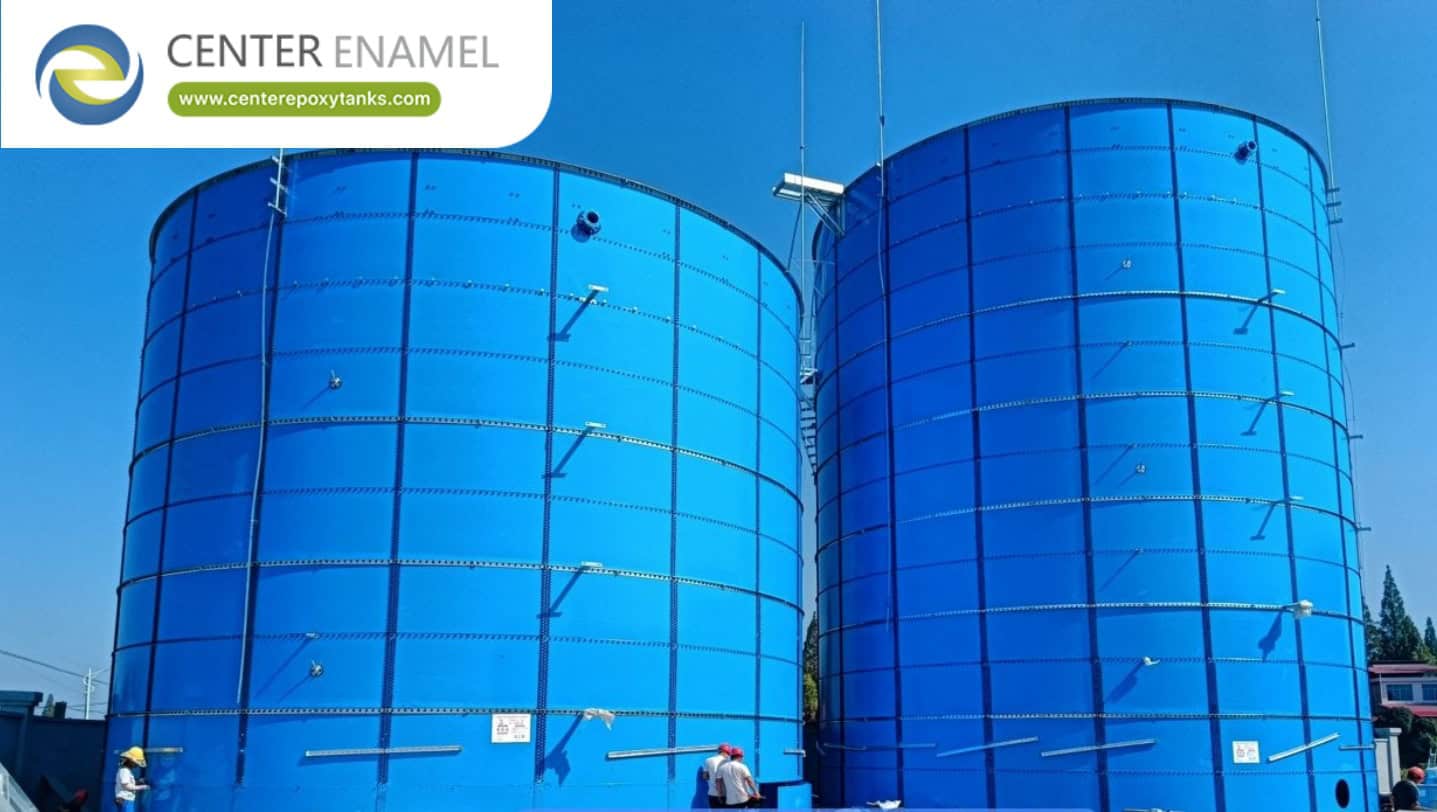
Epoxy Coated Tanks for Poultry Wastewater Storage: Engineering Guide
Poultry processing facilities generate some of the most complex wastewater in the industrial sector. Characterized by high concentrations of biological oxygen demand (BOD), fats, oils, and grease (FOG), and nutrient-rich nitrogen compounds, this effluent requires specialized containment that resists both chemical degradation and biological corrosion. Epoxy-coated bolted steel tanks serve as the premier solution for this application, offering the structural longevity of steel paired with a chemically inert, corrosion-resistant polymer barrier.
1. The Chemistry of Poultry Wastewater
Poultry effluent presents a unique challenge to containment materials. Engineering an effective storage solution requires an understanding of the specific stressors placed on the tank interior:
● pH Volatility: Biological processes and cleaning regimes (typically caustic or acidic) cause frequent pH swings, which rapidly degrade unprotected concrete and poorly coated steel.
● Fats, Oils, and Grease (FOG): These compounds can adhere to tank surfaces and foster anaerobic microbial activity, which produces hydrogen sulfide (H2S)—a highly corrosive gas that targets metal surfaces in the headspace of the tank.
● Nitrogen Compounds: High concentrations of ammonia and nitrates can accelerate galvanic corrosion if the metallic substrate is exposed.
The Epoxy Defense
Factory-applied Fusion Bonded Epoxy (FBE) creates a continuous, dielectric barrier. By fully isolating the carbon steel from the effluent, the coating prevents the electrolytic circuit necessary for corrosion. Unlike concrete, which is porous and susceptible to leaching, the high-density cross-linked polymer of the epoxy coating is essentially impermeable.
2. Engineering Standards: AWWA D103 Compliance
For poultry processing facilities, the structural standard for bolted tanks is AWWA D103 (Factory-Coated Bolted Carbon Steel Tanks).
Feature | Engineering Requirement for Poultry Wastewater |
Coating Type | High-build, immersion-grade thermoset epoxy (chemically resistant) |
Structural Design | AWWA D103 standard (ensures wind/seismic and hydrostatic safety) |
Headspace Protection | Secondary protection (typically thicker epoxy or vinyl ester) for H2S resistance |
Inspection | High-voltage "holiday" testing at 100% of panel area |
3. Optimization for Poultry Effluent
To ensure a 30-to-40-year service life in a poultry facility, the tank design must include specific optimization features:
A. Abrasion-Resistant Lining
Poultry wastewater contains grit, feathers, and organic solids. The internal epoxy lining must possess a high Taber Abrasion Resistance rating to ensure that suspended solids do not scour the coating during agitation or pumping cycles.
B. Headspace Ventilation
The gas phase at the top of the tank is often the most corrosive due to H2S buildup. Engineers specify specialized ventilation or "scrubbing" systems to minimize gas contact with the upper shell rings, often supplementing this with a reinforced chemical-resistant top-coat.
C. Bolted Construction Advantages
Poultry wastewater tanks are frequently installed as part of a modular treatment system. The bolted panel design is highly advantageous:
● Rapid Deployment: Panels are factory-coated and shipped as a kit, reducing on-site construction timelines from months to weeks.
● Expansion Ready: As processing throughput increases, the tank can be expanded by adding additional ring courses, providing a scalable path for growth.
4. Maintenance Protocol for Wastewater Containment
Routine maintenance is critical to prevent the small defects that lead to localized corrosion.
1. Annual Visual Audit: Inspect the internal liquid line (the interface between the effluent and the air) for signs of surfactant build-up or coating blistering.
2. Holiday Re-testing: During every periodic clean-out, use a low-voltage wet-sponge holiday detector to identify any microscopic coating breaches caused by mechanical equipment or abrasive solids.
3. Prompt Repair: If a holiday is identified, use an approved two-part liquid epoxy repair kit. This maintains the "continuous barrier" integrity, preventing localized "pitting" that could threaten the steel plate's structural thickness over time.
Frequently Asked Questions (FAQ)
Q: Are epoxy-coated tanks compatible with standard cleaning chemicals used in poultry plants?
A: Yes. High-grade industrial epoxy coatings are specifically formulated to withstand the pH fluctuations typical of plant sanitation chemicals. However, always consult the manufacturer's chemical resistance chart if your facility uses high-strength chlorinated solvents.
Q: Can these tanks be used for anaerobic digestion of poultry waste?
A: Yes. These tanks are frequently utilized for anaerobic digestion. In these scenarios, the coating must be specified for higher temperatures (up to 60C) to account for the exothermic nature of the digestion process.
Q: What is the primary difference between epoxy-coated steel and glass-fused-to-steel for wastewater?
A: While both are excellent, epoxy-coated steel offers higher impact resistance—meaning the coating is less likely to crack if an internal mixer or aerator is dropped during maintenance. Epoxy is also significantly easier and more cost-effective to repair in the field.
Would you like a technical comparison of coating formulations (e.g., Novolac vs. Standard Epoxy) tailored for your specific wastewater nitrogen concentration levels?


