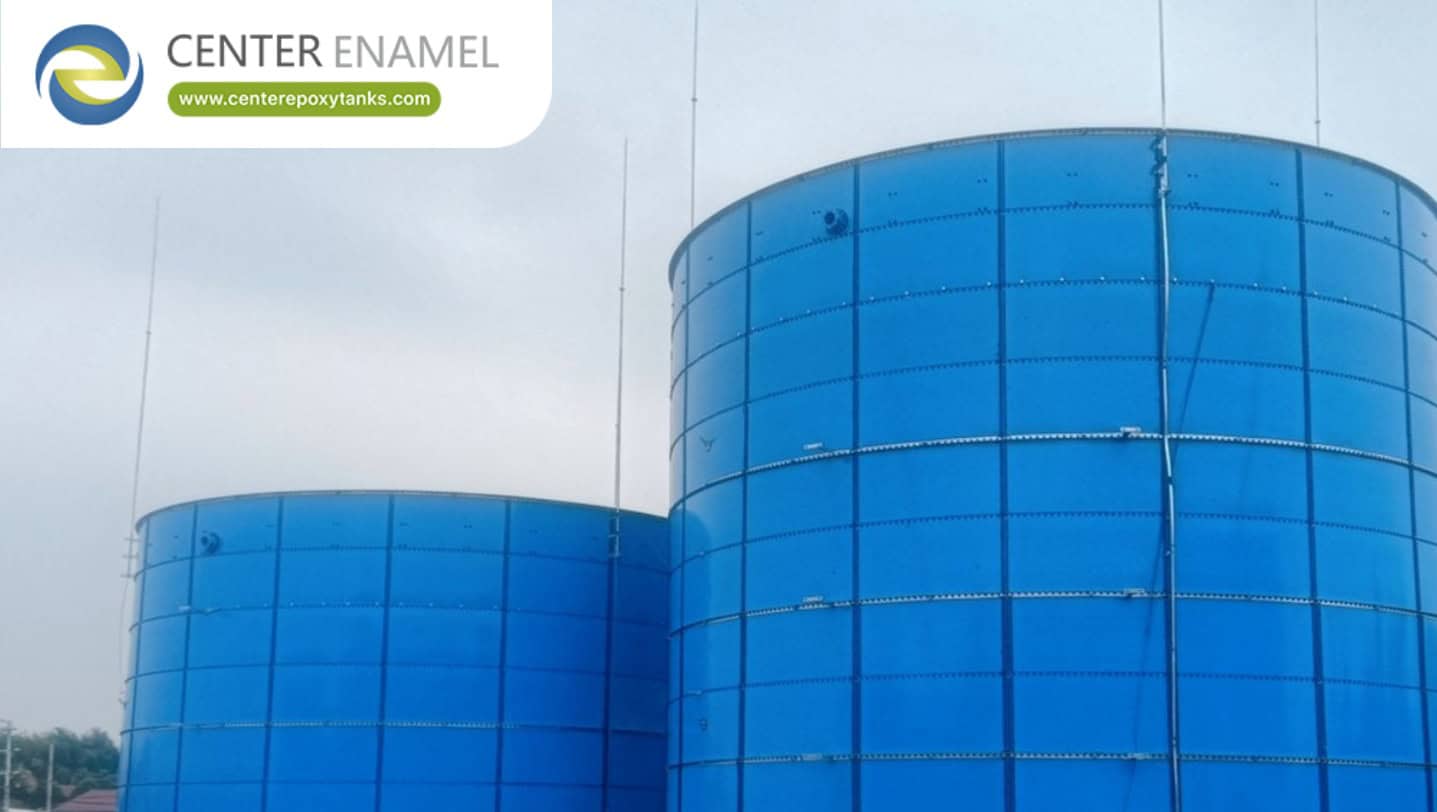
Epoxy Coated Bolted Tanks for Livestock Wastewater Storage: Durable Engineering Solutions
Modern livestock operations generate significant volumes of nutrient-rich wastewater, including manure slurry and washdown effluent. Managing this waste requires containment systems that are not only structurally robust but also chemically resistant to the acidic, highly corrosive, and biologically active nature of livestock waste. Factory-applied epoxy coated bolted steel tanks have become the industry standard for sustainable agriculture. By integrating modular, high-precision engineering with advanced polymer surface protection, these tanks provide a reliable, low-maintenance, and biosecure solution for long-term wastewater management.
1. The Corrosive Challenge of Livestock Wastewater
Livestock wastewater is not simple effluent; it is a chemically complex, fluctuating slurry that poses a severe threat to traditional containment materials.
Microbial-Induced Corrosion (MIC)
Livestock waste is a breeding ground for sulfate-reducing bacteria. These microorganisms metabolize sulfates into hydrogen sulfide (H2S) gas. In the tank’s headspace, moisture and secondary bacteria convert this gas into sulfuric acid (H2SO4). This acid effectively "eats" through concrete and bare steel. Epoxy coatings provide a chemically inert barrier that prevents this acid from ever touching the structural steel substrate.
Variable Chemical Loading
Wastewater composition changes based on diet, cleaning chemicals, and seasonal rainfall. Epoxy systems are engineered for "broad-spectrum" resistance, remaining stable across a wide pH range and preventing the blistering often seen in inferior field-applied coatings.
2. Factory-Engineered Quality Control
The primary advantage of specifying factory-coated bolted tanks is the removal of field-related quality risks.
● Controlled Surface Profile: Panels are blasted to an SSPC-SP10 / NACE No. 2 near-white metal standard, ensuring the substrate is free of contaminants and possesses the ideal anchor profile for coating adhesion.
● Thermal Cross-Linking: The epoxy is cured in multi-zone industrial ovens at high temperatures (180°C–220°C). This creates a dense, cross-linked polymer matrix that is significantly harder and more impermeable than any air-dried paint or field-applied epoxy.
● 100% Holiday Testing: Every panel is tested for pinholes using high-voltage electricity before leaving the factory. Any detected defect is corrected, ensuring that 100% of the surface area is fully protected before it arrives on the farm.
3. Engineering Comparison: Wastewater Containment
When choosing containment for livestock facilities, asset managers must consider both the initial cost and the long-term environmental liability of leaks.
Feature | Epoxy Bolted Steel Tank | Cast-in-Place Concrete | Corrugated Galvanized Tank |
Acid Resistance | Excellent (Thermoset Barrier) | Poor (Requires expensive liners) | Poor (Zinc reacts with acids) |
Installation Speed | Fast (Modular/Bolted) | Very Slow (Pouring/Curing) | Moderate |
Leak Risk | Extremely Low (Gasketed) | Moderate (Settlement Cracks) | High (Corroded Seams) |
Maintenance | Minimal | High (Crack Sealing) | High (Recalibration/Patching) |
Environmental Risk | Low (Secondary Containment options) | Moderate (Seepage risk) | High (Structural failure risk) |
4. Operational & Sustainable Benefits
● Groundwater Protection: Epoxy bolted tanks are easily fitted with double-bottom or leak detection systems, meeting strict environmental compliance mandates for preventing nutrient runoff into local aquifers.
● Rapid Expansion: As farm operations grow, these modular tanks can be expanded. Additional rings of panels can be added to existing structures to increase storage capacity without replacing the entire asset.
● Washdown Efficiency: The smooth, glass-like finish of high-performance epoxy prevents biological "slime" and solids from adhering to the tank walls, making routine sanitization and solids removal significantly faster and more thorough.
5. Frequently Asked Questions (FAQ)
Q: Can these tanks be used to store manure slurry with high solids content?
A: Yes. The interior surface of an epoxy-coated tank has a very low coefficient of friction. This allows for easier flow of viscous slurry and simplifies the use of mechanical agitators or mixers required to keep solids in suspension.
Q: How do bolted seams maintain integrity over time?
A: Bolted tanks utilize heavy-duty, chemical-resistant gaskets (such as EPDM or Viton) that are engineered to maintain a hermetic seal even during thermal expansion and contraction cycles. The bolts themselves are often encapsulated or coated with specialized materials to ensure they do not become weak points.
Q: Are these tanks compliant with environmental regulations?
A: Because factory-coated bolted tanks provide predictable, verifiable containment performance, they are widely recognized by environmental agencies as an effective Best Management Practice (BMP) for concentrated animal feeding operations (CAFOs) to prevent nitrogen and phosphorus runoff.
Investing in factory-applied epoxy coated bolted steel tanks for livestock wastewater storage is a commitment to sustainable farm management. By neutralizing the threat of corrosive gases and ensuring rigorous quality control through factory automation, these tanks protect the farm’s most valuable assets—its land, water, and livestock—while providing a scalable infrastructure that will support agricultural growth for decades.
Would you like to review the specific structural loading requirements or wind/seismic design calculations for a wastewater tank tailored to your specific regional climate and herd size?


