Grain Storage Silos: Sealed Storage, Aeration, and Design Standards
Harvest value lives and dies in the silo. Grain that enters at safe moisture can still spoil through condensation, insect infestation, or a leaky roof — and every percentage point of lost quality multiplies across thousands of tonnes. Modern grain storage is therefore engineered as a sealed, controlled environment, not just a tall container.
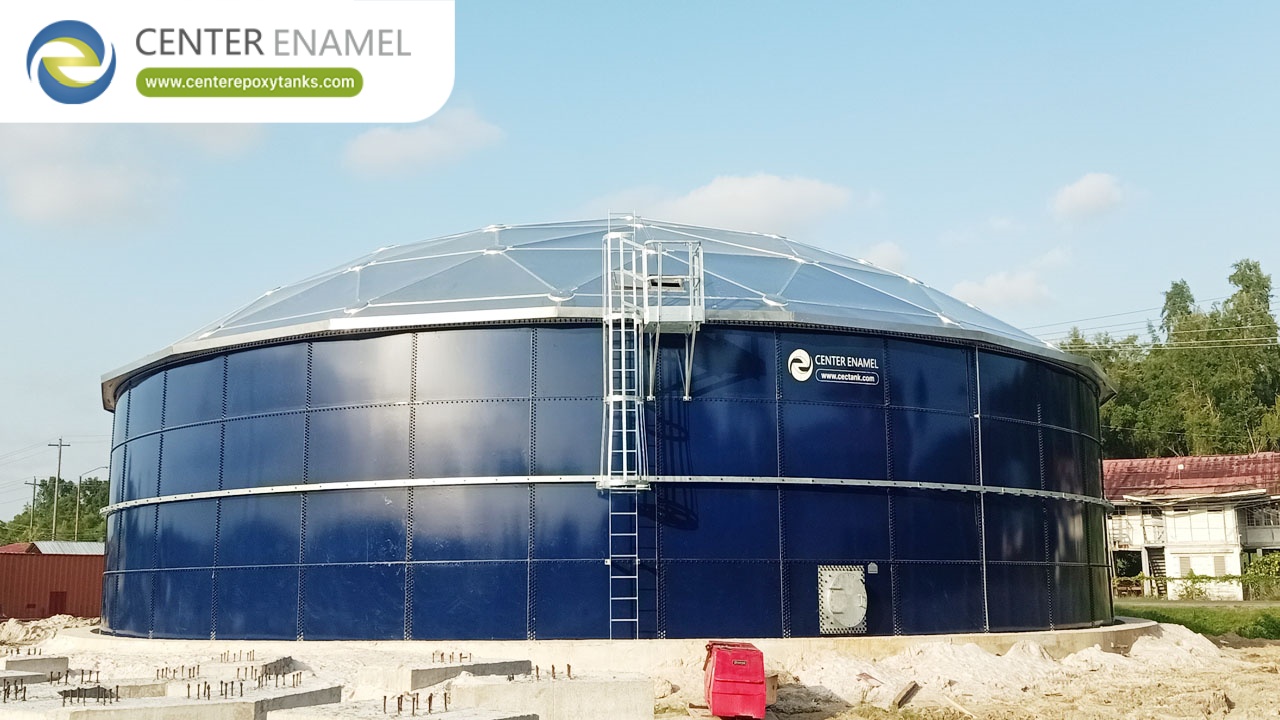
Grain storage silos are tall cylindrical or squat vessels for dry bulk grain and feedstock, built in bolted steel (flat-bottom or hopper-bottom), welded, or concrete, engineered with sealed roofs, wall stiffeners, aeration floors, and discharge systems sized for mass flow at hopper angles of 45-70 degrees. Bolted steel silos serve farms, ethanol plants, and ports worldwide, including a 1,663 m3 corn silo delivered to France in 2023.
1. Flat-Bottom or Hopper-Bottom — Which Silo Design Fits?
The bottom geometry decision follows turnover rate and reclaim requirements.
· Flat-bottom silos: Largest capacity per footprint; grain rests on a ventilated floor and exits through sweep augers — ideal for seasonal storage with controlled turnover.
· Hopper-bottom silos: 45-70 degree conical bottoms give complete gravity discharge without sweep machinery, suiting frequent cycling and first-in/first-out logistics.
· Stiffened versus smooth wall: Deep grain columns exert high wall friction; engineered vertical stiffeners let bolted silos reach greater heights without plate over-design.
· Squat versus tall: Squat silos ease aeration uniformity for difficult grains; tall silos win on land cost where plot area is constrained.
2. How Do Sealed Environments and Aeration Protect Grain?
Stored grain is a living mass — the silo must manage its atmosphere.
· Sealing to fumigation standard: Gas-tight roofs, joint seals, and sealable vents allow phosphine or controlled-atmosphere treatment that kills insects at all life stages.
· Aeration systems: Fans push ambient air through perforated floors to cool grain and erase moisture gradients — the driver of mold and crust formation.
· Moisture and temperature monitoring: Cable sensors track the grain mass; early hot spots trigger targeted aeration before spoilage spreads.
· Roof and vent engineering: Over-pressure relief, dust-tight access hatches, and snow-load-rated roofs keep weather and pests outside the stored mass.
3. What Standards and Features Govern Modern Silo Construction?
Silos are structures under dynamic loads that change with every discharge.
· Structural design: Wall rings designed for Janssen grain pressures with eccentric discharge, thermal cycling, and wind/seismic loads per structural codes.
· Corrosion protection: Hot-dip galvanized or GFS-coated panels defend against humid headspaces and aggressive grain dust; food-contact duties use certified interior surfaces.
· Safety provisions: Entrapment prevention at access points, dust-explosion venting where handling systems apply, and fall-arrest on ladders and platforms.
· Flow equipment: Discharge gates, intermediate rings, and loading distributors prevent grain segregation and manage peak outflow rates.
Data Table: Grain Silo Types Compared
Criterion | Flat-Bottom Bolted | Hopper-Bottom Bolted | Concrete Silo |
Capacity | 200-20,000+ tonnes | 50-1,500 tonnes | 1,000-30,000+ tonnes |
Discharge | Sweep auger | Full gravity, 45-70 deg hopper | Gravity/belt systems |
Turnover fit | Seasonal storage | Frequent cycling | Port/terminal scale |
Aeration | Floor duct systems | Hopper-aeration options | Limited retrofit |
Fumigation sealing | Add-on sealing systems | Sealed designs available | Gas-tight achievable |
Frequently Asked Questions (FAQ)
Q1: What is the best type of grain storage silo?
For seasonal bulk storage, flat-bottom bolted steel silos deliver the lowest cost per tonne with aeration floors and sweep discharge; for frequent turnover, hopper-bottom silos with 45-70 degree cones reclaim grain entirely by gravity. Both types now seal well enough for fumigation.
Q2: How long can grain be stored in a steel silo?
With sound harvesting practice, aeration, and monitoring, grain keeps 12 months and often multi-year cycles in sealed steel silos; the controlling variables are initial moisture, temperature uniformity, and insect exclusion rather than the silo material itself.
Q3: What is a hopper angle and why does it matter?
The cone angle at a silo's base — typically 45-70 degrees from horizontal for grain. Steep enough angles produce 'mass flow,' where the entire grain column moves together and discharges completely; shallower angles create stagnant zones that spoil, cake, and harbor insects.
Q4: Are bolted silos as durable as welded or concrete ones?
Yes for structural service life — modern bolted silos are engineered to the same grain pressure and wind/seismic codes, and factory galvanized or GFS-coated panels resist corrosion better than field-coated welded steel. Delivered references include a 1,663 m3 bolted corn silo in France (2023) and 1,084 m3 in Italy (2024).


