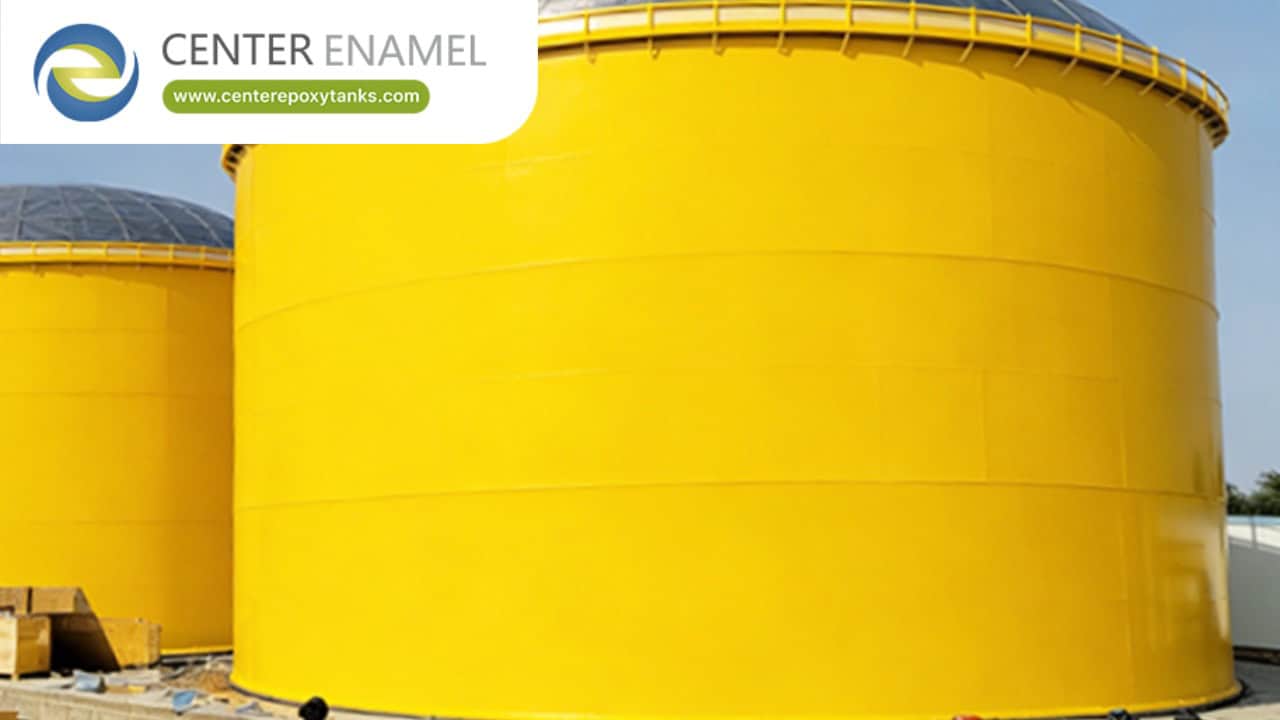
Germany Oil Tank Dome Roofs - Meeting Strict Emission and Water Protection Rules
German storage projects carry two regulatory pressures that other markets do not apply with the same intensity: air emission control and water protection. Both land on the roof. Emission rules push the operator towards sealed vapour spaces, effective deck seals and, in many cases, vapour recovery. Water protection rules push towards secondary containment, leak detection and detailing that keeps rainwater out of the bund. A roof that leaks, ponds or sheds rust into the containment is a compliance problem, not just a maintenance one.
An aluminium geodesic dome answers both pressures. Engineered by Shijiazhuang Zhengzhong Technology Co., Ltd. (Center Enamel), the sealed, gasketed envelope tightens the vapour space, the clear span allows an internal floating roof or vapour recovery connection to work properly, and aluminium's immunity to corrosion means the roof does not contribute rust or coating debris to the containment system.
1. How Do Domes Support Emission Control?
By providing a sealed, dimensionally stable fixed roof over the vapour space. That envelope is what allows an internal floating roof, a vapour recovery connection or a nitrogen blanketing system to perform to its design basis.
· Sealed Vapour Space: Gasketed panel joints limit uncontrolled breathing losses through the roof itself.
· Floating Deck Compatibility: The dome is designed together with the internal floating roof, carrying deck suspension and guide loads.
· Vapour Recovery Interface: Nozzles for vapour recovery or balancing lines are included in the penetration schedule before fabrication.
· Stable Geometry: Unlike a plate roof, a triangulated frame does not deflect enough to open seal gaps under wind or snow load.
· Emission-Relevant Sealing: Every penetration - hatch, vent, gauge pole - is sealed and documented because it is a measured emission path.
2. What Water Protection Requirements Apply?
Storage of water-hazardous liquids is regulated, and the containment must be capable of holding a release. Roof detailing supports this by keeping rainwater out of the bund, resisting corrosion so the roof does not become a contamination source, and allowing inspection of the containment.
· Clean Rainwater: A sealed roof keeps rain out of the vapour space and reduces the volume of contaminated water needing treatment.
· Containment Compatibility: Aluminium does not shed rust or coating flakes into the bund system.
· Accessible Inspection: Clear-span interiors and exterior walkways make the tank and its containment easier to inspect and document.
· Corrosion-Free Structure: No progressive corrosion means no unexpected debris or staining in the containment area.
· Documented Materials: Material certificates and coating records support the plant's documentation obligations.
3. Which Codes Are Used for German Tank Projects?
Typically EN 14015 for the tank, the Eurocodes for loads, and API 650 Appendix G or an equivalent Eurocode treatment for the dome. Emission and water protection requirements come from national regulation and the site permit, and they shape the roof's sealing class and penetration detail.
· EN 14015: The usual European specification for site-built welded steel storage tanks.
· Eurocodes: Wind, snow, seismic and accidental actions taken from the relevant parts and the German national annex.
· API 650 Appendix G: Applied where the project specifies it for the aluminium dome.
· Permit Conditions: Site-specific permit conditions fix emission limits and containment requirements that the roof design must respect.
· Documentation: Material certificates, weld records, coating records and an inspection and maintenance manual are issued with the dome.
Evaluation Criterion | Aluminum Dome | Conventional Steel Roof |
Vapour space sealing | Sealed gasketed envelope | Bolted or welded plate with many joints |
Contribution to containment load | None - no rust or flakes | Rust and coating debris |
Geometry under load | Stable triangulated frame | Plate deflection opens seal paths |
Future recoating | Not required | Generates waste requiring handling |
Documentation support | Full material and erection records | Standard |
Engineering Assurance and Project Support
Every welded oil tank delivered by Shijiazhuang Zhengzhong Technology Co., Ltd. (Center Enamel) is designed to API 650 with shell courses sized by the one-foot method and checked for wind, seismic and hydrostatic load cases, or to EN 14015 and the Eurocodes where the site is European. Shell plate is shot-blasted to Sa 2.5 and coated to a documented dry film thickness, longitudinal and annular plate welds are examined by radiography or ultrasonic testing to the acceptance level written into the purchase order, and every tank is hydrostatically tested and dimensionally surveyed before hand-over. For German projects we issue the roof as a documented package: load calculations, material certificates, penetration sealing schedule, erection and torque records, and an inspection and maintenance manual suitable for the plant's technical file.
Frequently Asked Questions (FAQ)
Can an aluminium dome help meet German emission requirements?
Yes. The sealed, gasketed envelope gives a tight vapour space, which is the foundation on which emission control measures work. The dome is designed together with the internal floating roof or vapour recovery connection so the system performs to its design basis, and every penetration is sealed and documented because each one is a potential emission path.
Does the dome contribute to water protection compliance?
It helps. Aluminium does not corrode or shed coating flakes, so the roof does not become a contamination source in the containment. A sealed envelope also keeps rainwater out of the vapour space, reducing the volume of water that has to be handled as potentially contaminated.
Which codes apply to the dome on a German project?
Tanks are normally designed to EN 14015 with Eurocode load combinations from the German national annex, and the dome is checked to API 650 Appendix G or an equivalent Eurocode treatment depending on the project specification. Site-specific permit conditions then fix the emission and containment requirements the roof design must respect.
Can the dome be customised for our site?
Yes. Span, rise, panel section, alloy and temper, gasket material, insulation, sealed vents, manways, vapour recovery nozzles, walkways, handrails and lightning protection are all engineered to your tank, product and permit conditions.
·


